翻刻
【コマ23】
【右丁】
般舟三昧院(はんしうさんまいゐん)は今出川通糸屋町( いとや )の西にあり宗㫖《割書:天台(てんたい)《振り仮名:眞󠄀言|しんこん》|律(りつ)浄土(じやうど)》兼学(けんかく)にして
禁裏内道塲(きんりないたうしやう)と称す開山は惠篤上人(けいとく )善空(せんくう)と號(かう)し字(あざな)は敬川(けいせん)謚(をくりな)を圓慈(ゑんじ)
和尚といふ本尊(ほんぞん)は阿弥陀佛の坐像(ざさう)にして慈覺大師(しかく )の作なり帝王歴代(ていわうれきたい)の
神牌(しんはい)を安置す後土御門院(ごつちみかどのゐん)の御塔(みたう)は本堂の西にあり式子内親王(しよくしないしんわう)の塚(つか)
《割書:當寺にあり《振り仮名:定家葛󠄀の墳|ていかかつら つか》といふむかし此地 定家卿(ていかきやう)の別莊(へつさう)なり門前(もんぜん)の辻子(つし)を《振り仮名:定家の辻子|ていか つ し 》と|いふ當院初は伏見里指月(ふしみのさとしげつ)#1にあり文禄三年(ふんろく )此地に移(うつ)す》
惠照山(ゑせうさん)浄福寺(しやうふく )は一条の西にあり浄土宗にして智恩院(ちをんゐん)に属(そく)す本尊阿弥仏
は弘法大師の作なり開基(かいき)は弘蓮社深譽上人(こうれんしやしんよ )本堂の額(がく)は浄福寺(じやうふくし)
と書(しよ)して後奈良院(ごならのゐん)の震筆(しんひつ)なり
《振り仮名:安𥡷山|あんをんさん》大超寺(たいてうじ)は浄福寺(じやうふくし)の西にあり右同宗にして本尊阿弥陀佛は惠心僧都(ゑしんそうつ)
伊勢太神宮に一七日 参籠(さんろう)しけるに阿弥陀の三尊 空中(くうちう)に現(けん)じ給ふ則其
尊形(そんきやう)を摸(うつ)して三尊( そん)を刻(きさみ)給へり其时 化人(けしん)來りて共(とも)に作る故(かるかゆへ)に丗人(せしん)《振り仮名:神明の御作|しんめい 》といふ
西陣(にしちん)といふは明德(めいとく)の頃 山名(やまな)細川(ほそかは)の两執権(りやうしつけん)洛中(らくちう)におゐて数度(すと)合戦(かつせん)ありし时 堀川(ほりかは)の西
一条より北に屯(たむろ)するを西陣(にしちん)といひ堀川(ほりかは)より東を東陣(ひかしちん)といふとそ《割書:委(くはしき)は應仁記(をうにんき) |に見えたり》
【左丁】
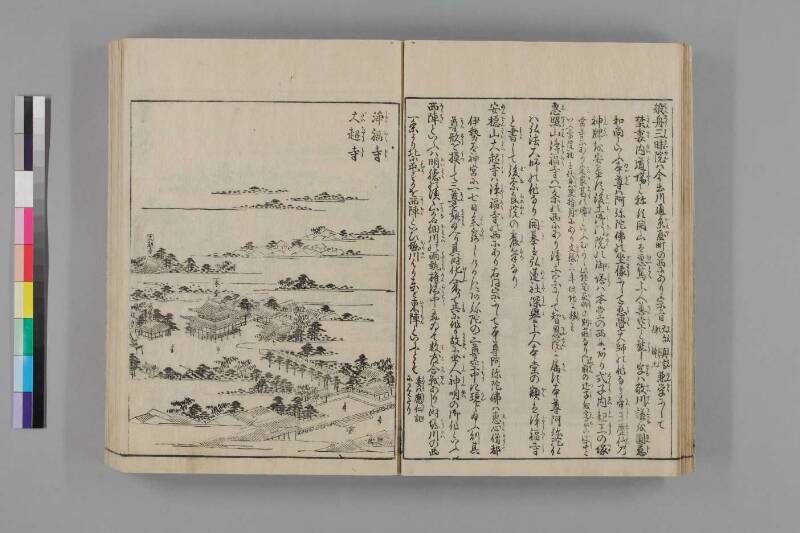
浄福寺(じやうふくじ)
大超寺(だいちやうじ)
【図中】
方丈
本堂
大超寺
地藏堂
鎮守
現代語訳
## 般舟三昧院・浄福寺・大超寺、そして「西陣」の由来
**【右丁】**
**般舟三昧院(はんじゅさんまいいん)**は、今出川通り糸屋町の西にある。宗旨は天台・真言・律・浄土を兼学しており、「禁裏内道場」と称されている。開山は恵篤上人(けいとくしょうにん)といい、善空(せんくう)と号し、字(あざな)は敬川(けいせん)、謚(おくりな)を円慈和尚という。本尊は阿弥陀仏の坐像で、慈覚大師の作である。歴代帝王の神牌(位牌)を安置している。後土御門院の御塔(みとう)は本堂の西にある。式子内親王の塚も当寺にあり、「定家葛の墳(ていかかずらのつか)」と呼ばれている。昔、この地は定家卿の別荘であった。門前の辻子(路地)を「定家の辻子」という。当院はもともと伏見の里・指月にあったが、文禄三年(1594年)にこの地へ移された。
**恵照山(えしょうざん)浄福寺(じょうふくじ)**は一条通りの西にある。浄土宗に属し、知恩院の末寺である。本尊の阿弥陀仏は弘法大師の作である。開基は弘蓮社深誉上人(こうれんじゃしんよしょうにん)。本堂の扁額は「浄福寺」と書かれており、後奈良院(後奈良天皇)の宸筆(天皇直筆)である。
**安穏山(あんのんざん)大超寺(だいちょうじ)**は浄福寺の西にある。同じく浄土宗に属する。本尊の阿弥陀仏は恵心僧都(えしんそうず)の作である。恵心僧都が伊勢太神宮に七日間参籠されたところ、阿弥陀の三尊が空中に現れなさった。そこでその尊いお姿を写して三尊を刻まれた。その時、化人(神の化身)が来て共に作ったので、世の人々は「神明の御作」と呼んでいる。
**「西陣(にしじん)」という名について**:明徳の頃、山名・細川の両執権が洛中において数度にわたって合戦を行った時、堀川の西・一条より北に屯(たむろ)した陣営を「西陣」といい、堀川より東を「東陣」と呼んだとのことである。詳しくは『応仁記』に記されている。
---
**【左丁(図の説明)】**
浄福寺・大超寺
【図中】方丈・本堂・大超寺・地蔵堂・鎮守
英語訳
## Hanjū Zanmai-in, Jōfuku-ji, Daichō-ji, and the Origin of "Nishijin"
**[Right folio]**
**Hanjū Zanmai-in (般舟三昧院)** is located to the west of Itoya-machi on Imadegawa-dōri. It practices a combined curriculum of Tendai, Shingon, Ritsu, and Jōdo Buddhism, and is known as a "inner ritual hall of the Imperial Palace" (kinri nai dōjō). Its founding abbot was the Venerable Keitoku, who took the religious name Senkū, the courtesy name Keisen, and was awarded the posthumous title of the Reverend Enji. The principal image is a seated Amida Buddha, carved by the Great Master Jikaku (Ennin). The memorial tablets of successive emperors are enshrined here. The memorial pagoda of Emperor Go-Tsuchimikado stands to the west of the main hall. The burial mound of Imperial Princess Shikishi (Shokushi) is also within this temple's precincts, known as the "Teika Kazura no Tsuka" (Mound of Lord Teika's Vine). In former times, this site was the country villa of Lord Fujiwara no Teika. The alleyway in front of the gate is called "Teika no Zushi" (Teika's Lane). The temple was originally located at Shigetsuin Fushimi, and was relocated to its current site in the third year of Bunroku (1594).
**Eshō-zan Jōfuku-ji (恵照山浄福寺)** is located to the west of Ichijō-dōri. It belongs to the Jōdo sect and is a sub-temple of Chion-in. The principal image of Amida Buddha is said to be the work of Kōbō Daishi (Kūkai). The temple was founded by the Venerable Shinyo of Kōren-sha. The plaque above the main hall, inscribed "Jōfukuji," is written in the hand of Emperor Go-Nara (his imperial brushwork, shimpitsu).
**Annon-zan Daichō-ji (安穏山大超寺)** is located to the west of Jōfuku-ji, belonging to the same Jōdo sect. The principal image of Amida Buddha is the work of the Priest Eshin (Genshin, Eshin Sōzu). It is said that when Eshin Sōzu spent seven days in retreat and prayer at the Grand Shrine of Ise, the Amida Triad appeared to him in the sky. He then modeled and carved the three sacred figures after what he had witnessed. At that time, a divine incarnation (keshin) came and assisted in the creation, and thus people refer to it as "the work of Shinmei" (the Ise deity).
**On the origin of the name "Nishijin" (西陣, the Western Camp):** Around the Meitoku era, when the two shogunal deputies (ryō-shikkен) Yamana and Hosokawa engaged in repeated battles within the capital, the camp assembled to the west of the Horikawa River, north of Ichijō, was called "Nishijin" (the Western Camp), while the area to the east of the Horikawa River was called "Higashijin" (the Eastern Camp). Further details may be found in the Ōnin-ki (Record of the Ōnin War).
---
**[Left folio (illustration captions)]**
Jōfuku-ji and Daichō-ji
[Captions within illustration:] Abbots' quarters (hōjō) · Main hall · Daichō-ji · Jizō Hall · Shrine of the tutelary deity (chinjū)