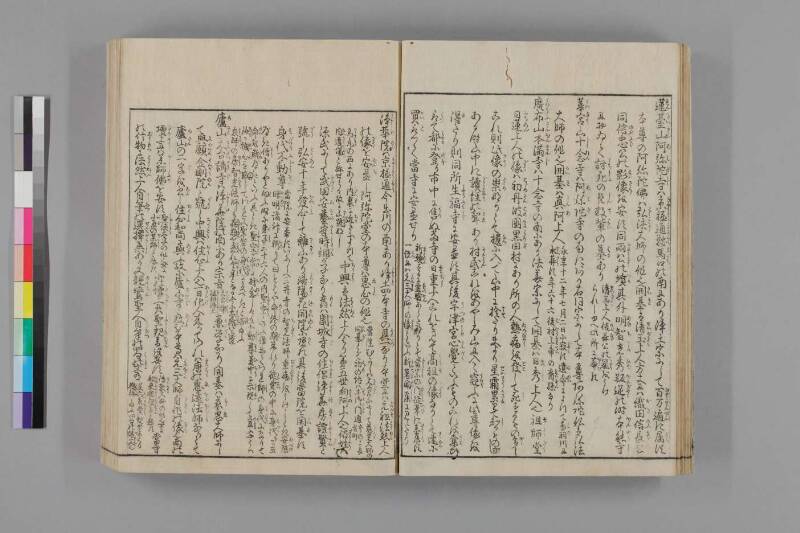
翻刻
【コマ25】
【右丁】
蓮䑓山(れんたいさん)阿弥陀寺(あみだじ)は京極通鞍馬口(きやうこくとをりくらまくち)の南にあり浄土宗にして百万遍(ひやくまんべん)に属(ぞく)す
夲尊の阿弥陀佛は弘法大師(こうばう )の作也 開基(かいき)は清玉上人(せいぎよく )方丈には織田信長公(おたのふなが )
同 信忠公(のぶたゞ )の影像(ゑいさう)を安す同 兩公(りやうこう)の墳(つか)其外 明智光秀(あけちみつひで)叛逆(ほんぎやく)の时 夲能寺(ほんのうじ)
におゐて討死(うちじに)の臣(しん)数軰(すはい)#1の墓(はか)あり《割書:清玉上人(せいきよく )信長公(のぶなが )の寵(ちやう)をうけ|られしゆへ此所に葬(ほうむ)る》
《振り仮名:𬜻宮山|くはきう 》十念寺(じうねん )は阿弥陀寺(あみだ )の南にあり右同宗にして夲尊阿弥陀仏は弘法
大師の作也 開基(かいき)は《振り仮名:眞󠄀阿上人|しんあ 》《割書:永享十二年七月二日に寂(じやく)す遺命(ゐめい)によつて鳥羽川(とば )に|水葬(すいさう)す年六十六 後村上帝(ごむらかみてい)の裔孫(ゑいそん)なり》
廣布山(くはうふさん)《振り仮名:本𣼛寺|ほんまんじ》は十念寺の南にあり法華宗にして開基は日秀上人(につしう )也 祖師堂(そしだう)
日蓮上人(にちれん )の像(ざう)は初(はじめ)丹波國(たんばのくに)黑田村(くろだ )にあり所の人 熱病(ねつびやう)を發(をこ)して死(し)するもの多(をゝ)し
これ則 此像( ざう)の祟(たゝり)なりとて𣟧(ひつ)#5に入 ̄レて山中に捨(すて)たり夫より星霜(せいさう)累(かさな)りて知(し)るものなし
ある时山中に讀經(どくきやう)の聲(こゑ)あり村民(そんみん)これをあやしみ山に入て窺(うかゞ)ふに此尊像を
得(ゑ)たり則同所 生福寺(しやうふくじ)に安置す其後 宇津宮心覺(うつのみやしんがく)といふものこれを奪(うば)ひ
取(とつ)て都(みやこ)に登(のほ)り市中に售(うり)ぬ當寺の日重上人(にちぢう )これを見て髙祖(かうそ)の像(ざう)なりとて速(すみやか)に
買取(かいと)つて當寺に安置せり《割書:祈願(きくはん)するに霊驗(れいけん)あらたなりとて當宗(たうしう)の門徒(もんと)常(つね)に参集(さんしう)す|一説( せつ)には元三大師(くはんさん )の像(ざう)ともいふ新著聞集(しんちよもんしう)に見えたり》
【左丁】
《振り仮名:浄𬜻院|じやうけゐん》は京極通今出川(きやうこくとをり )の南にあり浄土四夲寺(じやうと )の其一(そのいつ)なり夲堂には元祖(ぐはんそ)法然上人(はうねん )
の像(ざう)を安置(あんち)し阿弥陀堂の夲尊は惠心(ゑしん)の作也《割書:當院むかしは天台宗(てんだい )にして慈覚大師(じかく )の|開基(かいき)とぞ初(はじめ)の地は土御門通(つちみかど )《割書:今の上長|者町》》
《割書:烏丸(からすまる)の西にあり内裏(たいり)に近(ちか)きによつて|《振り仮名:内道塲|ないだうじやう》と称せらる故に山號(さんがう)なし》中興(ちうこう)は法然上人(はうねん )より第五丗 向阿上人(かうあ )也 俗姓(ぞくしやう)は
源氏にして武田安藝守時綱(たけだあきのかみときつな)が子なり舊(もと)は園城寺(をんじやうじ)の住侶(ぢうりよ)浄華房證賢(じやうけばうしやうけん)と
號(がう)し弘安十年(こうあん )發心(ほつしん)して離山(りさん)あり洛陽(らくやう)花開院(けかいゐん)に隠(かく)れ其後當院を開基(かいき)す
身代不動尊(みがはりふどうそん)《割書:當院に安置すいにしへ三井寺の智光法師(ちくはう )重病(ぢうびやう)をうけしとき安陪(あべの)|晴明(せいめい)諸神に祈(いの)りて曰もはや命終(めうしう)の期(ご)来れり徒㐧(とてい)#4の中に身代(みがは)りに立》
《割書:べき僧(さう)ありやと問(と)ふ时に㐧子(でし)#4三十六人の内 聖空(しやうくう)といふ僧出てわれ師(し)の身代(みかはり)になりて|命(めい)を断(たつ)べきといふ其とき聖空(しやうくう)が常(つね)に持念(ぢねん)しける不動尊( どうそん)夢中(むちう)に示現(じけん)して宣(のたま)ふやうは》
《割書:汝(なんぢ)か誠心(せいしん)を感(かん)じてわれ又聖空の身代(みかはり)に立べきと告(つげ)給ふ|忽(たちまち)師(し)の房(ぼう)智光法師(ちくはう )も病難(ひやうなん)を免(まぬか)れ全身(ぜんしん)となる今に霊驗(れいげん)いちじるし》
廬山天台講寺(ろさんてんだいかうじ)は浄華院(じやうけ )の南にあり宗㫖《割書:天台(てんだい)律(りつ)|法相(ほうさう)浄土(じやうと)》兼学(けんがく)なり開基は慈惠大師(じゑ )にし
て與願金剛院(よぐはんこんがうゐん)と號(がう)し中興(ちうこう)は住心上人(ぢうしん )也 一日(あるひ)化人(け )來つてわれは唐(もろこし)の惠遠法師(ゑをんほうし)なりとて
廬山の二字( じ)を書(しよ)し住心和尚(ぢうしん )に與(あた)ふ故に廬山寺(ろさんじ)と𨸩(あらた)む夲尊は元三大師(くはんざん )自作(じさく)の像(ざう)也南の
《振り仮名:𭐀上|だんしやう》には薬師佛(やくしぶつ)を安す《割書:聖徳太子(しやうとく )の作也丗に|《振り仮名:小屋の薬師|こ や やくし 》と称す》この壇上(たんじやう)には聖観音(しやうくはんをん)を安す《割書:傳教大師(でんきやう )の作也丗に|舩来迎観音(ふならいかうくはんをん)と称す》當寺
の什物(じうもつ)に法然上人(はうねん )自筆(しひつ)の選擇集(せんちやくしう)あり又 親鸞聖人(しんらん )自筆(じひつ)の《振り仮名:四句の文| く もん》有《割書:是《振り仮名:六角󠄀堂観丗音|ろつかくたう 》より|授與(じゆよ)し給ふ四句の偈文(けもん)#6也》
現代語訳
## 右丁
**蓮台山阿弥陀寺**は、京極通鞍馬口の南にある。浄土宗に属し、百万遍知恩寺の末寺である。本尊の阿弥陀仏は弘法大師の作である。開基は清玉上人。方丈には織田信長公・同信忠公の肖像画を安置している。また両公の墓もある。そのほか、明智光秀の叛逆の際、本能寺において討ち死にした家臣数輩の墓もある。
> 【注】清玉上人は信長公の寵愛を受けていたため、ここに葬られた。
**菓宮山十念寺**は、阿弥陀寺の南にある。同じく浄土宗で、本尊の阿弥陀仏は弘法大師の作である。開基は真阿上人。
> 【注】永享十二年(1440)七月二日に入寂。遺命によって鳥羽川に水葬された。享年六十六。後村上天皇の裔孫である。
**広布山本満寺**は、十念寺の南にある。法華宗で、開基は日秀上人である。祖師堂に安置されている日蓮上人の像は、もとは丹波国黒田村にあった。その地の人々が熱病を発して死ぬ者が多く、これはこの像の祟りであるとして、箱に入れて山中に捨てた。それより長い年月が経ち、知る者もなくなった。ある時、山中に読経の声がした。村人たちはこれを不思議に思い、山に入って探したところ、この尊像を見つけた。そこで同所の生福寺に安置した。その後、宇津宮心覚というものがこれを奪い取って都に上り、市中で売りに出した。当寺の日重上人がこれを見て、高祖(日蓮上人)の像であると認め、すぐに買い取って当寺に安置した。
> 【注】祈願すれば霊験あらたかであるとして、当宗の門徒が常に参集する。一説には元三大師の像ともいう。『新著聞集』に記されている。
---
## 左丁
**浄華院**は、京極通今出川の南にある。浄土四本寺のうちの一つである。本堂には元祖・法然上人の像を安置し、阿弥陀堂の本尊は恵心僧都の作である。
> 【注】当院はかつて天台宗で、慈覚大師の開基という。はじめの地は土御門通(現在の上長者町)烏丸の西にあった。内裏に近かったため「内道場」と称され、ゆえに山号がない。
中興は法然上人より第五世・向阿上人である。俗姓は源氏で、武田安芸守時綱の子である。もとは園城寺(三井寺)の僧侶で、浄華房証賢と号した。弘安十年(1287)に発心して離山し、洛陽の花開院に隠れ、その後当院を開基した。
**身代わり不動尊**(当院に安置):昔、三井寺の智光法師が重病にかかったとき、安倍晴明が諸神に祈って言うには、「もはや命の終わる時が来た。弟子の中に身代わりに立つべき僧がいるか」と問うた。そのとき弟子三十六人のうち、聖空という僧が出て、「私が師の身代わりとなって命を絶とう」と言った。その時、聖空が常に念じていた不動尊が夢の中に示現して言うには、「汝の誠心に感じ入り、われもまた聖空の身代わりに立とう」とお告げになった。たちまち師の智光法師も病難を免れ、全快した。今に至るまで霊験著しい。
**廬山天台講寺**は、浄華院の南にある。宗旨は天台・律・法相・浄土を兼学する。開基は慈恵大師(良源)で、与願金剛院と号した。中興は住心上人である。ある日、化人が来て「われは唐の恵遠法師である」と言い、「廬山」の二字を書して住心和尚に与えた。それゆえ廬山寺と改めた。本尊は元三大師が自ら作った像である。南の壇上には薬師仏を安置している。
> 【注】聖徳太子の作で、世に「小屋の薬師」と称する。
この壇上には聖観音も安置している。
> 【注】伝教大師の作で、世に「舟来迎観音」と称する。
当寺の什物には、法然上人自筆の『選択集』がある。また、親鸞聖人自筆の「四句の文」がある。
> 【注】これは六角堂の観世音より授与された四句の偈文である。
英語訳
## Right Folio
**Rentai-zan Amida-ji** is located to the south of Kuramaguchi on Kyōgoku-dōri. It belongs to the Jōdo (Pure Land) sect and is a sub-temple of Hyakumanben Chion-ji. The principal image of Amida Buddha enshrined here is said to be the work of Kōbō Daishi (Kūkai). The temple was founded by the Venerable Seigyoku. In the abbots' quarters, portraits of Lord Oda Nobunaga and his son Lord Nobutada are enshrined, as are the burial mounds of both lords. There are also the graves of the many retainers who died in battle at Honnō-ji during Akechi Mitsuhide's rebellion.
> [Note] Because the Venerable Seigyoku had received the favor of Lord Nobunaga, he was buried at this place.
**Kwakū-zan Jūnen-ji** is located to the south of Amida-ji. It belongs to the same Jōdo sect, and its principal image of Amida Buddha is likewise said to be the work of Kōbō Daishi. The temple was founded by the Venerable Shin'a.
> [Note] He passed away on the second day of the seventh month of Eikyō 12 (1440). In accordance with his last wishes, he was given a water burial in the Toba River. He was sixty-six years of age and was a descendant of Emperor Go-Murakami.
**Kōfu-zan Honman-ji** is located to the south of Jūnen-ji. It belongs to the Hokke (Nichiren) sect and was founded by the Venerable Nisshū. The statue of the Venerable Nichiren enshrined in the Founder's Hall was originally located in Kuroda Village in Tanba Province. Many people in that area fell ill with fever and died, and it was believed that this was due to a curse from the statue. So they placed it in a box and abandoned it in the mountains. Many years passed, and no one knew of it any longer. One day, the sound of sutra recitation was heard coming from the mountains. The villagers, finding this strange, entered the mountains to investigate and discovered the sacred statue. They then enshrined it at a local temple called Shōfuku-ji. Later, a man named Utsu no Miya Shinkaku seized the statue, brought it up to the capital, and put it up for sale in the city. The Venerable Nichijū of this temple saw it, recognized it as a statue of the founding patriarch, and promptly purchased it to enshrine at this temple.
> [Note] Believers of the sect gather here constantly, as prayers are said to bring striking miraculous benefits. According to one account, it is also said to be a statue of Ganzan Daishi. This is noted in the *Shin Chōmonjū* (New Collection of Remarkable Tales).
---
## Left Folio
**Jōke-in** is located to the south of the intersection of Kyōgoku-dōri and Imadegawa. It is one of the four head temples of the Jōdo sect. The main hall enshrines a statue of the founding patriarch, the Venerable Hōnen, and the principal image of the Amida Hall is a work by Eshin (Genshin).
> [Note] This temple originally belonged to the Tendai sect and was founded by Jikaku Daishi. Its original site was to the west of Karasuma on Tsuchimikado-dōri (present-day Kamichōja-machi). Because of its proximity to the Imperial Palace, it was called the "Inner Training Hall" (Naidōjō), and therefore has no mountain name (sangō).
The temple was revived in the middle period by the fifth generation successor to the Venerable Hōnen, the Venerable Kōa. His secular family name was Minamoto (Genji), and he was the son of Takeda Aki-no-kami Tokitsuna. Originally a monk at Onjō-ji (Mii-dera), he was known as Jōkebō Shōken. In Kōan 10 (1287), he resolved to leave the mountain and concealed himself at Kekai-in in the capital, later founding this temple.
**The Substitute Fudō (Migawari Fudō-son)** (enshrined at this temple): Long ago, when the monk Chikō Hōshi of Mii-dera fell gravely ill, Abe no Seimei prayed to the various deities and declared: "The hour of death has come. Is there among your disciples one who would stand as a substitute?" At that moment, among the thirty-six disciples, a monk named Shōkū came forward and said, "I will take my master's place and lay down my life." At that very time, the Fudō-son whom Shōkū had always venerated appeared to him in a dream, saying: "Moved by your sincerity, I myself shall stand in place of Shōkū." Immediately, the master Chikō Hōshi was freed from his illness and made a full recovery. The statue's miraculous power remains renowned to this day.
**Rozan Tendai Kōji** (Rozan-ji) is located to the south of Jōke-in. Its doctrine encompasses the combined study of Tendai, Vinaya (Ritsu), Hossō, and Pure Land teachings. It was founded by Jie Daishi (Ryōgen) and was originally named Yogan Kongō-in. The temple was revived by the Venerable Jūshin. One day, a transformed being appeared and said, "I am the Venerable Huiyuan of Tang China," and wrote the two characters for "Lushan" (廬山, *Rozan*), presenting them to Abbot Jūshin. Accordingly, the temple's name was changed to Rozan-ji. The principal image is a statue made by Ganzan Daishi himself. On the southern altar, an image of Yakushi Buddha (the Healing Buddha) is enshrined.
> [Note] It is said to be the work of Prince Shōtoku, and is commonly known as the "Koya no Yakushi" (the Yakushi of the Cottage).
On this same altar, a Shō Kannon (Āryāvalokiteśvara) is also enshrined.
> [Note] It is said to be the work of Dengyō Daishi, and is commonly known as the "Fune Raigō Kannon" (the Kannon of the Boat Welcome).
Among the temple's treasures is a handwritten copy of the *Senchakushū* (Passages on the Selection of the Nembutsu) by the Venerable Hōnen, as well as a handwritten "Four-line Verse" by Saint Shinran.
> [Note] This is a four-line verse (gemon) bestowed upon him by the Kannon of the Rokkaku-dō (Hexagonal Hall).