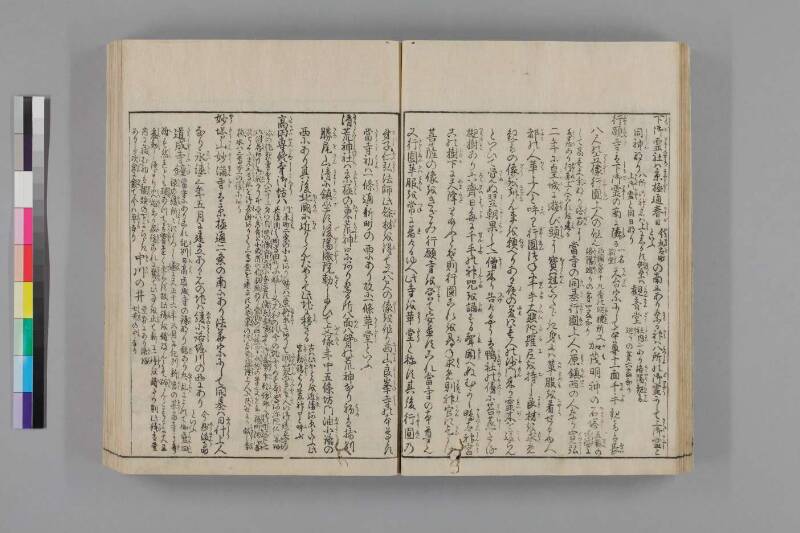
翻刻
【コマ27】
【右丁】
下御霊社(しもごりやうのやしろ)は京極通春日(きやうごく かすが )《割書:今(いま)丸太町(まるた )|といふ》の南にあり祭(まつ)る神(かみ)は八所(はつしよ)の御霊(ごりやう)にして上御霊(かみごりやう)と
同神(とうじん)なり《割書:八所の神名は上(かみ)にしるす例祭(まつり)は|上御霊(かみごりやう)と同日なり》観音堂(くはんをんどだう)《割書:社内(しやない)にあり洛陽観音(らくやうくはんをん)|巡(めぐ)りの第六番なり》
行願寺(ぎやうくはんじ)は下御霊(しもごりやう)の南に隣(とな)る《割書:一名|革堂(かうだう)》天台宗(てんだい )にして本尊 十一面千手観音( せんじゆ )は長(みたけ)
八尺の立像(りうざう)行圎上人(きやうゑん )の作也《割書:西国第十九番の巡禮所(じゆんれい )又|洛陽巡(らくやうめぐ)りの第四番なり》加茂明神(かも )の石塔(せきたう)《割書:五輪(ごりん)の|塔婆(たうば)に》
《割書:して高 壱丈余( よ)なり塔前(たうぜん)に|鳥居(とりゐ)あり行圎上人(ぎやうゑん )これを建(たつ)る》當寺の開基(かいき)行圎上人(ぎやうゑん )は原(もと)鎭西(ちんせい)の人なり寛弘(くはんこう)
二年に皇城(みやこ)に逰(あそ)び頭(かしら)に寶冠(ほうくはん)をいたゞき身(み)には革服(かはころも)を着(ちやく)せるゆへ
都の人 革上人(かく )#4と呼(よべ)り行圎(ぎやうゑん)つねに千手大悲陀羅尼(せんじゆたいひたらに)を持(じ)し良材(よきき)を求(もと)め
観音の像(ざう)を刻(きざま)ん事を願(ねが)へりある夜(よ)の夢(ゆめ)に壱人の沙門(しやもん)來り霊木(れいぼく)を送(をく)らん
といひて覚(さめ)ぬ翌朝(よくちやう)果(はた)して一僧( そう)來り告(つげ)けるやうは鴨社(かものやしろ)の傍(かたはら)に苔蒸(こけむし)たる
槻樹(つきのき)#1あり六齊日毎(ろくさいにちこと)に千手(せんじゆ)の神咒(しんじゆ)を誦(じゆ)する聲(こえ)聞(きこ)へぬむかし鴨太神宮(かものたいしんくう)
この樹下(じゆか)に天降(あまくだ)り給ふとぞ則行圎これを尋(たづ)ね求(もと)め則(すなはち)神官(しんくはん)に乞(こひ)うけ
菩薩の像をきざみ行願寺を営(いとなみ)て安置すこれ當寺の本尊也
又 行圎(ぎやうゑん)革服(かはころも)を常(つね)に着(き)けるゆへ此寺を革堂(かうたう)と称す其後 行圎(ぎやうゑん)の
【左丁】
㐧子(でし)仁弘法師(にんこう )此 餘材(よざい)を得(ゑ)て又八尺の像(ざう)を作り西山(にしやま)良峯寺(よしみねてら)の本尊とす
當寺(たうじ)初(はじめ)は一條通新町( でう )の西にあり故に一条革堂( かうだう)といふ
清荒神社(きよしくはうしんのやしろ)は京極(きやうごく)の東(ひがし)荒神口(くはんじん )#5にあり祭る所 八面八臂( めん ひ )の荒神なり初(はじめ)は攝州
勝尾山(かちをさん)清(きよし)に鎭坐(ちんざ)す後陽成院(ごやうじやう )勅(ちよく)し給ひて文禄年中(ぶんろく )五條坊門油小路( あふらこうじ)の
西にあり其後 北闕(ほくけつ)に近(ちか)からんためとて此地に移(うつ)さる《割書:古は此ほとりを近衛河原(このゑ )といふ此|宮勧請(みやくはんじやう)より荒神口と呼(よ)ぶ》
高田専修寺御坊(たかだせんじゆじごぼう)は《割書:川原町二条(かはらまち )の北にあり初 ̄メは一条栁原( やなきはら)にありて開山(かいさん)親鸞聖人(しんらんしやうにん)の御建立なり|其後間之町高田町に移(うつ)し又 元和(けんな)の頃(ころ)今の地にうつす本尊(ほんぞん)阿弥陀仏は安阿(あんあ)》
《割書:弥(み)の作親鸞聖人六十三才の自画(しぐわ)の像(ぞう)寳藏(ほうそう)に安置す洛東(らくとう)岡崎(おかさき)にて御息男(ごそくなん)印新僧都(いんしんそうづ)へ御形見( かたみ)として|御附属(こふそく)ありし御影(みゑい)なり本堂は秀吉公(ひてよし )北政所(きたまんところ)の化粧殿(けしやうてん)なり堂内(とうない)の画は狩野永德(かのゝゑいとく)の筆也又近年 桜町院(さくらまちいん)御菩(こぼ) 》
《割書:提(たい)として一光三尊仏(いつかうさんそん )を御寄附( きふ)ありて三尊堂を建立す又 慶安の頃(ころ)寺務(じむ)#2慧隆上人(けいりう )に龍女(りう )より献(たてまつり)し青(せい)|龍水(りう )は三尊堂の傍(かたはら)にあり》
妙塔山(めうたうさん)妙滿寺(めうまんじ)は京極通二条の南にあり法華宗にして開基は日什上人(につしう )
なり永徳三年(ゑいとく )五月に建立あり元の地は綾小路堀川(あやのこうし )の西にあり《割書:今 妙満寺町(めうまんじ )|といふ》
道成寺鐘(たうしやうじのかね)《割書:當寺にありこれ紀州(きしう)日高(ひたか)道成寺の鐘(かね)なり銘(めい)あり兵乱(ひやうらん)によつて伽藍(がらん)囬(くはい)|禄(ろく)の後(のち)《振り仮名:所〻|しよ〳〵》にうつし遂(つひ)に天正十六年五月に紀州 新宮(しんぐう)の某(なにがし)當寺に奇(き)》
《割書:附(ふ)す然(しか)れども瑾(さず)#3あつて音響(をんきやう)遠く至(いた)らず故 此鐘( かね)を鑄改(い )んとて碎(くだか)んとするに大に|震動(しんどう)し鐘より火焔(くはゑん)出る衆僧(しゆそう)これに驚(をどろひ)て此事を止(とゞ)て新に一鐘( しやう)を鑄(ゐ)たり則 此鐘( かね)は堂》
《割書:内に藏(をさ)む初は龍頭(りうづ)の下(しも)にひゞき|ありしが次㐧(しだい)に愈(いへ)て今は平(たいらか)なり》《振り仮名:中川の井|なかかは 》《割書:堂前にあり洛陽(らくやう)|七井(しちせい)の中(うち)なり》
【注 「高田専修寺御坊」の項は、安永九刊本では「本誓寺」】
現代語訳
## 【コマ27】
### 右丁
**下御霊社**(しもごりょうのやしろ)は、京極通と春日(現在は丸太町という)の南に位置する。祀る神は八所の御霊であり、上御霊と同じ神である(八所の神名は上御霊の項に記す。例祭は上御霊と同日である)。観音堂(社内にあり、洛陽観音巡りの第六番である)。
**行願寺**(ぎょうがんじ)は、下御霊の南に隣接する(別名・革堂〔こうどう〕)。天台宗であり、本尊の十一面千手観音は身丈八尺の立像で、行円上人の作である(西国第十九番の巡礼所、また洛陽巡りの第四番である)。加茂明神の石塔(五輪の塔婆であり、高さ一丈余り。塔の前に鳥居がある。行円上人がこれを建てた)。
当寺の開基・行円上人はもともと鎮西(九州)の人である。寛弘二年(1005年)に都へ上り、頭に宝冠をいただき、身には革の衣を着ていたため、都の人々は「革上人」と呼んだ。行円は常に千手大悲陀羅尼を持誦し、良材を求めて観音の像を刻もうと願っていた。ある夜の夢に一人の沙門(僧侶)が現れ、「霊木を送ろう」と言って目が覚めた。翌朝、果たして一人の僧が訪ねてきて告げるには、「鴨社のかたわらに苔むした槻の木があり、六斎日ごとに千手の神咒を誦する声が聞こえる。昔、鴨大神宮がこの木の下に天降り給うたという」と。そこで行円はこれを訪ね求め、神官に乞い受けて菩薩の像を刻み、行願寺を営んで安置した。これが当寺の本尊である。
また行円が革の衣を常に着ていたため、この寺を「革堂」と称する。その後、行円の
---
### 左丁
弟子・仁弘法師がその余材を得て、また八尺の像を作り、西山の良峯寺(善峯寺)の本尊とした。
当寺は初めは一条通新町の西にあった。それゆえ「一条革堂」という。
---
**清荒神社**(きよしこうじんのやしろ)は、京極の東、荒神口にある。祀るところは八面八臂の荒神である。初めは摂州(摂津国)の勝尾山(かつおさん)の清浄なる地に鎮座していた。後陽成院が勅命を下され、文禄年中(1592〜1596年)に五条坊門油小路の西に遷し、その後、北闕(禁裏)に近くあらしめんとて、この地に移された(古くはこのあたりを「近衛河原」と言った。この宮を勧請してより「荒神口」と呼ぶ)。
---
**高田専修寺御坊**(たかだせんじゅじごぼう)は、川原町二条の北にある。初めは一条柳原にあり、開山は親鸞聖人の御建立である。その後、間之町・高田町に移し、また元和の頃(1615〜1624年)に今の地へ移した。本尊の阿弥陀仏は安阿弥の作。親鸞聖人六十三歳の自画像は宝蔵に安置する。洛東岡崎にて御息男・印信僧都へ御形見としてお附属あった御影である。本堂は秀吉公の北政所(ねね)の化粧殿である。堂内の画は狩野永徳の筆である。また近年、桜町院が御菩提として一光三尊仏を御寄附あり、三尊堂を建立した。また慶安の頃(1648〜1652年)、寺務・慧隆上人に龍女より献上された青龍水は、三尊堂のかたわらにある。
---
**妙塔山妙満寺**(みょうとうざん・みょうまんじ)は、京極通二条の南にある。法華宗であり、開基は日什上人(にっしゅうしょうにん)である。永徳三年(1383年)五月に建立された。元の地は綾小路堀川の西にあった(現在「妙満寺町」という)。
**道成寺の鐘**(当寺にある。これは紀州日高の道成寺の鐘である。銘がある。兵乱によって伽藍が壊滅した後、あちこちに移され、ついに天正十六年〔1588年〕五月に紀州新宮の某がこの寺に寄附した。しかしながら疵〔きず〕があって音響が遠くに届かない。それゆえこの鐘を鋳直そうと砕こうとしたところ、大いに震動し、鐘より火焔が出た。衆僧これに驚いてこの事をとどめ、新たに一鐘を鋳た。すなわちこの鐘は堂内に収める。初めは龍頭の下に響きのひびきがあったが、次第に癒えて今は平らかである)。
**中川の井**:堂前にあり、洛陽七井のうちである。
---
【注】「高田専修寺御坊」の項は、安永九年刊本では「本誓寺」となっている。
英語訳
## [Plate 27]
### Right Folio
**Shimo-Goryō Shrine** is located to the south of Kyōgoku-dōri and Kasuga (now called Marutamachi). The deities enshrined are the eight御霊 (Goryō — vengeful spirits elevated to divine status), the same as those of Kami-Goryō Shrine. *(The names of the eight deities are recorded in the entry for Kami-Goryō Shrine. The annual festival takes place on the same day as that of Kami-Goryō Shrine.)* The Kannondō (Kannon Hall) *(located within the shrine precincts; it is the sixth stop on the Rakuyō Kannon Pilgrimage)*.
**Gyōgan-ji** is adjacent to the south of Shimo-Goryō Shrine *(also known as Kōdō — "the Leather Hall")*. It belongs to the Tendai sect, and its principal image — an eleven-faced, thousand-armed Kannon (Jūichimen Senju Kannon) — is a standing statue eight shaku in height, carved by the monk Gyōen. *(It is the nineteenth stop on the Saigoku Pilgrimage, and the fourth stop on the Rakuyō Pilgrimage.)* The stone pagoda of Kamo Myōjin *(a five-ringed stūpa standing over one jō in height; a torii stands before it, erected by the monk Gyōen)*.
The founder of this temple, the Venerable Gyōen, was originally from Chinzei (Kyushu). In the second year of Kankō (1005), he came to the capital. Because he wore a jeweled crown on his head and a garment of leather on his body, the people of the capital called him "the Leather Saint" (Kawa-Shōnin). Gyōen constantly recited the Thousand-Armed Great Compassion Dhāraṇī and earnestly sought fine timber with which to carve an image of Kannon. One night, in a dream, a monk appeared and said, "I will send you a sacred timber," and then he awoke. The following morning, sure enough, a monk came and told him: "Beside the Kamo Shrine stands an ancient zelkova tree thick with moss; on each of the six fast days, the sound of someone chanting the Thousand-Armed Dhāraṇī can be heard from it. In ancient times, the Great Deity of Kamo is said to have descended from heaven beneath this very tree." Gyōen then sought out the tree, petitioned the shrine officials to receive it, carved from it the image of the Bodhisattva, established Gyōgan-ji, and enshrined the image there. This is the principal image of this temple.
Furthermore, because Gyōen habitually wore a garment of leather, this temple came to be called *Kōdō* ("Leather Hall"). Thereafter, Gyōen's
---
### Left Folio
disciple, the priest Ninkō, obtained the remaining timber and carved another eight-shaku image, which became the principal image of Yoshimine-dera on the Western Hills.
This temple was originally located to the west of Ichijō-dōri Shinmachi. It is therefore also called "Ichijō Kōdō."
---
**Kiyoshi Kōjin Shrine** is located to the east of Kyōgoku, at Kōjinguchi. The deity enshrined there is the Kōjin with eight faces and eight arms. Originally, the deity was enshrined at Katsuo-zan in Settsu Province (present-day Hyogo Prefecture). By imperial decree of Emperor Go-Yōzei, during the Bunroku era (1592–1596), the shrine was relocated to the west of Gojōbōmon Aburakōji, and later moved to its present location in order to be near the Imperial Palace *(In ancient times, this area was called "Konoe-Kawara." After the enshrinement of this deity, it came to be called "Kōjinguchi")*.
---
**Takada Senshū-ji Gobō** is located north of Kawaramachi Nijō. It was originally at Ichijō Yanagihara, and was founded by Shinran Shōnin. It was later moved to Ainomachiand Takadamachi, and then relocated to its present site around the Genna era (1615–1624). The principal image of Amida Buddha was carved by An'ami. A self-portrait of Shinran Shōnin at age sixty-three is enshrined in the treasure repository. It is the portrait that he left as a memento for his son Inshin Sōzu in Okazaki, to the east of the capital. The main hall was formerly the cosmetics chamber (keshōden) of Kitanomandokoro (Lady Nene), consort of Toyotomi Hideyoshi. The paintings inside the hall are by Kanō Eitoku. In recent years, the Sakuramachi-in donated a Ikkō Sanzon-butsu (Amida Triad in a Single Aureole) as a memorial offering, and a Sanzon-dō (Hall of the Three Honored Ones) was constructed. Around the Keian era (1648–1652), the green dragon water (seiryūsui), presented to the head priest Keiryū Shōnin by a dragon maiden, can be found beside the Sanzon-dō.
---
**Myōtō-zan Myōman-ji** is located to the south of Kyōgoku-dōri Nijō. It belongs to the Hokke sect (Nichiren Buddhism), and its founding abbot was the Venerable Nichijū. It was established in the fifth month of the third year of Eitoku (1383). Its original location was to the west of Ayakōji Horikawa *(the area is now called "Myōmanji-chō")*.
**The Bell of Dōjō-ji**: *(This bell is at this temple. It is the bell of Dōjō-ji in Hidaka, Kishū Province (Wakayama). It bears an inscription. After the temple buildings were destroyed in the turmoil of war, the bell was moved from place to place and eventually, in the fifth month of the sixteenth year of Tenshō (1588), was donated to this temple by a certain person from Shingū in Kishū Province. However, the bell had a flaw and its sound did not carry far. When they attempted to recast it by breaking it apart, it shook violently and flames shot forth from it. The assembled monks were so startled that they abandoned the attempt and instead cast a new bell. This original bell is now kept within the hall. At first there was a crack near the dragon's head, but it gradually healed and is now smooth.)*
**The Well of Nakagawa**: Located in front of the hall; it is one of the Seven Wells of Rakuyō (the capital).
---
*Note: In the Anei 9 (1780) edition, the entry for "Takada Senshū-ji Gobō" appears instead as "Honsei-ji."*