翻刻
【コマ28】
【右丁】
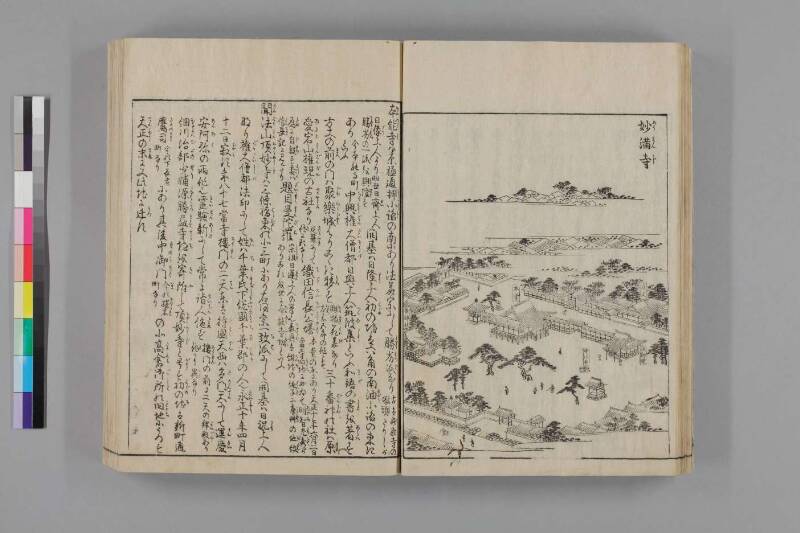
《振り仮名:妙𣼛寺|めうまんじ》
【図中】
方丈
祖師堂
中川井
本堂
番神社
【左丁】
本能寺(ほんのうじ)は京極通押小路( をしこうじ)の南にあり法華宗にして勝劣派(しやうれつば)なり《割書:古は妙顕寺の|塔頭(たうとう)たりしが》
《割書:日像上人( ざう )より四丗 日齊上人( せい )|勝劣(しやうれつ)の一派( は)を興隆(こうりう)す》開基は日隆上人( りう )初(はじめ)の地は六角󠄀の南 油小路(あぶら )の東に
あり《割書:今本能寺町|といふ》中興(ちうこう)権大僧都日與上人(ごんだいそうず )筑波集(つくばしう)といふ和語(わご)の書(しよ)を著(あらは)す
方丈の前(まへ)の門は聚樂城(じゆらくじやう)よりこゝに移(うつ)す《割書:彫物(ほりもの)花美(くはび)なり|㔫甚五郎(ひだり )の作とぞ》三十番神( ばんじん)の社は原(もと)
愛宕山権現(あたこさんごんげん)の古社(ふるやしろ)なり《割書:瓦葺(かはらふき)にして|他(た)に類なし》織田信長公塔(をだのぶながこうのたう)《割書:本堂の東にあり天正十年六月二日|當寺 旧地(きうち)におゐて明智光秀(あけちみつひて)が》
《割書:為(ため)に自殺(じさつ)す委(くはしく)は|信長記(しんちやう )に見えたり》題目曼陀羅(だいもくまんだら)《割書:宗祖(しうそ)日蓮上人( れん )の筆也 表具(ひやうぐ)は紺地(こんじ)の鈍子(どんす)に唐艸(からくさ)の地紋(ぢもん) |ありこれを丗に本能寺切(ほんのうじきれ)といふ》
聞法山(もんばうさん)頂妙寺(ちやうめうじ)は三條橋東( はしひがし)の北三町にあり右同宗 一致派( ちは)にして開基は日祝上人( しう )
なり権大僧都法印(ごんだいそうづ )にして姓(せい)は千葉氏(ちばうぢ)下総國(しもふさのくに)千葉郡(ちばこほり)の人也 永正十年(ゑいしやう )四月
十二日 寂(じやく)す年八十七當寺 樓門(ろうもん)の二天( てん)東は持國天(じこくでん)西は多門天(たもんてん)にして運慶(うんけい)
安阿弥(あんあみ)の兩作也 霊驗(れいげん)新(あらた)にして常に詣人(けいじん)絶(たゑ)ず《割書:樓門(ろうもん)の前に二天の拜殿(はいでん)あり|他(た)に異(こと)なり》
細川治部少輔源勝益(ほそかは ぢぶの せう みなもとかつます)寺地(てらち)を寄附(きふ)して頂妙寺(ちやうめうじ)と号(がう)す初(はじめ)の地(ち)は新町通
鷹司(たかつかさ)《割書:今の下長者|町なり》にあり其後 中御門(なかのみかど)《割書:今の椹木(さわらき)|町なり》の北 髙倉御所(たかくらごしよ)の旧地(きうち)にうつす
天正(てんしやう)の末(すゑ)に又此地に迁(うつ)す
現代語訳
## 【コマ28】
### 右丁
**妙満寺**(図)
【図中の説明】
- 方丈
- 祖師堂
- 中川井
- 本堂
- 番神社
---
### 左丁
**本能寺**(ほんのうじ)は、京極通押小路の南にある。法華宗にして勝劣派である(もとは妙顕寺の塔頭であったが、日像上人より四代目の日齊上人が勝劣の一派を興隆した)。開基は日隆上人である。初めの地は六角の南、油小路の東にあった(現在「本能寺町」という)。中興の権大僧都・日與上人は、『筑波集』という和語の書を著した。方丈の前の門は聚楽城よりここに移したものである(彫物が花美であり、左甚五郎の作といわれる)。三十番神の社は、もとは愛宕山権現の古社である(瓦葺きであり、他に類がない)。
**織田信長公の塔**(本堂の東にある。天正十年〔1582年〕六月二日、当寺の旧地において明智光秀のために自害した。詳しくは『信長記』に見える)。
**題目曼陀羅**(宗祖・日蓮上人の筆である。表具は紺地の緞子に唐草の地紋があり、これを世に「本能寺切」という)。
---
**聞法山頂妙寺**(もんぽうざん・ちょうみょうじ)は、三条橋東の北三町にある。上と同じ宗派・一致派であり、開基は日祝上人である。権大僧都法印であり、姓は千葉氏、下総国千葉郡の人である。永正十年(1513年)四月十二日に遷化した。享年八十七。当寺の楼門の二天は、東が持国天、西が多聞天であり、運慶と安阿弥の両者の作である。霊験あらたかであり、常に参詣者が絶えない(楼門の前に二天の拝殿があり、他に異なる作りである)。
細川治部少輔源勝益が寺地を寄附して、「頂妙寺」と号した。初めの地は新町通鷹司(現在の下長者町である)にあり、その後、中御門(現在の椹木町である)の北、高倉御所の旧地に移した。天正の末にまたこの地に遷した。
英語訳
## [Plate 28]
### Right Folio
**Myōman-ji** (illustration)
**[Labels within the illustration]**
- Hōjō (Abbot's Quarters)
- Soshidō (Founder's Hall)
- Nakagawa no I (Well of Nakagawa)
- Hondō (Main Hall)
- Banjin-sha (Shrine of the Thirty Guardian Deities)
---
### Left Folio
**Honnō-ji** is located to the south of Kyōgoku-dōri Oshikōji. It belongs to the Hokke sect (Nichiren Buddhism), specifically the Shōretsu-ha (the "Superior-Inferior" school). *(Originally it was a sub-temple [tatchū] of Myōken-ji, but four generations after the Venerable Nichizō, the Venerable Nichsei established and promoted the Shōretsu school as a distinct branch.)* The founding abbot was the Venerable Nichiryū. The temple's original location was to the east of Aburakōji, south of Rokkaku *(the area is now called "Honnōji-chō")*. The revered Gondai-sōzu Nichiyo, who brought renewed vitality to the temple, authored a Japanese-language work called *Tsukuba-shū*. The gate before the abbot's quarters was relocated here from Jurakudai Castle *(the carvings are ornate and splendid, and are said to be the work of Hidari Jingorō)*. The Shrine of the Thirty Guardian Deities was originally the old shrine of Atago-san Gongen *(it has a tiled roof and is unique in its kind)*.
**The Stupa of Lord Oda Nobunaga** *(Located to the east of the main hall. On the second day of the sixth month of the tenth year of Tenshō [June 21, 1582], he died by his own hand at the former site of this temple, at the hands of Akechi Mitsuhide. For details, see the* Shinchō-ki [Chronicle of Nobunaga]*.)*
**The Title Mandala (Daimoku Mandara)** *(This is in the hand of the founding patriarch, the Venerable Nichiren. The mounting is made of dark blue satin damask with an arabesque ground pattern, and is known in the world as the "Honnōji-gire" [Honnōji cloth].)*
---
**Monpō-zan Chōmyō-ji** is located three chō to the north of the east end of Sanjō Bridge. It belongs to the same sect but to the Itchi-ha (the "Unity" school), and its founding abbot was the Venerable Nichishū. He held the rank of Gondai-sōzu-hōin, and his family name was Chiba; he was a native of Chiba District in Shimōsa Province. He passed away on the twelfth day of the fourth month of the tenth year of Eishō (1513) at the age of eighty-seven. The two guardian deities (Niten) in the temple's two-storied gate are: Jikoku-ten (Dhṛtarāṣṭra) to the east and Tamon-ten (Vaiśravaṇa) to the west, the respective works of Unkei and An'ami. Their miraculous powers are manifest and constant, and the stream of worshippers never ceases *(In front of the two-storied gate there is a worship hall dedicated to the two deities, which is an arrangement unlike any other)*.
Hosokawa Jibushōyū Minamoto no Katsumasu donated the temple grounds, and the temple took the name "Chōmyō-ji." Its original location was on Shinmachi-dōri Takatsukasa *(now known as Shimo-Chōja-machi)*, and it was subsequently moved to the former site of the Takakura御所 to the north of Nakanomikado *(now known as Sawaraki-machi)*. At the end of the Tenshō era it was again moved to its present location.