翻刻
【コマ33】
【右丁】
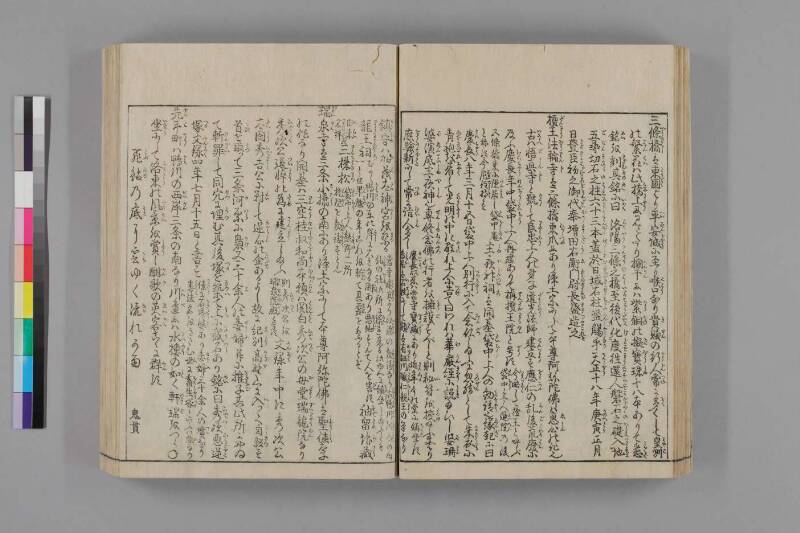
三條橋( でうのはし)は東国(とうごく)より平安城(へいあんじやう)に至る喉口(ここう)なり貴賤(きせん)の行人(かうじん)常(つね)に多(をゝ)くして皇州(みやこ)
の繁花(はんくは)は此 橋上(きやうしやう)に見えたり欄干(らんかん)には紫銅(からかね)の擬寶珠(きほうしゆ)十八本ありて悉(こと〳〵ぐ)
銘(めい)を刻(きざむ)其銘(そのめい)に曰(いはく)《振り仮名:洛陽三條之橋|らくやう さんでうのはしは》《振り仮名:至_二|いたりて》《振り仮名:後代_一|こうだいに》《振り仮名:化_二度|けどす》#1《振り仮名:往還人_一|わうくはんにんを》《振り仮名:磐石之礎|はんじやくのいしすへ》《振り仮名:入《返り点:レ》地|いりて とちに》
五尋切石之柱六十三本(ごぢんきりいしのはしらろくじうさんぼん)蓋(けだし)《振り仮名:於_二|をいて》《振り仮名:日域_一|にちいきに》 石柱濫觴乎(せきちゆうのらんしやうなり)天正十八年(てんしやう )庚寅(かのへとら)正月
日 豊臣(とよとみ)初之(はじむこれを)御代奉增田右衛門尉長盛(をんだいはうましだうゑもんのせうながもり)《振り仮名:造_レ之|つくる これを》
《振り仮名:𣞀王法輪寺|だんわうほうりんじ》は三條橋東爪( ひがしつめ)にあり浄土宗にして本尊阿弥陀佛は惠心(ゑしん)の作也
古(いにしへ)は《振り仮名:悟眞󠄀寺|ごしんじ》と號(かう)して良忠上人(りやうちう )の㐧子 道光法師(だうくはう )建立(こんりう)す《振り仮名:應仁の乱後|をうにん らんご 》荒廢(くはうはい)に
及ふ慶長年中(けいちやうねんぢう)袋中上人(たいちう )再建ありて《振り仮名:栴𣞀王院|せんだんわうゐん》と号(がう)す《割書:今(いま)略(りやく)して𣞀王と呼ぶ|袋中上人(たいちう )退院(たいゐん)の後》
《割書:五條橋東に隠居(いんきよ)し袋中庵(たいちうあん)|と称す今 尼(あま)住持(ぢうじ)す》主夜神祠(しゆやじんのやしろ)は開基 袋中上人(たいちう )の勧請(くはんしやう)也 縁起(ゑんぎ)に曰
慶長八年(けいちやう )三月十五日袋中上人 別行(べつきやう)に入て念仏(ゐんぶつ)し給ふに忽然(こつぜん)として朱衣(あかきころも)に
靑袍(あをきひたれ)を着(ちやく)して光明(くはうみやう)の中に顕(あらは)れ上人に告(つげ)て曰われは《振り仮名:𬜻嚴經|けこんきやう》に説(とき)給ひし婆珊(ばさん)
婆演底主夜神(ばゑんていしゆやしん)也 専修念佛(せんしゆねんぶつ)の行者を擁護(をうご)すべしと則 秘符(ひふ)を授(さづけ)給ふ夫より
應驗(をうけん)新(あらた)にして常(つね)に詣人(けいしん)多し《割書:慶長以来(けいてう )は當寺 寳藏(ほうざう)にあり近年(きんねん)今の堂に鎭坐(ちんざ)す|鳥居(とりい)は石柱(いしはしら)にして額(かく)は有栖川職仁親王(ありすがはよりひとしんわう)の筆なり》
【左丁】
鎭守(ちんじゆ)は加茂太神宮(かもたいじんぐう)を祭(まつ)る《割書:當寺 建立(こんりう)より以前(いぜん)の勧請(くはんじやう)なり古(いにしへ)鴨川(かもかは)洪水(くわうすい)の时|《振り仮名:糺の社|たゞす やしろ》此所に流(なか)れ來る此ゆへに鎭坐(ちんざ)し給ふとそ》
龍王祠(りうわうのやしろ)《割書:むかし鴨川(かもかは)の東の岸(きし)に大きなる渕(ふち)あり悪虵(あくじや)すんて人を害(がい)す|一とせ旱魃(かんはつ)の年これを斬(きり)て其霊( れい)を祭るとぞ》袖留地藏(そでとめぢざう)
《割書:由来(ゆらい)|不詳(つまひらかならず)》三株松(さんちうのまつ)《割書:袋中上人(たいちう )熊野二所(くまの )|権現(ごんげん)を勧請(くはんじやう)すと也》
瑞泉寺(ずいせん )は三条小橋( こはし)の南にあり浄土宗にして本尊阿弥陀佛は聖德太子(しやうとく )
の作なり開基は三空桂叔和尚(さんくうけいしゆくをしやう)本願(ほんぐわん)は関白秀次公(くはんばくひでつぐ )の母堂(ぼだう)瑞龍院(ずいりやうゐん)なり
秀次公(ひでつぐ )追悼(ついとう)の為(ため)に建立(こんりう)し給ふ《割書:則 秀次公(ひでつく )を|瑞泉院殿(すいせんゐんてん)と号す》文禄年中(ふんろく )に秀次公
太閤秀吉公(たいこうひでよし )に對(たい)して逆心(きやくしん)の企(くはだて)あるよし故に紀州(きしう)高野山(かうや )に入(い)ッて自殺(じさつ)す
首(くび)を取(とつ)ッて三条河原( かわら)に梟(かけ)又 三十余人( よ )の妾婦(せうふ)并に稚子(をさなご)其此所におゐ
て斬罪(さんざい)して同穴( けつ)に埋(うづ)む其後 塚(つか)を築(きつい)て上(うへ)に截石(きりいし)あり銘(めい)に曰 秀次悪逆(ひでつくあくぎやく)
塚(つか)文禄四年(ふんろく )七月十五日と書す《割書:傍(かたわら)に石塔婆(せきたうば)あり妾婦(せうふ)三十余人の墳(つか)なり|悉(こと〳〵く)法名をきさむ世(よ)に畜生塚(ちくしやうつか)といふは非(ひ)なり》
先斗町(ほんとてう)は《振り仮名:鴨川の西岸三条|かも せいがん 》の南なり川邊(かはべ)には水樓(すいろう)の如(こと)く軒端(のきば)をつらね
坐(いながら)にして洛東(らくとう)の風景(ふうけい)を賞(しやう)し酣歌(かんか)の英客(ゑいかく)こゝに群(くん)す
飛(とぶ)鮎(あゆ)の底(そこ)に雲(くも)ゆく流(なが)れかな
現代語訳
## 【コマ33】
### 【右丁】
**三条橋**(さんじょうのはし)は、東国より平安城(京都)へ至る咽喉口(要衝)である。貴賤を問わず行き交う人が常に多く、みやこの繁栄はこの橋の上に見ることができる。欄干には紫銅(からかね)の擬宝珠が十八本あり、すべてに銘が刻まれている。その銘に曰く、「洛陽三条の橋は、後代に至るまで往還の人を教え導かんとして、磐石の礎石を地中に五尋(約九メートル)埋め、切石の柱六十三本を建てた。これはまさに日本における石柱の濫觴(はじまり)である。天正十八年(一五九〇)庚寅正月吉日、豊臣(秀吉)の御代に、奉行・増田右衛門尉長盛がこれを造る」とある。
**栴檀王法輪寺**(せんだんおうほうりんじ)は、三条橋の東詰にある。浄土宗にして、本尊の阿弥陀仏は恵心(源信)の作である。古くは「悟真寺」と称し、良忠上人の弟子・道光法師が建立した。応仁の乱の後に荒廃した。慶長年中(一五九六〜一六一五)に袋中上人が再建し、「栴檀王院」と号した。〈今は略して「栴檀王」と呼ぶ。袋中上人が退院された後、五条橋の東に隠居して「袋中庵」と称した。現在は尼が住持を務めている。〉
**主夜神祠**(しゅやじんのやしろ)は、開基・袋中上人の勧請によるものである。縁起に曰く、慶長八年(一六〇三)三月十五日、袋中上人が別行(特別の修行)に入って念仏を唱えられたところ、忽然として朱の衣に青い直垂を着し、光明の中に現れ出て、上人に告げて言うには、「われは『華厳経』に説かれている婆珊婆演底主夜神(バサンバエンテイしゅやじん)である。専修念仏の行者を擁護すべし」と言い、すなわち秘符を授けられた。それより霊験あらたかにして、常に参詣する人が多い。〈慶長以来はこの寺の宝蔵にあったが、近年、現在の堂に鎮座された。鳥居は石柱であり、額(扁額)は有栖川職仁親王(ありすがわよりひとしんのう)の筆によるものである。〉
### 【左丁】
鎮守は加茂大神宮を祭る。〈当寺の建立より以前の勧請である。古く鴨川が洪水の時、糺の社がこの地へ流れ着いた。このゆえに鎮座されたという。〉
**龍王祠**(りゅうおうのやしろ)〈むかし鴨川の東岸に大きな淵があり、悪蛇が住んで人を害した。ある旱魃の年にこれを斬り、その霊を祭ったという。〉
**袖留地蔵**(そでとめじぞう)〈由来は詳らかでない。〉
**三株松**(さんちゅうのまつ)〈袋中上人が熊野二所権現を勧請したという。〉
---
**瑞泉寺**(ずいせんじ)は、三条小橋の南にある。浄土宗にして、本尊の阿弥陀仏は聖徳太子の作と伝える。開基は三空桂叔和尚、本願(檀那)は関白・秀次公の母堂、瑞龍院である。秀次公追悼のために建立された。〈すなわち秀次公を「瑞泉院殿」と号す。〉
文禄年中(一五九二〜一五九六)に、秀次公は太閤・秀吉公に対して逆心を企てたとして、紀州高野山に入って自殺した。首を取って三条河原に梟(さら)し、また三十余人の妾婦ならびに幼子たちをもこの地において斬罪に処し、同じ穴に埋めた。その後、塚を築き、上に切石を置いて銘に曰く、「秀次悪逆塚 文禄四年(一五九五)七月十五日」と書してある。〈傍らに石塔婆があり、妾婦三十余人の墳(つか)である。ことごとく法名を刻む。世に「畜生塚」というのは誤りである。〉
---
**先斗町**(ぽんとちょう)は、鴨川の西岸・三条の南にある。川辺には水楼のように軒端を連ね、座ながらにして洛東(鴨川の東の景色)の風景を賞で、酔いの中で謳歌する風流な客がここに集う。
> 飛ぶ鮎の底に雲ゆく流れかな
英語訳
## [Plate 33]
### Right Folio
**Sanjō Bridge** is the vital gateway from the eastern provinces to the city of Heiankyō (Kyoto). People of all classes constantly throng here, and the prosperity of the capital can be witnessed upon this bridge. The balustrades are adorned with eighteen擬宝珠 (giboshi) ornamental finials of purple copper (karakane), each engraved with an inscription. The inscription reads: "The Bridge of Sanjō in Rakuyō (Kyoto) is built to guide travelers for generations to come. Its foundations of solid rock are sunk five fathoms (approximately nine meters) into the earth, and sixty-three pillars of hewn stone have been erected. This is truly the origin of stone-pillar bridge construction in Japan. On a propitious day in the first month of Tenshō 18 (1590), the year of Kanoe-Tora, under the reign of Toyotomi (Hideyoshi), the magistrate Masuda Uemon-no-jō Nagamori constructed this bridge."
**Sendanō Hōrin-ji Temple** (Sandan'ō Hōrin-ji) stands at the eastern approach of Sanjō Bridge. It belongs to the Jōdo (Pure Land) sect, and its principal image of Amida Buddha is a work attributed to Eshin (Genshin). In ancient times it was known as "Goshin-ji," and was founded by Dōkō Hoshi, a disciple of the Venerable Ryōchū. It fell into ruin after the Ōnin War. During the Keichō era (1596–1615), the Venerable Taichū rebuilt it and renamed it "Sandanō-in." ⟨It is now commonly called simply "Sandanō." After the Venerable Taichū retired from the abbacy, he went into seclusion east of Gojō Bridge, calling his retreat "Taichū-an." Today, a nun serves as the abbess.⟩
**Shuya-jin Shrine** was established through the devotional efforts (kanjō) of the founder, the Venerable Taichū. According to the founding legend: On the fifteenth day of the third month of Keichō 8 (1603), the Venerable Taichū entered a special period of ascetic practice and was reciting the nenbutsu when, suddenly, a divine figure appeared in a blaze of light, clad in a crimson robe and a blue hitatare court garment. The figure spoke to the Venerable, saying, "I am Vasanta-vayanī, the Goddess of the Night (Shuyashin), as preached in the Avatamsaka Sutra (Kegon-kyō). I shall protect all those who practice exclusive nenbutsu," and thereupon bestowed a sacred talisman upon him. Since that time, miraculous efficacy has been freshly manifested, and worshippers constantly visit in great numbers. ⟨Since the Keichō era, the deity was enshrined in the temple's treasure repository; in recent years she has been installed in the present hall. The torii gate is of stone pillars, and the hanging board (hengaku) bears the calligraphy of Imperial Prince Arisugawa Yorihito.⟩
### Left Folio
The tutelary deity of the temple is Kamo Daijingū (the great deity of Kamo). ⟨This deity was enshrined here before the founding of the temple. It is said that in ancient times, during a great flood of the Kamo River, the Tadasu Shrine was swept to this location, and this is why the deity came to reside here.⟩
**Ryūō Shrine** (Dragon King Shrine): ⟨Long ago, there was a great deep pool on the eastern bank of the Kamo River, where a wicked serpent dwelled and harmed people. In a certain year of severe drought, the serpent was slain and its spirit enshrined.⟩
**Sodetome Jizō** (Sleeve-Catching Jizō): ⟨The origin is unknown.⟩
**Sanju no Matsu** (Three-Trunk Pine): ⟨It is said that the Venerable Taichū invited the two deities of the Kumano gongen to reside here.⟩
---
**Zuisen-ji Temple** stands to the south of Sanjō Kobashi (the small bridge of Sanjō). It belongs to the Jōdo sect, and its principal image of Amida Buddha is traditionally attributed to Prince Shōtoku. The founding abbot was the Reverend Sankū Keishuku, and the principal patron (hongan) was the mother of Regent Hidetsugu, known as Zuiryū-in. The temple was built in memory of Lord Hidetsugu. ⟨Accordingly, Lord Hidetsugu is given the posthumous title "Zuisen-in-dono."⟩
During the Bunroku era (1592–1596), Lord Hidetsugu was accused of conspiring against Taikō Hideyoshi; he entered Mount Kōya in Kishū Province and took his own life. His head was severed and displayed on the Sanjō Riverbank, and furthermore, more than thirty of his consorts and their young children were executed on this same spot and buried together in a common grave. Thereafter, a burial mound was raised, upon which a cut stone was placed bearing the inscription: "Hidetsugu Akugyaku-zuka (Mound of Hidetsugu's Treachery), Fifteenth day of the seventh month of Bunroku 4 (1595)." ⟨Beside it stands a stone stupa marking the grave of the more than thirty consorts, all of whose Buddhist posthumous names are carved upon it. The popular name "Chikushō-zuka" (Mound of the Beasts) is considered improper.⟩
---
**Pontochō** lies to the south of Sanjō on the western bank of the Kamo River. Along the riverside, the eaves of establishments line up as if forming a water pavilion, allowing guests to admire the scenery of the eastern riverscape (Rakutō) while seated, and merry revelers gather here to enjoy song and drink.
> *Tobu ayu no / soko ni kumo yuku / nagare kana*
>
> *(A leaping ayu trout — beneath it, clouds drift along in the flowing current)*