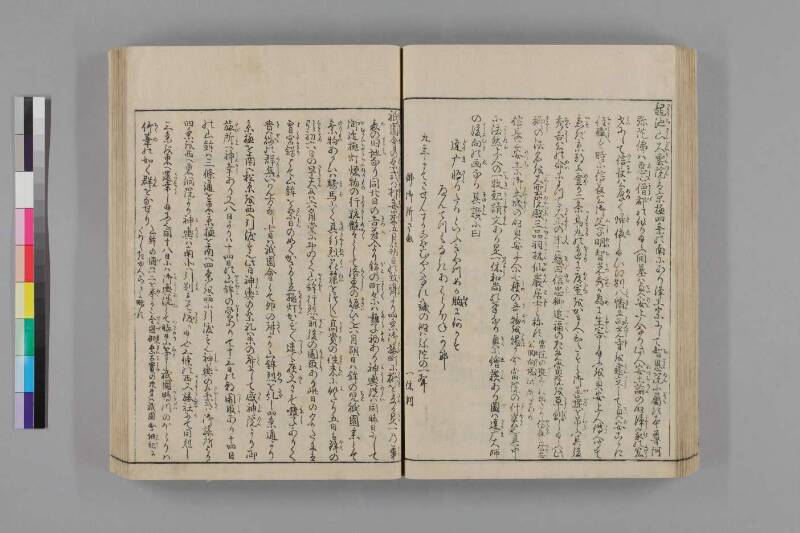
翻刻
龍池山大雲院は京極四条の南にあり浄土宗にして智恩院に属す本尊阿
弥陀佛は惠心僧都の作り給ふ開基は貞安上人なり此人安土論の時浄家の宏
才にして信長公厚く帰依し給ひ江州八幡に西光寺を建立して見安こゝに
住職を時に信長公御父子明智光秀か為に生害し給ふ貞安上人傳へ聞て
急ぎ京都に登り二条烏丸の辺に庵室をかまへひたすら御菩提を吊ふ其後
秀吉公の命によつて天正の末に織田信忠卿追福のため當院を草創し給ふ此
郷の法名を大雲院殿三品羽林仙巌居士と称す
當院の號こゝに出たり信長公信長公信忠
公回向塔此所にあり
信長公安土に御在城の時貝安上人に七種の奇物を賜る今當院の什寶也其中
に法然上人の一牧起請文あり是一休和尚の筆なり奥に繪談あり圖は達摩大師
の後向の画なり其讃に曰
達磨悟りたりといふきやつめか胸にあかす
へんてつもなきあはらほねかな
九年まてさせんするこそむやくなれ誠の時は弥陀の一聲
仏御所さま
一休判
祇園會の祭式或は抑毎歳五月朔日の致齋より四条御旅町に榊を立る是一の華
表の旧地なり同廿日の吉符入より鉾の町々には囃子初あり神輿洗は同晦日にして
御迎提灯煉物の行粧艶々として洛東の賑ひ也六月朔日は鉾の児祇園■とて
乗物あるひは騎馬にて其行烈花麗をつくし高貴の往来に似たり五日は鉾の
引初六日の早天には六角堂におゐて山鉾行烈前後の鬮取あり此日の夕かたには
宵宮錺とて山鉾を祭日の如くかさり立提灯かず〳〵連て夜更まで囃子ありて
貴賤の群集いはん方なし七日は祇園會とて卯の刻より山鉾烈を糺し四条通より
京極を南へ松原を西へ引渡す也此日神輿の祭礼は末の刻にして感神院より御
旅所へ神幸あり又八日よりは十四日の山鉾の営ありて十三日の朝鬮取あり十四日
の山鉾は三條通を東京極を南へ四条を西に引渡す也神輿の祭式は御旅所より
四条を西へ東洞院より神輿は南北は引別れて渡り給ふ三條の西又旅社にて同烈し
三条を東へ還幸し給ふ也同十八日には御輿洗とて晦日にし祇園鴨川のほとりは
竹葦の如く群をなせり
山鉾の図は一二を挙る也是全圖例祭毎に古實の次第は祇園會細紀に
くはしきゆへこゝに略す
現代語訳
## 龍池山大雲院
龍池山大雲院は京極四条の南にある。浄土宗であり、知恩院に属す。本尊の阿弥陀仏は恵心僧都の作である。開基は貞安上人である。この人は安土宗論の時、浄土宗家の傑出した才人であり、信長公が厚く帰依された。近江国八幡に西光寺を建立して貞安がここに住職を務めていた時、信長公父子が明智光秀のために殺害された。貞安上人はその報を伝え聞いて急ぎ京都に上り、二条烏丸の辺りに庵室を設け、ひたすら御菩提を弔った。その後、秀吉公の命によって天正の末に織田信忠卿の追福のために当院を草創された。信忠公の法名を「大雲院殿三品羽林仙巌居士」と称する。
(当院の号はここに由来する。信長公・信忠公の回向塔がここにある。)
信長公が安土に御在城の時、貞安上人に七種の奇物を賜った。今は当院の什宝である。その中に法然上人の一枚起請文があり、これは一休和尚の筆である。奥に絵談があり、図は達磨大師の後ろ向きの画である。その讃に曰く、
達磨が悟ったというあのやつめが 胸にあかす
へんてつもない あばら骨かな
九年まで座禅するこそ無益なれ 誠の時は弥陀の一声
仏御所様
一休(花押)
---
## 祇園会の祭式
さて、毎年五月朔日(一日)の致斎より四条御旅町に榊を立てる。これは一の鳥居(華表)の旧地である。同二十日の吉符入りより鉾の町々では囃子始めがある。神輿洗いは同月晦日(三十日)であり、御迎え提灯・練り物の行粧は艶やかで、洛東の賑わいである。六月朔日は鉾の稚児が祇園詣でとして、乗り物あるいは騎馬にてその行列は花麗を尽くし、高貴な往来のようである。五日は鉾の引き始め、六日の早朝には六角堂において山鉾行列の前後の鬮(くじ)取りがある。この日の夕方には「宵宮飾り」として山鉾を祭日のように飾り立て、提灯を数多く連ねて夜更けまで囃子があり、貴賤の群集は言いようもないほどである。七日は「祇園会」として卯の刻より山鉾の列を整え、四条通より京極を南へ、松原を西へ引き渡す。この日、神輿の祭礼は未の刻であり、感神院より御旅所へ神幸がある。また八日からは十四日の山鉾の営みがあり、十三日の朝に鬮取りがある。十四日の山鉾は三条通を東、京極を南へ、四条を西に引き渡す。神輿の祭式は御旅所より四条を西へ進み、東洞院より神輿は南北に引き別れて渡られる。三条の西の旅社にて同列となり、三条を東へ還幸される。同十八日には「御輿洗い」として(晦日と同様に行われ)、祇園・鴨川のほとりは竹葦のごとく群をなす。
山鉾の図は一、二を挙げるにとどまる。これは全図ではない。例祭ごとの古実の次第は『祇園会細記』に詳しいため、ここでは略す。
英語訳
## Ryūchisan Daiunin (Great Cloud Temple)
Ryūchisan Daiunin is located to the south of Kyōgoku Shijō. It belongs to the Jōdo sect and is affiliated with Chion'in. The principal object of worship, an Amida Buddha, was created by the priest Eshin Sōzu. The temple was founded by the priest Teian. Teian was an exceptionally gifted figure within the Jōdo sect at the time of the Azuchi Religious Debate, and Lord Nobunaga held him in great reverence. Nobunaga built Saikō-ji in Ōmi Hachiman, where Teian served as head priest. It was during this time that Lord Nobunaga and his son were killed at the hands of Akechi Mitsuhide. Upon hearing this news, the priest Teian hastened to Kyoto, established a hermitage near Nijō Karasuma, and devoted himself wholly to prayers for their souls. Thereafter, by order of Lord Hideyoshi, toward the end of the Tenshō era, the temple was founded to pray for the repose of the spirit of Lord Oda Nobutada. Nobutada's posthumous Buddhist name is given as "Daiunin-den Sanpon Urin Sengan Koji."
(The temple's name derives from this. Memorial stupas for Lord Nobunaga and Lord Nobutada are located here.)
When Lord Nobunaga was residing at Azuchi Castle, he bestowed upon the priest Teian seven rare and unusual objects. These are now among the temple's treasured possessions. Among them is the Ichimai Kishōmon (One-Page Oath) of the monk Hōnen, written in the hand of the monk Ikkyū. At the end is a pictorial account: the illustration depicts Bodhidharma seen from behind. The inscription reads:
*That fellow Dharma who claims to have attained enlightenment —*
*the chest he reveals is nothing but bare, ordinary bones.*
*To sit in meditation for nine years is in vain;*
*the true moment comes with a single utterance of Amida.*
To the honorable Butsugosho-sama
Ikkyū (seal)
---
## The Ceremony of the Gion Festival
Now, every year beginning with the period of ritual abstinence (chisai) on the first day of the fifth month, sakaki branches are erected in Shijō Otabi-chō. This is the former site of the first torii gate. From the twentieth day, the auspicious opening ceremony (kisshu-iri) is held, and in the neighborhoods of the hoko floats, the festival music (hayashi) begins. The ritual purification of the mikoshi (Omikoshi-arai) takes place on the last day of the same month, and the parade of welcoming lanterns and processional decorations is splendidly elegant, adding to the festive atmosphere of eastern Kyoto. On the first day of the sixth month, the children who ride the hoko floats make a pilgrimage to Gion — traveling by palanquin or on horseback — their procession magnificently adorned, resembling the passage of noble dignitaries. On the fifth day comes the first pulling of the hoko floats. In the early morning of the sixth day, at Rokkaku-dō, lots are drawn to determine the order of the procession of the yama and hoko floats. That same evening, in what is called the "Eve Decoration" (Yomiya-kazari), the floats are adorned as if for the festival day itself; numerous lanterns are strung in rows, music continues until late into the night, and crowds of people of all social ranks gather in indescribable numbers. On the seventh day, for the Gion Festival proper, beginning from the Hour of the Rabbit (around 5–7 a.m.), the rows of yama and hoko floats are assembled and proceed from Shijō-dōri southward along Kyōgoku, then westward along Matsubara. The festival rites of the mikoshi on this day take place at the Hour of the Sheep (around 1–3 p.m.), and the divine procession travels from Kanjin'in (Yasaka Shrine) to the Otabisho (temporary shrine). From the eighth day onward, preparations are made for the yama and hoko floats of the fourteenth, and lots are drawn on the morning of the thirteenth. On the fourteenth, the yama and hoko floats proceed eastward along Sanjō-dōri, southward along Kyōgoku, and westward along Shijō. The mikoshi ceremony proceeds westward from the Otabisho along Shijō, and from Higashinotōin the mikoshi separate and proceed in different directions — northward and southward. Reuniting at the temporary shrine to the west of Sanjō, they return in procession eastward along Sanjō. On the eighteenth of the same month, the ritual purification of the mikoshi (Omikoshi-arai) is held (similar to that on the last day of the previous month), and the banks of the Kamo River near Gion are thronged with people like reeds and bamboo.
Only one or two illustrations of the yama and hoko floats are included here. These are not complete depictions. The detailed procedures of ancient customs for each annual festival are described fully in the *Gion-e Saiki* (Detailed Record of the Gion Festival), and are therefore omitted here.