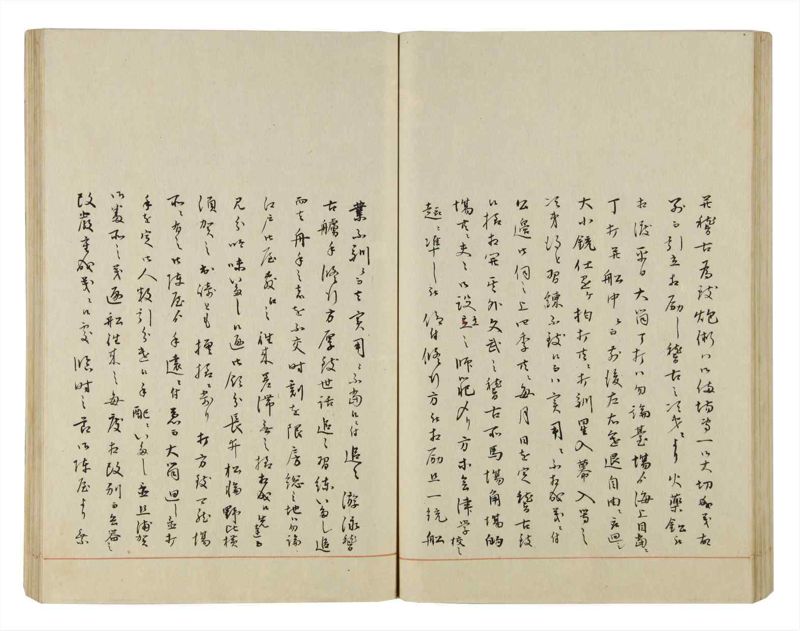
翻刻
幷稽古為致炮術ハ御備場専一御大切成義故
別而引立相励し稽古之次第ニより火薬鉛被
相渡平日大筒丁打ハ勿論台場ゟ海上目当ニ
丁打幷船中ニ而前後左右進退自由ニ取廻シ
大小銃仕懸ケ拍打共ニ打馴星入幕入等之
次第得と習練不致候而ハ実用ニ不相成義ニ付
公辺御伺之上四季共ニ毎月日を定稽古致
候様相開其外文武之稽古所馬場角場的
場共ニ夫々御設立之師範〆り方等会津学校之
趣ニ準し被 仰付修行方被相励且一統船
業不馴ニ而者実用ニ不当候ニ付追々游泳稽
古艫手修行方厚致世話追々習練いたし追
而者舟手之者を不交時刻を限房総之地ハ勿論
江戸御屋敷江之往来差滞無之様相成候先達而
見分吟味いたし候通御領分長井松輪野比横
須賀之出崎とも模様ニ寄り打方致可然場
所ニ有之御陣屋ゟ手遠ニ付兼而大筒廻し置打
手を定御人数引分遣候手配ニいたし置浦賀
御番所之義通船往来之毎度相改別而兵器之
改厳重成義ニ候処臨時之節御陣屋より乗
現代語訳
並びに稽古をさせ、砲術については御備え場において最も重要な事柄であるため、特別に奨励して稽古に励ませた。稽古の進み具合に応じて火薬・鉛を渡し、平日の大筒の丁打ちはもちろん、台場より海上を目当てに丁打ちを行い、また船中において前後左右に進退自由に取り回し、大小の銃の仕懸け・拍打をともに打ち馴らし、星入・幕入などの次第をよく習練しなければ実用に相成らぬ事柄であるため、公辺(幕府)へお伺いの上、四季を通じて毎月日を定めて稽古を致すよう申し聞かせた。その他、文武の稽古所・馬場・角場・的場をそれぞれ設立し、師範・締め方等については会津の学校の趣に準じて仰せ付けられ、修行方を励ませた。また、一統(全員)が船業に不慣れでは実用に当たらないため、追々、游泳の稽古・艫手(かじ取り・漕ぎ手)の修行に厚く世話をし、次第に習練させ、後々は舟手の者を交えずに、時刻を限って房総の地はもちろん、江戸の御屋敷への往来が差し滞りなく相成るようにした。先達って(以前に)見分・吟味いたした通り、御領分の長井・松輪・野比・横須賀の出崎(岬)はいずれも、模様(状況)次第によっては打ち方(砲撃)をするのに然るべき場所に有之(ある)が、御陣屋より手遠(遠方)であるため、かねてから大筒を廻し置き、打ち手を定め、御人数を引き分けて遣わす手配をしておいた。浦賀御番所については、通船・往来のたびに相改め(改める・検査する)、特に兵器の改めが厳重である事柄であるところ、臨時の節には御陣屋より乗り…
英語訳
...and [various martial arts] were also practiced. As for gunnery (*hōjutsu*), since it was of the utmost importance at the defensive positions (*go-sonae-ba*), it was especially encouraged and diligently practiced. In accordance with the progress of training, gunpowder and lead were distributed; and as not only regular firing of large cannon (*ōzutsu*) on the flatlands but also aimed cannon fire at sea targets from the battery emplacements (*daiba*), as well as the handling of large and small firearms — including primed shooting (*shikake*) and percussion firing (*hakuda*) — maneuvering freely fore and aft, port and starboard aboard ships, and the procedures of star-load firing (*hoshi-iri*) and curtain-load firing (*maku-iri*) and the like, would be of no practical use unless thoroughly drilled, [he] reported to the shogunate (*kōhen*) and, upon receiving approval, arranged for training sessions to be held on fixed days each month throughout all four seasons. In addition, training facilities for both civil and military arts — a riding ground (*umaba*), archery range (*kakuba*), and target range (*matoba*) — were each established, and with regard to instructors (*shihan*) and administrative management (*shimari-kata*), they were ordered in accordance with the model of the Aizu domain school (*gakkō*), and the pursuit of training was diligently promoted. Furthermore, since the entire body of personnel being unfamiliar with nautical affairs would render them unfit for practical service, he took great care in progressively arranging training in swimming (*yūei*) and the practice of stern-handling and rowing (*tomote*), so that in time they would be able to travel without impediment — without the assistance of professional boatmen (*funate no mono*) and within set hours — not only to the Bōsō region but also to and from the domain residence (*o-yashiki*) in Edo. As had previously been ascertained through inspection and investigation, the headlands (*dezaki*) of Nagai, Matsūwa, Nobi, and Yokosuka within the domain territory were all locations well-suited for gunnery depending on circumstances, but since they were remote from the garrison headquarters (*go-jin'ya*), arrangements had been made in advance to position large cannon there, assign gun crews, and dispatch a portion of the personnel accordingly. Regarding the Uraga checkpoint (*go-bansho*), every passing vessel and traveler was subject to inspection, and in particular the inspection of weapons was strictly enforced; yet in cases of emergency, [personnel would] embark from the garrison headquarters...