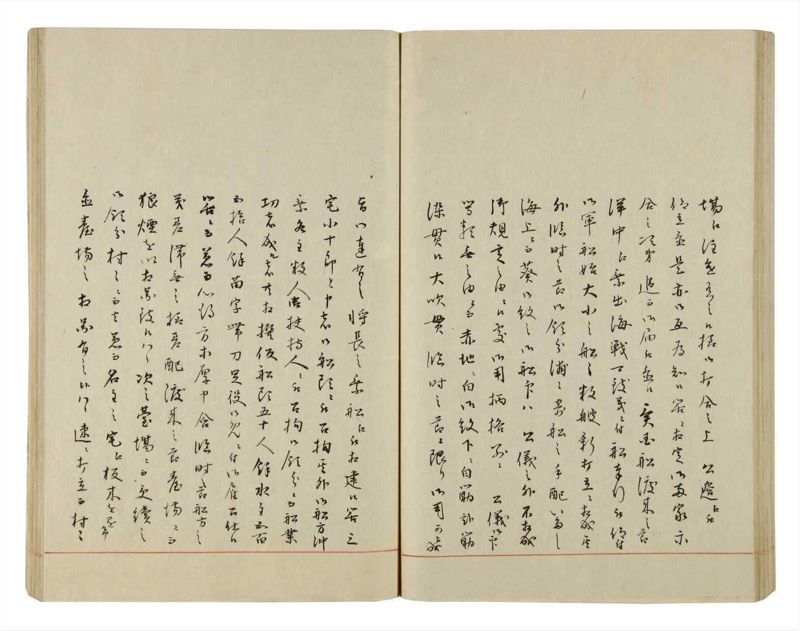
翻刻
場江注進有之候様御打合之上 公辺江被
仰立是亦御互為知候筈ニ相定御両家示
合之次第追而御届被置候異国船渡来之節
洋中江乗出海戦可致義ニ付船奉行被仰付
御軍船始大小之船々数艘新打立ニ相成其
外臨時之節御領分浦々寄船之手配いたし
海上ニ而葵御紋之御船印ハ 公儀之外不相成
御規定之由ニ候処御用柄格別ニ 公儀御印
等類無之由ニ而赤地ニ白御紋下ニ白筋弐筋
染貫候大吹貫臨時之節ニ限り御用可被成
旨御達有之将長之乗船江相建候筈三
宅小十郎と申者御船頭ニ被召抱其外御船方沖
乗水主数人御扶持人ニ被召拘#1御領分ニ而船業
功者成ル者共相撰仮船頭五十人余水主五百
五拾人余苗字帯刀足役御免ニ付御雇召仕候
筈ニ而兼而心得方等厚申含臨時之節船方之
義差滞無之様差配渡来之節台場ニ而
狼煙を以相図致候ハヽ次之台場ニ而受続之
御領分村々ニ而者兼而名主之宅江板木を懸け
置台場之相図有之候ハヽ速ニ打立而村々
現代語訳
場へ注進があるよう御打ち合わせの上、公辺(幕府)へ申し立てられ、これまた互いに知らせ合う筈に相定まり、御両家示し合わせの次第は追って御届けが置かれた。異国船が渡来する節には、洋中(海上)へ乗り出して海戦を致すべき義につき、船奉行が仰せ付けられ、御軍船をはじめ大小の船々数艘が新しく打ち立て(建造)に相成り、その外、臨時の節は御領分の浦々の寄船(集めた船)の手配をいたした。海上にて葵御紋の御船印は、公儀(幕府)の外には相成らぬ御規定の由に候ところ、御用柄(任務の性質上)格別に、公儀の御印等に類するものなしとの由にて、赤地に白御紋、下に白筋二筋を染め貫いた大吹貫(大きな吹き流し)を、臨時の節に限り御用に成さるべき旨御達しがあり、将長(将官・指揮官)の乗船へ相建てる筈とした。三宅小十郎と申す者を御船頭に召し抱え、その外御船方・沖乗り・水主(かこ)数人を御扶持人に召し拘え(召し抱え)、御領分にて船業に功者なる者共を相撰び、仮船頭五十人余・水主五百五十人余を、苗字帯刀・足役御免につき御雇いとして召し仕える筈にて、かねてより心得方等を厚く申し含め、臨時の節、船方の義が差し滞りなきよう差配した。渡来の節、台場にて狼煙をもって相図(合図)致し候はば、次の台場にて受け続け、御領分の村々においては、かねてより名主の宅へ板木を懸け置き、台場の相図があり候はば、速やかに打ち立てて村々へ…
英語訳
...reports were to be made to the [nearest] garrison, and after consultation, the matter was to be reported to the authorities (*kōbe*, i.e., the shogunate); it was likewise established that both parties would inform each other accordingly, and the details of the arrangements agreed upon between the two domains were to be duly submitted as a report. As it was determined that, upon the arrival of a foreign ship (*ikoku-sen*), [the domain forces] would sortie into open waters to engage in naval battle, a Ship Magistrate (*fune-bugyō*) was appointed; several warships (*gunsen*) as well as vessels of various sizes were newly constructed, and additionally, in the event of an emergency, arrangements were made to requisition vessels (*yosebune*) from the coastal areas of the domain's territories. Since it was stipulated by regulation that the ship's ensign (*o-fune-jirushi*) bearing the hollyhock crest (*aoi go-mon*) could only be used by the shogunate (*kōgi*), and as there was nothing equivalent to the shogunate's official insignia that was suited to the nature of this special duty, an authorization was issued to use, exclusively on emergency occasions, a large streamer (*ō-fukinuki*) dyed with a white crest on a red ground and two white horizontal stripes below it, which was to be raised on the vessel of the commanding officer (*shōchō*). A man by the name of Miyake Kojūrō was engaged as the chief helmsman (*o-sendō*), and several others serving as ship's officers (*o-funakata*), navigating officers (*okinori*), and sailors (*kako*) were taken on as stipended retainers (*o-fuchi-nin*). From among those skilled in maritime affairs (*sengyo*) within the domain's territories, selections were made, and over fifty provisional helmsmen (*kari-sendō*) and over five hundred and fifty sailors (*suifu*) were engaged as hired personnel (*o-yatoi*), with the privileges of surname (*myōji*), the right to wear swords (*taitō*), and exemption from foot-service (*ashiyaku*) granted [as incentives]. They were to be thoroughly briefed in advance on conduct and procedures, and arrangements were made to ensure that maritime affairs would proceed without hindrance in the event of an emergency. When a [foreign vessel's] arrival was signaled from a shore battery (*daiba*) by means of a signal rocket (*noroshi*), the next shore battery was to relay the signal in succession; and throughout the villages of the domain's territories, wooden clappers (*ita-gi*) were to be hung in advance at the village headmen's (*nanushi*) residences, so that upon receiving the signal from the shore battery, they would be promptly struck and [the alarm spread] from village to village...