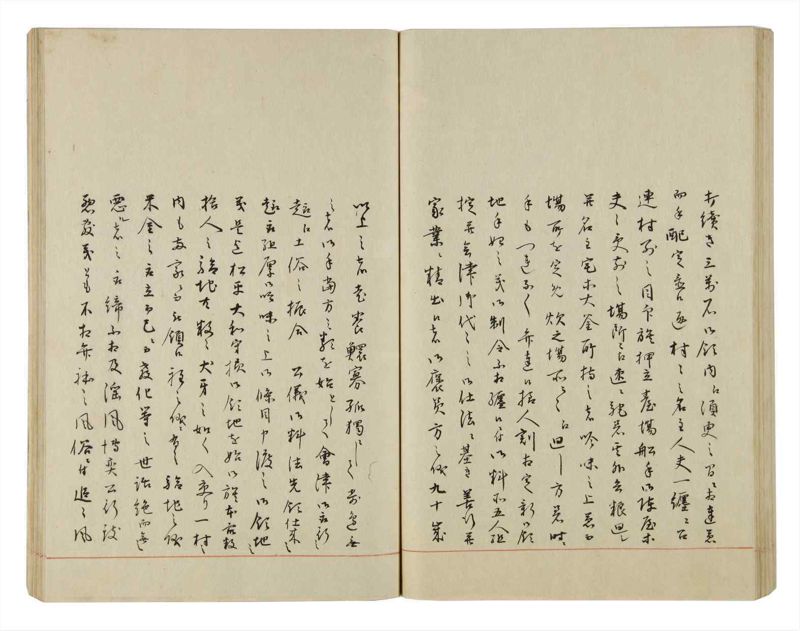
翻刻
打続き三万石御領内江須臾之間ニ相達兼
而手配定置候通村々之名主人夫一纏ニ召
連村別之目印旗押立台場船手御陣屋等
夫々受前之場所々江速ニ馳着其外兵粮廻シ
幷名主宅等大釜所持之者吟味之上兼而
場所を定め炊之場所ニ々江廻し方着時ニ
手もつれなく弁達候様人割相定新御領
地手始之義御制令不相纏候ニ付御料所五人組
掟幷会津御代々之御仕法ニ基き善行幷
家業ニ精出候者御褒美方之儀九十歳
以上之者老養鰥寡孤独ニして寄辺無
之者御手当方之類を始として会津御取行之
趣江土俗之振合 公儀御料法先領仕来之
趣取組厚御吟味之上御条目申渡之御領地之
義是迄松平大和守様御領地を始御旗本衆数
拾人之給地共数々犬牙之如く入交り一村之
内も両家ニ而被領候程之儀ニ有之給地之儀
米金之取立而已ニ而教化等之世話絶而無之
悪ル者之取締不相及淫風博奕公行致
悪敷義とも不相弁体之風俗ニ付追々風
現代語訳
打ち続き、三万石の御領内へ須臾(しゅゆ)の間に相達し、かねて手配定め置いた通り、村々の名主・人夫を一纏めに召し連れ、村別の目印旗を押し立て、台場・船手御陣屋等それぞれ受け前の場所々へ速やかに馳せ着き、その外、兵粮廻し、並びに名主宅等にて大釜所持の者を吟味の上、かねて場所を定め、炊き出しの場所々へ廻し方、着時に手もつれなく弁達(べんたつ)できるよう人割を相定めた。
新御領地における手始めの義として、御制令がいまだ整っていないにつき、御料所の五人組掟、並びに会津御代々の御仕法に基づき、善行並びに家業に精を出した者への御褒美の方法、九十歳以上の者・老養・鰥寡孤独にして寄る辺なき者への御手当の方法の類をはじめとして、会津御取り行いの趣を土俗の振り合い・公儀御料法・先領仕来りの趣と取り組み、厚く御吟味の上、御条目を申し渡した。
御領地の義、これまで松平大和守様御領地をはじめ、御旗本衆数十人の給地共が数々、犬牙の如く入り交じり、一村の内も両家にて被領(りょうされ)る程の義にこれあり、給地の義は米・金の取り立てのみにて、教化等の世話はまったくなく、悪者の取り締まりも及ばず、淫風・博奕(ばくえき)が公行(こうこう)致し、悪しき義とも弁えぬ体の風俗につき、追々風…
英語訳
...continuing without interruption, [the alarm] was to reach throughout the thirty-thousand-*koku* domain within an instant. In accordance with the arrangements established in advance, the village headmen (*nanushi*) and laborers (*ninpu*) of each village were to be assembled together, each village's identifying banner (*mejirushi-hata*) raised, and [the assembled parties] were to proceed swiftly to their respectively assigned posts at shore batteries (*daiba*), naval station headquarters (*funade go-jinya*), and other such locations. Furthermore, regarding the distribution of provisions (*hyōrō*), and after investigating those in possession of large iron cauldrons (*ōgama*) at the headmen's residences and elsewhere, locations for field kitchens (*taki-dashi*) were designated in advance, with arrangements made for rotation [of personnel and supplies] to those cooking locations so that, upon arrival, matters could be executed smoothly and without confusion, and the allocation of personnel (*hito-wari*) was accordingly established.
As the first order of business in the newly acquired domain territories, since the regulatory ordinances (*go-seirei*) had not yet been consolidated, [the administration] drew upon the five-household-group regulations (*go-ninGumi okite*) applicable to shogunate-administered lands (*go-ryōsho*) and the longstanding governance methods (*go-shihō*) of successive generations of the Aizu domain, and—combining the practices of Aizu administration with local customs (*dozoku no furiAi*), the shogunate's laws for its own territories (*kōgi go-ryōhō*), and the established customs of the previous domain lord's administration—conducted thorough deliberations and promulgated a set of regulations (*go-jōmoku*).
Regarding the domain's territories: up to this point, [the lands had been] interspersed in a complex, interlocking fashion—like the interlocking teeth of dogs (*kengyo no gotoku*)—among the territories of the Lord of Matsudaira Yamato-no-Kami and the stipend lands (*kyūchi*) of scores of shogunal bannermen (*hatamoto*), to such an extent that even within a single village, [the land] was held by two different lords. In the case of such stipend lands, [the holders] concerned themselves solely with collecting rice and monetary dues, with absolutely no attention given to moral instruction or education (*kyōka*) of the people, and no effective control over wrongdoers. Licentiousness (*in-fū*) and gambling (*bakueki*) were openly practiced, and the local customs were such that [the people] showed no discernment between right and wrong. Accordingly, as regards the [reform of] customs, [the text continues on the next page]...