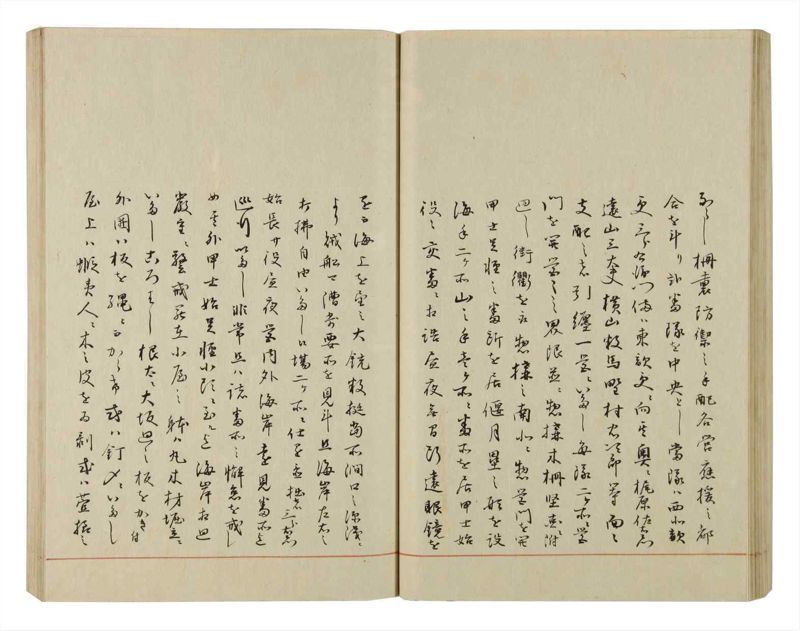
翻刻
ならし柵裏防禦之手配各営応援之都
合を計り弐番隊を中央とし当隊ハ西北敵
受三郎右衛門備ハ東敵受ニ向其奥ニ梶原佐右衛門
遠山三大夫横山数馬野村忠次郎等面々
支配之者引纏一営ニいたし毎隊二ヶ所ニ営
門を開営々之界限並ニ惣構木柵堅固ニ附
廻し街衢を取惣構之南北ニ惣営門を開
甲士足軽之番所を居偃月塁之形を設
海手二ヶ所山之手壱ヶ所と番所を居甲士始
役々交番ニ相詰昼夜無間断遠眼鏡を
懸而海上を望ミ大銃数挺当所澗口之深浅ニ
より賊船可漕寄要所を見計且海岸左右之
打払自由いたし候場二ヶ所ニ仕懸置拙者三郎右衛門
始長サ役昼夜営内外海岸遠見番所迄
巡行いたし非常且ハ諸番所之懈怠を戒し
め其外甲士始足軽小頭ニ至ル迄海岸相廻
厳重ニ警戒罷在小屋之躰ハ丸木材堀立ニ
いたしころはし根太ニ大坂廻之板をかき付
外囲ハ板を縄ニ而からけ或ハ釘〆ニいたし
屋上ハ蝦夷人ニ木之皮を為剥或ハ萱様之
現代語訳
地面を平らにし、柵裏の防御の手配、各陣営応援の都合を計り、二番隊を中央とし、当隊は西北の敵受け、三郎右衛門備えは東の敵受けに向かわせた。その奥に梶原佐右衛門、遠山三太夫、横山数馬、野村忠次郎等の面々が支配の者を引き連れて一つの陣営とし、各隊二ヶ所に陣営の門を開き、陣営々の境界線並びに総構えの木柵を堅固に取り回し、街路を設けて総構えの南北に総陣営門を開いた。
甲士足軽の番所を設置し、偃月塁の形を設け、海手二ヶ所、山の手一ヶ所に番所を設置し、甲士をはじめ役々が交代で詰め、昼夜間断なく遠眼鏡をかけて海上を望み、大砲数挺を当所の澗口の深浅により賊船が漕ぎ寄せてくる可能性のある要所を見計らい、且つ海岸左右の打ち払いを自由に行える場所二ヶ所に仕掛けておいた。拙者三郎右衛門をはじめ長や役人は昼夜陣営内外、海岸、遠見番所まで巡行し、非常時並びに諸番所の怠慢を戒め、その外甲士をはじめ足軽小頭に至るまで海岸を回り厳重に警戒していた。小屋の体裁は丸木材の堀立とし、ころばし根太に大阪廻りの板を掻き付け、外囲いは板を縄で絡げ、或いは釘締めにし、屋根の上は蝦夷人に木の皮を剥がせ、或いは萱様の
英語訳
They leveled the ground and arranged defensive preparations behind the palisades, coordinating mutual support between each camp. The second squad was positioned at the center, with our unit facing northwest to receive the enemy, and Saburouemon's unit positioned to face the enemy from the east. Behind them, Kajiwara Saemon, Toyama Sandayū, Yokoyama Kazuma, Nomura Tadajirō and others gathered their subordinates into one camp. Each unit opened camp gates at two locations, firmly constructed wooden palisades around the boundaries of each camp and the entire fortification, established streets, and opened main camp gates at the north and south of the overall structure.
They established guard posts for samurai and ashigaru (foot soldiers), constructed fortifications in the shape of a crescent moon, and set up guard posts at two locations facing the sea and one location facing the mountains. Samurai and various officials took turns on duty, continuously watching the sea through telescopes day and night. They strategically positioned several large cannons at key points where enemy ships might approach based on the depth of the inlet, and prepared two locations on the left and right of the coastline where they could freely conduct bombardments. I, Saburouemon, along with chiefs and officials, patrolled day and night from inside and outside the camp to the coastal observation posts, warning against emergencies and negligence at various guard posts. Furthermore, from samurai to ashigaru squad leaders, all strictly maintained vigilant watch while patrolling the coastline. The huts were constructed with round timber posts driven into the ground, with planks from Osaka attached to the sleepers and joists, the outer enclosures made of boards tied with rope or fastened with nails, and the roofs covered with tree bark stripped by the Ainu people, or with grass-like materials.