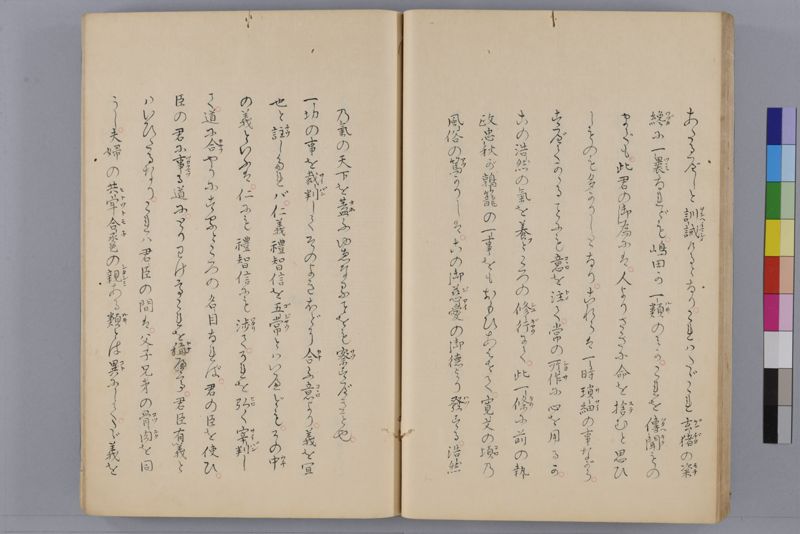
翻刻
【右丁】
あたるべしと訓(ヲシヘ)₋誡(イマシメ)けるとなり。これはたゞこれ玄(ゲン)‐猪(ヂヨ)の粢(モチ)
纔(ワヅカ)に一₋裹(ツヽミ)なれども。島田か一₋類(ルヰ)のみか。これを伝(ツタヘ)-聞(キク)もの
までも。此君の御₋為には。人よりさきに命を捨(ステ)むと思ひ
しものも多かりしとなり。これらは一⁻時 瑣(サ)⁻細(サイ)の事ながら。
すべてかゝることにも意(コヽロ)を注(トメ)て。常の所(シヨ)⁻作(サ)に心を用るか。
この浩⁻然の気を養 ̄フところの修(シユ)⁻行(ギヤウ)にて。此一⁻条(テウ)に前の⁻執
政忠₋秋が鶉‐籠の一⁻事をもおもひあはせて。寛⁻文の頃(コロ)の
風⁻俗の篤(アツ)かりしは。この御 慈(ジ)⁻愛(アイ)の御徳より発(ハツ)する。浩⁻然
【左丁】
の気の天下を蓋(オホ)ふゆゑなることをも察(サツ)すべきこと也。
一⁻功の事を裁(サイ)⁻判(バン)してそのよきほどに合(カナ)ふ意(コヽロ)より。義を宜
也と註(チウ)したれば。仁義礼智信を五(ゴ)⁻常(ジヤウ)とはいへども。その中(ウチ)
の義といふは。仁にも礼智信にも渉(ワタリ)て。それを弘(ヒロ)く宰(サイ)⁻判(バン)し
て。道に合(カナフ)やうにするところの名⁻目なれば。君の臣を使ひ。
臣の君に事(ツカフマツ)る道に。とりわけてこれを称(トナ)へて。君臣有_レ義と
はいひたるなり。これは君⁻臣の間は。父⁻子兄⁻弟の骨(コツ)⁻肉(ニク)を同
うし。夫婦の《振り仮名:共⁻牢合⁻巹|ヒトツトモネ》の親(シタシミ)ある類(ルヰ)とは異(コト)にして。たゞ義を
現代語訳
【右丁】
あたるべしと教え戒めたということである。これはただ玄猪の餅がわずかに一包みであったけれども、島田の一族だけでなく、これを伝え聞く者までも、この君のためには人より先に命を捨てようと思う者が多かったということである。これらは一時的で些細な事柄ながら、すべてこのようなことにも心を注いで、普段の行いに心を用いるかどうかが、この浩然の気を養うところの修行である。この一条に前の執政忠秋が鶉籠の一事も思い合わせて、寛文の頃の風俗が篤厚であったのは、この御慈愛の御徳から発する浩然
【左丁】
の気が天下を覆うためであることも察すべきことである。
一つの功績の事を裁判してそのよい程度に合う心から、義を「宜なり」と注釈したので、仁義礼智信を五常とはいうけれども、その中の義というのは、仁にも礼智信にも関わって、それを広く裁判して道に合うようにするところの名目なので、君が臣を使い、臣が君に仕える道に、とりわけてこれを称して「君臣有義」とは言ったのである。これは君臣の間は、父子兄弟の骨肉を同じくし、夫婦の共牢合巹の親しみある類とは異なって、ただ義を
英語訳
[Right page]
should be taught and admonished. Although this was merely one small bundle of rice cakes for the Genchō ceremony, not only Shimada's clan but even those who heard this story were moved to think they would sacrifice their lives for this lord before anyone else. Though these are temporary and trivial matters, whether one pays attention to such things and applies one's heart to everyday conduct is the practice of cultivating this grand qi (hazen no ki). Considering this point together with the former chief minister Tadaaki's incident with the quail cage, we should understand that the sincere customs of the Kanbun era arose from this grand
[Left page]
qi emanating from His Lordship's benevolent virtue that covered the entire realm.
Since "gi" (righteousness) is annotated as "appropriateness" in the sense of judging merit and fitting it to the proper degree, although we speak of benevolence, righteousness, propriety, wisdom, and trustworthiness as the Five Constants, righteousness among them relates to all of benevolence, propriety, wisdom, and trustworthiness, broadly adjudicating them to accord with the Way. Therefore, in the way that lords employ retainers and retainers serve lords, this is particularly called "righteousness between lord and retainer." This is because the relationship between lord and retainer differs from those who share the flesh and blood of father-child or elder-younger brother relationships, or the intimacy of husband and wife sharing the same dwelling and drinking cup—it is based purely on righteousness.