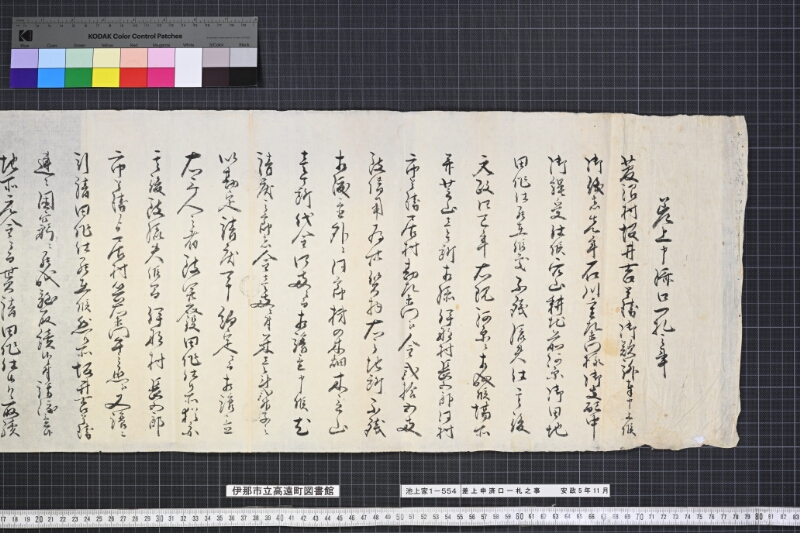
翻刻
差上申済口一札之事
菅沼村坂井吉兵衛御歎訴奉申上候
御儀者先年石川重左衛門様御支配中
御縄受仕様穴山耕地前河原御田地
田作仕罷在候処不残流失仕其後
文政四巳年右既河原ニ相成候場所
并芝山壱ヶ所相添伊那村長五郎同村
市兵衛居村勘左衛門江金弐拾五両
致借用為此質物右之地所不残
相渡置外ニ同節柿の木畑木立山
壱ヶ所代金四両ニ而相譲置申候尤
請戻之節者金壱両ニ付米壱斗弐升子之
【紙継のため、弐ヶ所割印有】
以勘定請戻可申約定ニ而相譲置
右三人之者致開発田作仕候所猶亦
其後致流失候間 伊那村長五郎
市兵衛ゟ居村兵右衛門午之丞江又譲ニ
引請田作仕罷在候然ル所坂井吉兵衛
連々困窮ニ罷成難取続候ニ付請渡置候
地所元金ニ而貰請田作仕候ハゝ取続
現代語訳
## 差出申す済口一札の事
菅沼村の坂井吉兵衛がお訴え申し上げました件について申し上げます。先年、石川重左衛門様がご支配なさっていた頃、縄受けをいたしました穴山耕地前河原のご田地において田作りをしておりましたところ、残らず流失してしまいました。その後、文政四巳年(1821年)に、すでに河原となっておりました場所、ならびに芝山一か所を添えて、伊那村の長五郎・同村の市兵衛・居村の勘左衛門へ金二十五両を借用し、この質物として右の地所を残らず引き渡しました。その他に、同じ時に柿の木畑・木立山一か所を代金四両にて譲り渡しました。なお、請け戻しの際には、金一両につき米一斗二升を子(利子)として勘定し、請け戻すべきという約定にて譲り渡しました。
右三人の者が開発して田作りをしておりましたところ、その後また流失してしまいましたので、伊那村の長五郎・市兵衛から居村の兵右衛門・午之丞へ又譲りとして引き受け、田作りをしておりました。しかるところ、坂井吉兵衛は次第に困窮に陥り、生計を立て続けることが難しくなりましたので、請け渡しておいた地所を元金にて買い戻して田作りができれば、生計を立て続けることが
英語訳
## A Settlement Document Herewith Submitted
Regarding the matter petitioned by Sakai Kichibei of Suganuma Village: In former years, during the administration of Lord Ishikawa Jūzaemon, he was registered as cultivator (*nawauké*) of paddy fields at穴山耕地前河原 (Anayama Kōchi Maekawara). However, all of these fields were washed away by flooding. Subsequently, in the 4th year of Bunsei (1821), the area that had become a riverbed, along with one plot of grassland (*shibayama*), were offered as collateral for a loan of 25 ryō of gold borrowed from Chōgorō and Ichibei of Ina Village, and Kanzaemon of the home village (居村). All of the said land was handed over as security. Additionally, at the same time, one plot of persimmon grove and wooded land was sold for 4 ryō. Furthermore, it was agreed that upon redemption, the amount would be calculated at a rate of 1 *to* 2 *shō* of rice per ryō as interest (*ko*).
The aforementioned three persons had developed and cultivated the land, but it was subsequently washed away again. Therefore, Chōgorō and Ichibei of Ina Village transferred the land to Hyōemon and Umanojō of the home village, who took it over and cultivated it. In these circumstances, Sakai Kichibei fell into increasing poverty and found it difficult to sustain his livelihood. He hoped that if he could redeem the land at the original principal amount and farm it, he would be able to sustain himself—