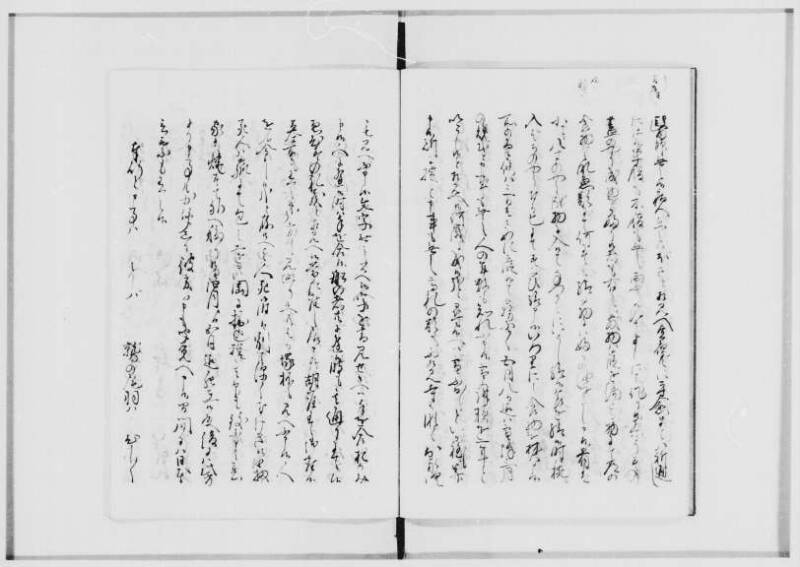
翻刻
【右丁】
醫師無之候病人在之はぼさと相見へ昼夜共に平愈まては祈通し
に仕候草履も木履も無之雨ふり候得者よしにて作り候茶うすの
蓋のやう成物をかふり候者も有之候敷物は葭を編たる物にて道の
食物はみな魚類にて何にても給る物にはふかの油をさし申候肴は
小 ̄サキ八寸のやう成物に入候て手つかみにいこし給候食を給候時は椀 ̄ニ
入ばちのやうなる匕にてすくひ給申候いろりにて食物を焚申候
所の気候は三日はさめに霞候て霧ふかく五月八日迄は雪降三月
の規式と申事も無之人の年数も知れ不申候雪の降積を一年と
いたし候と相見へ候何歳に成候哉と尋候へは雪ふる〳〵といか程も算
申候所に掟と申事も無之高札の類も不相見寺もなく出家僧
【左丁】
も見へ不申候文字無之見へ候字を書見せ候へは手を合おかみ
申候人に逢候时は手を合候舩の者共に逢候时も其通りにて候
ゑひすの礼義と相見へ候常に座し居申候は胡座にて御座候
墓所も有之候哉方〳〵見廻り候へ共はか塚抔も見へ不申候人
をも食し候哉と存候へは人死候時は別て深くなけき候由扨
死人は菰にて包之遠き岡に掘込捨其印も致不申其
家も焼すて外へ移りけり四月ゟ五月迄罷在候故へ後には此方
より申事も少は聞しり彼方ゟ申も聞覚へ申候間間には日本
言葉も有之候
奉行と申事は ミシバ 鷲の尾羽は ひし〳〵
現代語訳
【右丁】
医師がおらず、病人がいる場合は(村の)長老のような者が、昼夜を問わず平癒するまで祈り続けるのであります。草履も木履もなく、雨が降る場合はやにわに作り、茶臼の蓋のような物をかぶる者もおります。敷物は葦を編んだ物で、道中の食べ物はすべて魚類であり、何であれ食べ物には鱶(ふか)の油をかけます。肴は小さな八寸(約24cm)ほどの器のような物に入れ、手づかみで食べます。食事をする時は椀に入れ、杓子(しゃくし)のような匙ですくって食べます。囲炉裏で食べ物を煮炊きします。その土地の気候は三日おきに晴れたかと思えば霞がかかって霧が深く、五月八日までは雪が降ります。三月の節句のような行事もなく、人の年齢も分かりません。雪の降り積もりを一年として数えているように見受けられます。「何歳におなりですか」と尋ねると、「雪ふるふる」と言っていくらでも(雪の数を)数えます。掟というものもなく、高札の類も見当たらず、寺もなく、出家僧も
【左丁】
見当たりません。文字がなく、(こちらが)見えている字を書いて見せると、手を合わせて拝みます。人に会う時は手を合わせます。船の者たちに会う時も同じようにします。これがえびす(アイヌ)の礼儀と見受けられます。常に座っているのは胡坐(あぐら)で座っております。墓所もあるかと、あちこち見て回りましたが、墓塚なども見当たりません。人をも食べるのかと思いましたが、人が死んだ時は特に深く嘆き悲しむとのことです。さて、死人は菰(こも)に包んで遠い丘に掘り込んで捨て、その印もつけず、その家も焼き捨てて外へ移っていきます。四月から五月まで滞在したので、後にはこちらが言うことも少しは聞き知り、向こうが言うことも聞き覚えるようになりました。その間には日本語もあります。
奉行のことは「ミシバ」、鷲の尾羽は「ひしひし」
英語訳
【Right page】
There are no doctors, and when someone falls ill, someone who appears to be a village elder prays continuously, day and night, until recovery. They have neither sandals nor wooden clogs; when it rains, they hastily fashion something and wear objects resembling the lid of a tea-grinding mortar on their heads. Their floor coverings are woven from reeds, and their provisions along the way consist entirely of fish, to which they apply shark oil regardless of what they are eating. Side dishes are placed in small bowl-like vessels about eight sun (approximately 24 cm) in size and eaten by hand. When taking meals, food is placed in a bowl and scooped up with a ladle-like spoon. They cook food over an open hearth. The climate of the region is such that every three days the sky clears, then becomes misty and heavily fogged; snow falls until the eighth day of the fifth month. There are no ceremonies equivalent to the third-month festivals, and people's ages are unknown. It appears that they count one year by the accumulation of snow. When asked "How old are you?", they say "snow falls, snow falls" and count as many (snows) as they can. There are no laws or regulations, no public notice boards to be seen, no temples, and no Buddhist monks
【Left page】
can be seen either. They have no writing system, and when shown written characters, they clasp their hands together in reverence. When meeting people, they clasp their hands together. They do the same when meeting those on ships. This appears to be the etiquette of the Ezo (Ainu). They are always seated in a cross-legged position. I searched here and there for burial grounds but found no grave mounds. Wondering if they ate humans, I inquired, but it seems that when someone dies, they grieve especially deeply. The dead are wrapped in straw matting, buried in a hole dug in a distant hill, with no marker left, and the house of the deceased is burned and the family moves elsewhere. Having stayed from the fourth through the fifth month, we eventually came to understand a little of what they said to us and grew familiar with what they said, and among their words there are some Japanese terms.
What corresponds to "magistrate" is "Mishiba"; the tail feathers of an eagle are "hishi-hishi."