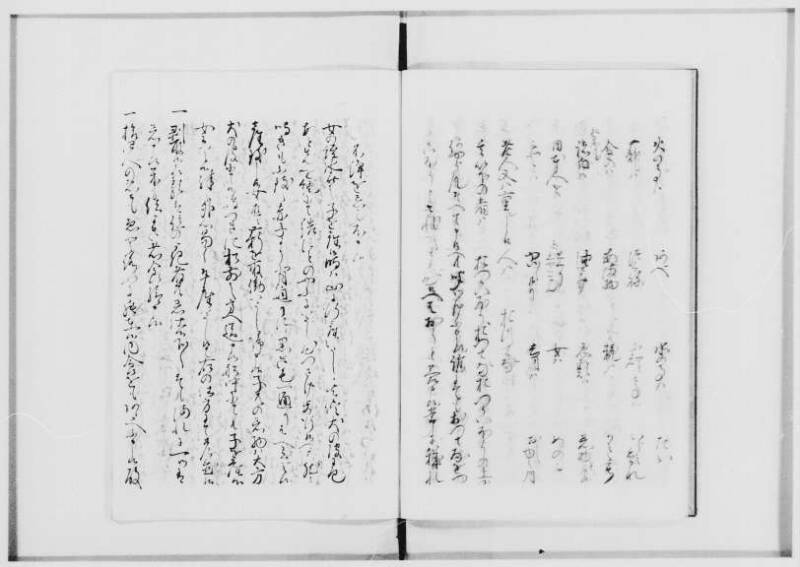
翻刻
【右丁】
火の事は あべ 水の事は たい
薪は つくね 不知と云事は いらみしかれ
食は あまも 糀は かみたち
松前ゟ渡し#1
諸白は 油さけ 衣類は 着物と申候
日本人をは 又は《割書:とくり|しやも也》 女は めのこ
忝とは やいやいけり 去月は おしゆく月
老人又は重 ̄ンし候人は おつてな
其以下の者は おつかいほう、おつてなおつかいほうの上に
何やらんそへて申候へ共聞わけ不申候誰にてもおつてなをつ
かいほうとそれ〳〵によひ候へはおうと答申候常に穢れ
【左丁】
不浄を忌え不申候
女の経水無之子を産候時は山に行産いたし其儘犬の皮に包
あと先を縄にて結つとのやふにいたしひつさけ歩行候へ共然に
鳴きも不致赤子より背通りに黒き毛一通りはへ有之候
産致し候女は直に薪を取働いたし帰申候子共の着物は大方
犬の皮にて候島つきに松前之方へ送申候船中にても子を産候
女子有之候殊之外心易く平産いたし候て右の仕方にて産置候
一剥取候衣類は位のよき者共着仕候下〳〵はもまれに一つは
着申候米も位よき者食給申候
一拾四人の者ともゑとろふに罷在候内食をもあたへ不申候故
現代語訳
【右丁】
火のことは「あべ」、水のことは「たい」
薪は「つくね」、知らないということは「いらみしかれ」
食べ物は「あまも」、糀(こうじ)は「かみたち」
(以下は)松前から渡した(伝わった)もの
諸白(もろはく)は「油さけ」、衣類は「着物」と申します。
日本人のことは「また」は(割書:「とくり」あるいは「しゃも」とも言う)、女は「めのこ」
ありがたいということは「やいやいけり」、先月は「おしゆく月」
老人または重んじられる人は「おつてな」
その以下の者は「おつかいほう」、おつてな・おつかいほうの上に
何やら添えて申しますが聞き分けられません。誰でも「おつてな」や「おつかいほう」と
それぞれに呼べば「おう」と答えます。常に穢れ・
【左丁】
不浄を忌み嫌うことがありません。
女性は月経がなく(あるいは、気にせず)、子を産む時は山へ行って出産し、そのまま犬の皮に包み、前後を縄で結んで、つとのようにして引っさげて歩きますが、それでも(赤子は)泣きもしません。赤子は背中の方に黒い毛が一筋生えています。出産した女性はすぐに薪を取りに行って働いてから帰ります。子どもの着物はほとんどが犬の皮でできています。島々から松前の方へ送る船の中でも子を産む女性がおり、格別に容易く安産して、右に述べた仕方で産んだまま(子をくくりつけて)置きます。
一、剥ぎ取った(毛皮で作った)衣類は、位の高い者たちが着ます。下々の者はまれに一つ着るくらいです。米も位の高い者が食べます。
一、十四人の者たちがえとろふ(択捉)に滞在していた間、食を与えられなかったため、
英語訳
【Right page】
Fire is called "abe"; water is called "tai."
Firewood is "tsukune"; not knowing something is "iramishikare."
Food is "amamo"; fermented rice malt (kōji) is "kamitachi."
(The following terms were) brought over from Matsumae:
Morohaku (refined sake) is called "abura-sake"; clothing is called "kimono."
Japanese people are called "mata," (marginal note: also "tokuri" or "shamo"); women are called "menoko."
Expressing gratitude is "yaiyaikeri"; last month is "oshiyuku tsuki."
An elder or a person of high standing is "ottsutena."
Those of lower standing are "ottsukaihō." Above "ottsutena" and "ottsukaihō,"
something is added, but we cannot make it out. If anyone is called "ottsutena" or "ottsukaihō"
as appropriate, they answer "ō." They do not at all avoid
【Left page】
ritual impurity or uncleanliness.
When women give birth, they go to the mountains to deliver, then immediately wrap the infant in dog skin, tie the front and back with rope to form a bundle like a tsuto (a straw-wrapped package), and carry it hanging as they walk — yet the baby does not cry. The newborn has a line of black hair running along its back. The woman who has given birth immediately goes to collect firewood, works, and then returns home. Children's clothing is mostly made of dog skin. Even on ships traveling from the islands toward Matsumae, there are women who give birth; they deliver with remarkable ease and leave the infant bundled in the manner described above.
One: Garments made from stripped pelts are worn by those of higher rank. Those of lower standing rarely wear even one. Rice is also consumed only by those of higher rank.
One: While the fourteen men were staying in Etorofu (Iturup Island), they were given no food, and therefore —