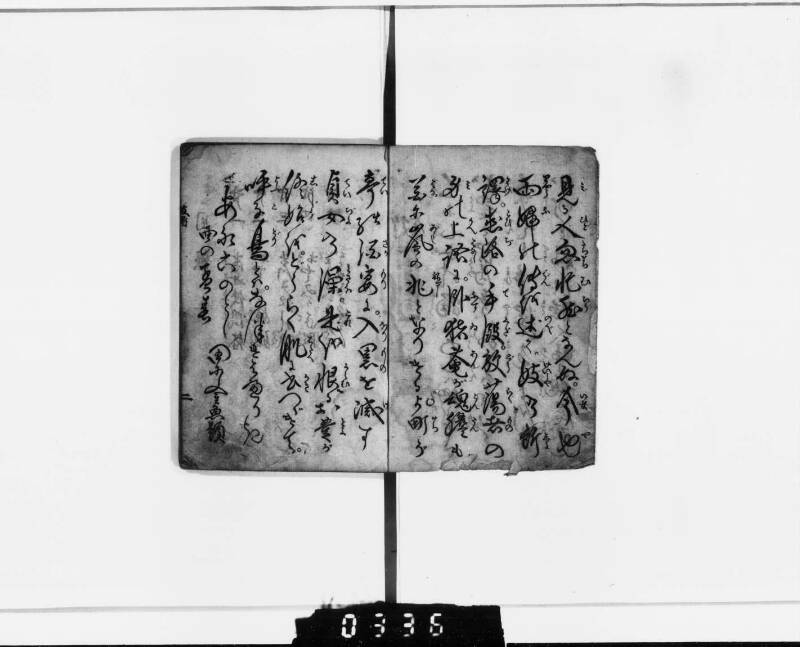
翻刻
見(み)る人(ひと)忽(たと、あと)忙然(むちう)となんぬ。今也(いまや)
両婦(りやうふ)の伝(でん)を述(のべ)て。妓(けいしや)の所(しよ)
訳(わけ)。恋路(こひぢ)の手段(てくだ)。放蕩者(どうらくもの)の
身(み)の上(うへ)語(はなし)に。臥猪菴(ふすゐあん)が魂胆(こんたん)も。
花(はな)に嵐(あらし)の兆(きざし)となりける よ(○)?町(まち)が
亭(てい)の酒宴(さかもり)に。入黒(ほりもの)を滅(け)す
貞女(ていぢよ)の操(みさほ)。是(これ)を恨(うらむ)がお豊(とよ)が
終始(しじう)を。どうらく肌(はたへ)に書(かき)つゞけて。
呼子鳥(よふこどり)とは。なつけはへりき
安永六のとしのとし田にし金魚題
酉の孟春
現代語訳
見る人は忽ち夢中になってしまう。今こそ両婦人の伝記を述べて、遊女の事情、恋路の手段、放蕩者の身の上話に、臥猪菴の魂胆も、花に嵐の兆しとなったのであろうか。町の亭での酒宴に、彫り物を消し去る貞女の操。これを恨むのがお豊の生涯を、放蕩肌に書き綴って、呼子鳥と名付けたのである。
安永六年の酉年、田にし金魚題
酉の孟春
英語訳
Those who see them are immediately entranced. Now, by recounting the biography of these two women - the circumstances of courtesans, the methods of love affairs, and the life stories of libertines - perhaps Gachoan's scheme also became an omen of storms amid flowers. At the drinking parties in town pavilions, the chastity of virtuous women that erases tattoos. Lamenting this, I have written down O-Toyo's life story in a libertine style, and named it "Yobuko-dori" (The Calling Bird).
Composed by Tanishi Kingyo in the sixth year of An'ei, Year of the Rooster
First month of spring, Year of the Rooster