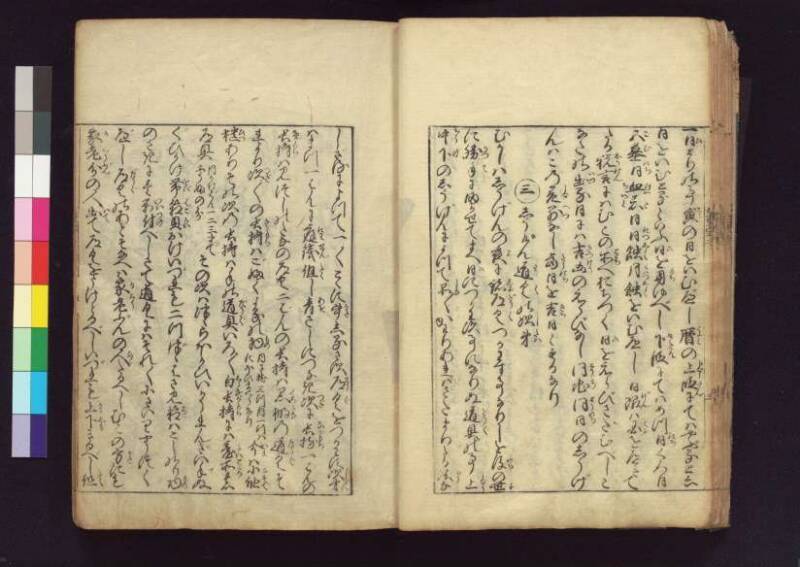
翻刻
一日(ひ)とりの事 寅(とら)の日をいむべし暦(こよみ)の上段(じやうたん)にてはやぶると云
日をいむとるといふ日(ひ)を用(もち)ゆべし下段(けたん)にてはめつ日(にち)くろ日
五墓日(こむにち)《振り仮名:血忌|けつき|ちいみ》日 日蝕(にちしよく)月蝕(くはつしよく)をいむへし日 限(げん)は国(くに)をへたて
たる祝言(しうけん)にはむこの所(ところ)へおちつく日(ひ)をえらびさだむべしこ
なたの出(いつ)る日には吉凶(きつけう)のえらびなし同地(とうち)同日(とうにち)のしうげ
んはこの差別(しやへつ)なし当日(たうにち)を吉(きち)日とするなり
㊂しうげん道具(たうく)の次第(したい)
むかしはしうげんの夜(よ)に諸道具(しよだうく)つかわす事なりしを後(のち)の世(よ)
に勝手(かつて)にまかせてまへ日(ひ)につかわす事になりぬ道具(たうく)の事 上(しやう)
中下(ちうげ)のしうげんによつて品(しな)〳〵かわりあればさたまりたる法(ほう)な
しざるによつて一〳〵こゝに書(かき)しるさす道具(とうぐ)をつかわす次第(したい)
はまつ一ばんに庭銭(にわせん)但(たゝ)し青(あを)さしにつなぎ次(つぎ)に長持(ながもち)一ばんの
長持(ながもち)はみづしのたなの道具二ばんの長持は黒棚(くろたな)の道具(だうぐ)そ
れより次(つぎ)〳〵の長持(ながもち)はごふくよるの物(もの)《割書:内に枕三つ内一つは|にほひまくらなり》今(いま)は小袖(こそで)
櫃(ひつ)ありその次の長持は手の道具(だうぐ)いろ〳〵白長持(しらながもち)には台所(たいところ)の
道具《割書:内かけばん一二三まで|ふうふの分》その次はつゝらほかひいかうれんだい手(て)ぬ
くひかけ帯箱(おびはこ)貝(かい)おけいづれも二つづゝはさみ箱(はこ)はこしのり物(もの)
のさきに壱 対(つい)付(つけ)べしさて道具にはそれ〳〵にさいりやうつく
べし道具(だうぐ)のあとそなへは家老(からう)ぶんの人(ひと)たるへしむこの方(かた)にも
家老分(からうぶん)の人 出(いて)て道具をうけとるべしいづれも上下(かみしも)きるべし但(たゝ)
現代語訳
日取りの件 寅の日を忌むべし。暦の上段で「破る」と言う日を忌み、「取る」という日を用いるべし。下段では滅日、黒日、五墓日(血忌・穢忌とも言う)、日蝕、月蝕を忌むべし。日限は、国を隔てた祝言には婿の所へ落ち着く日を選び定めるべし。こちらの出立する日には吉凶の選びなし。同地同日の祝言はこの差別なし。当日を吉日とするなり。
祝言道具の次第
昔は祝言の夜に諸道具を遣わす事であったが、後の世に勝手に任せて前日に遣わす事になった。道具の件は、上中下の祝言によって品々変わりがあるので定まった法なし。よって一々ここに書き記さず。道具を遣わす次第は、まず一番に庭銭(但し青差しに繋ぎ)、次に長持、一番の長持は水屋の棚の道具、二番の長持は黒棚の道具、それより次々の長持は呉服夜の物(内に枕三つ、内一つは匂い枕なり)、今は小袖櫃あり、その次の長持は手の道具色々、白長持には台所の道具(内掛け盤一二三まで夫婦の分)、その次は葛籠、箒、行灯台、手拭い掛け、帯箱、貝桶、いずれも二つずつ、挟み箱、輿の物の先に一対付けるべし。さて道具にはそれぞれに采配を付くべし。道具の後供えは家老分の人であるべし。婿の方にも家老分の人出でて道具を受け取るべし。いずれも上下を着るべし。但し
英語訳
Regarding the selection of dates: The day of the Tiger should be avoided. From the upper section of the calendar, days marked as "destructive" should be avoided, and days marked as "taking" should be used. From the lower section, one should avoid extinction days, black days, five-grave days (also called blood taboo or defilement taboo), solar eclipses, and lunar eclipses. For the time limit, in wedding ceremonies across different provinces, one should select and determine the day when the groom settles at his destination. For the day of departure from here, there is no need to consider good or bad fortune. For ceremonies in the same location on the same day, there is no such distinction. The actual day is considered an auspicious day.
The Order of Wedding Ceremony Items
In ancient times, various items were sent on the night of the wedding ceremony, but in later times it became customary to send them the day before according to convenience. Regarding the items, since they vary in different ways depending on upper, middle, and lower class ceremonies, there is no fixed rule. Therefore, I will not write down each one here. The order of sending items is: first, garden money (tied with blue cord), next, long storage chests. The first long chest contains items for the water room shelves, the second long chest contains items for black shelves, the subsequent chests contain textile night items (including three pillows, one of which is a scented pillow). Now there are small-sleeve chests. The next long chest contains various hand tools, white long chests contain kitchen items (including hanging trays numbered one through three for the married couple). Next are wicker baskets, brooms, lantern stands, towel hangers, obi boxes, shell buckets - all in pairs, sandwich boxes, and one pair should be attached to the front of the palanquin items. Each item should have its ceremonial baton attached. The rear attendants for the items should be people of senior retainer rank. On the groom's side, people of senior retainer rank should also come out to receive the items. All should wear formal court dress. However,