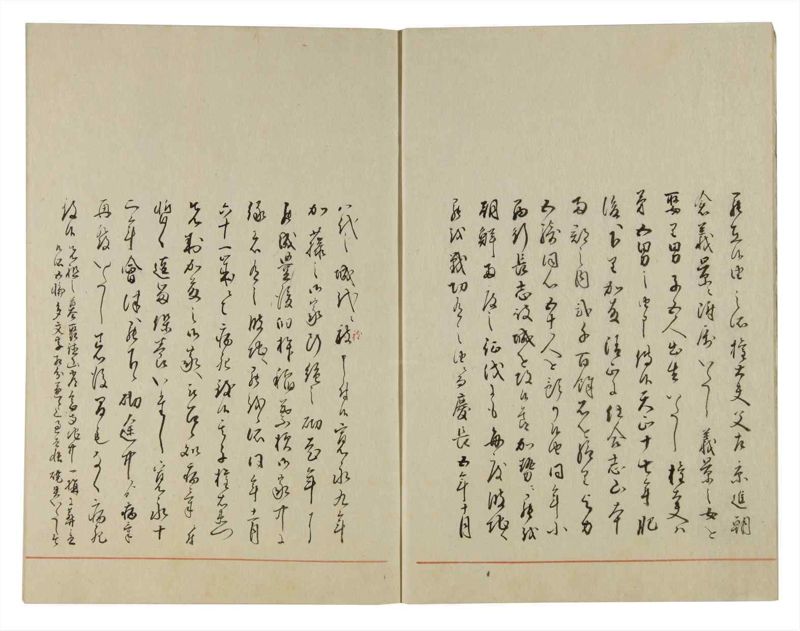
翻刻
【右丁】
罷在候由之所権大夫父左京進朝
倉義景ニ附属いたし義景之女を
娶り男子五人出生いたし権大夫ハ
第五男之由申伝候天正十七年肥
後へ下り加藤清正に仕《場所:合志》《場所:山本》
両郡之内弐千百余石を給り与力
五騎同心五十人を預り候由同年小
西行長志岐城を攻候節加勢ニ罷越
朝鮮両度之征伐にも毎度彼地へ
罷越戦功有之由ニ而慶長五年十月
【左丁】
八代之城代ニ被申付候寛永九年
加藤之御家断絶之砌老年に
罷成豊後臼杵稲葉様御家中に
縁者有之彼地へ罷越候所同年十一月
六十一歳ニて病死致候其子権右衛門
先判加藤之御家へ被召候処病気ニ付
暫く逗留保養いたし寛永十
二年会津へ罷下候砌途中ゟ病気
再発いたし着後間もなく病死
致候《割書:先祖之墓聚徳山常念寺地中一構所構ニ葬置|候所五輪多文字相分兼候上過去帳焼失いたし今》
現代語訳
【右丁】
(越前国志津山本之郷に)おられたとのことで、権大夫の父・左京進は朝倉義景に仕え、義景の娘を娶り、男子五人をもうけた。権大夫はその第五男であると伝えられている。天正十七年(1589)に肥後へ下り、加藤清正に仕え、合志・山本両郡の内で二千百余石を給与され、与力五騎・同心五十人を預かったとのことである。同年、小西行長が志岐城を攻めた際に加勢として出陣し、朝鮮への二度の出兵にもその都度現地へ赴き、戦功があったとのことで、慶長五年(1600)十月、
【左丁】
八代の城代に任じられた。寛永九年(1632)に加藤家が御家断絶となった折、老齢となっていたため、豊後臼杵の稲葉様の御家中に縁者がおり、そちらへ赴いたところ、同年十一月に六十一歳にて病死した。その子・権右衛門は、以前に加藤家に召し抱えられていたが、病気のため、しばらく逗留して療養し、寛永十二年(1635)に会津へ下る途中から病気が再発し、到着後まもなく病死した。
《割書:先祖の墓は聚徳山常念寺の境内の一区画に葬られているが、五輪塔の文字が判読しがたく、また過去帳も焼失してしまい、今は》
英語訳
【Right folio】
(He had been residing in Shizuyama-Moto-no-Sato in Echizen Province,) and it is said that Gondayū's father, Sakyōnoshin, served Asakura Yoshikage, married Yoshikage's daughter, and had five sons. Gondayū is said to have been the fifth son. In the seventeenth year of Tenshō (1589), he went down to Higo Province and entered the service of Katō Kiyomasa, receiving over 2,100 koku within the two districts of Kōshi and Yamamoto, and was entrusted with five yoriki cavalry and fifty dōshin foot soldiers. In the same year, when Konishi Yukinaga attacked Shiki Castle, he went to provide reinforcements. He also participated in both Korean campaigns, going to the peninsula on each occasion and distinguished himself in battle. In the tenth month of the fifth year of Keichō (1600),
【Left folio】
he was appointed as the castellan (jōdai) of Yatsushiro. In the ninth year of Kan'ei (1632), when the Katō clan was dissolved, he had grown old, and as he had relatives among the retainers of the Inaba clan of Usuki in Bungo Province, he traveled there, but died of illness in the eleventh month of that same year at the age of sixty-one. His son, Gon'emon, had previously been summoned into service by the Katō clan, but due to illness, he stayed for a while to recuperate. When he set out to travel down to Aizu in the twelfth year of Kan'ei (1635), his illness recurred along the way, and he died of illness shortly after arriving.
*Marginal note: The ancestors' graves are interred within a single enclosure in the grounds of Jūtokuzan Jōnenji temple, but the inscriptions on the five-ringed stone pagodas (gorintō) are difficult to read, and furthermore the death registers (kakochō) were lost in a fire, so now [the details are unclear]...