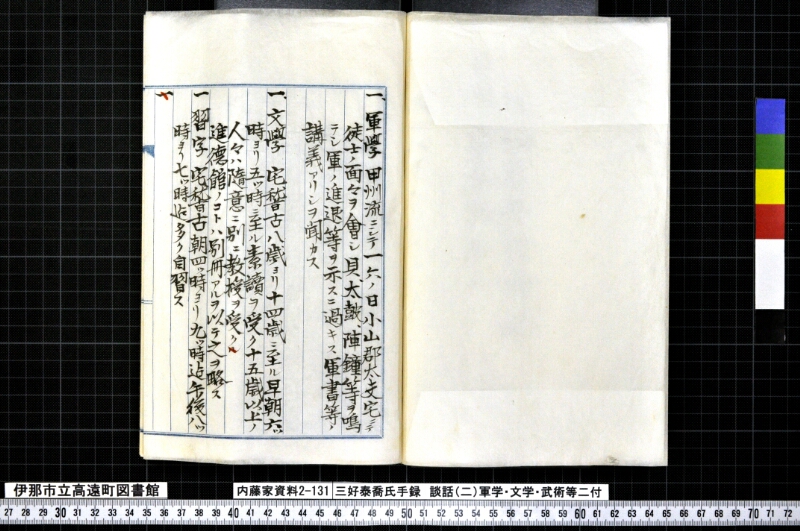
翻刻
【左丁】
一、軍学 甲州流ニシテ一六ノ日小山太夫宅ニテ
徒士ノ面々ヲ会シ貝、太鼓、陣鐘等ヲ鳴
ラシ軍ノ進退等ヲ示スニ過キス軍書等ノ
講義アリシヲ聞カス
一、文学 宅稽古八歳ヨリ十四歳ニ至ル早朝六ツ
時ヨリ五ツ時ニ至ル素読ヲ受ク十五歳以上ノ
人々ハ随意ニ別ニ教授ヲ受ク
進徳館ノコトハ別冊アルヲ以テ之ヲ略ス
一 習字 宅稽古朝四ツ時ヨリ九ツ時迄午後八ツ
時ヨリ七ツ時迄多ク自習ス
現代語訳
【左丁】
一、軍学 甲州流であって、一と六の日に小山太夫宅にて
徒士の面々を集め、貝、太鼓、陣鐘等を鳴
らし軍の進退等を示すに過ぎず。軍書等の
講義があったとは聞かない。
一、文学 家庭での稽古は八歳より十四歳に至るまで、早朝六つ
時より五つ時に至るまで素読を受ける。十五歳以上の
人々は随意に別に教授を受ける。
進徳館のことは別冊があるので、これを省略する。
一、習字 家庭での稽古は朝四つ時より九つ時まで、午後八つ
時より七つ時まで、多くは自習する。
英語訳
[Left page]
1. Military Science: Following the Kōshū school, on the 1st and 6th days [of each ten-day period], at the residence of Koyama Dayū,
gathering the ashigaru (foot soldiers), they would sound
conch shells, drums, and battle gongs to demonstrate
military advances and retreats, nothing more. I have not heard of any
lectures on military treatises.
1. Literature: Home instruction from age eight to fourteen, receiving
reading practice from early morning at the sixth hour
until the fifth hour. People fifteen years and older
received separate instruction as desired.
Regarding Shintoku-kan, there is a separate volume, so this is omitted.
1. Calligraphy: Home practice from the fourth hour in the morning until the ninth hour, and in the afternoon from the eighth
hour until the seventh hour, mostly self-study.