翻刻
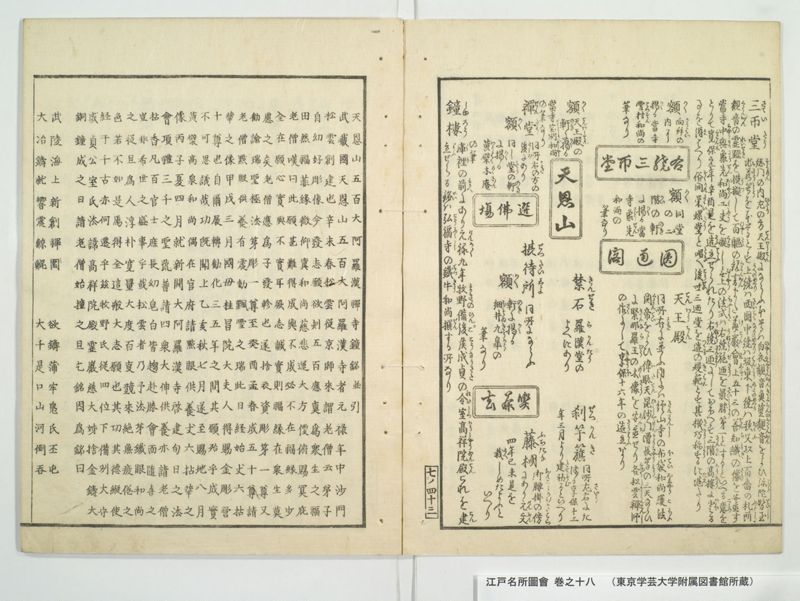
三匝堂(さゝいたう) 《割書:総門(そうもん)の内 左(ひたり)の方 天王殿(てんわうてん)にならふ本尊は白衣観音(ひやくえくわんおん)魚藍観音(きよらんのくわんおん)をよひ弥陀(みた)勢至(せいし)|地蔵(ちさう)等(とう)を本尊とす上繞(うへのめくり)は西国(さいこく)中繞(なかのめくり)は坂東(はんとう)下繞(したのめくり)は秩父(ちゝふ)以上百番の札所(ふたしよ)》
《割書:観音(くわんおん)の霊跡(れいせき)を模擬(うつ)して百躯(ひやくたい)の観音(くわんおん)また華厳会上(けこんゑしやう)五十三の善知識(せんちしき)の像(さう)を安置す|当寺 中興(ちゆうこう)象先和尚(さうせんおしやう)工夫(くふう)を凝(こら)し無上(むしやう)の法式(ほふしき)は右繞施匝(うねうせさう)を最勝(さいしよう)第一とするといへる意(こゝろ)を》
《割書:とりて寛保(くわんほ)元年辛酉是を造立(さふりふ)せられたり右繞三匝(うねうさんさう)にしておほえす三階(さんかい)の高楼(かうろう)に登(のほ)る|事を得はへり俗間(そくかん)栄螺堂(さゝいたう)と唱(とな)へ後世(こうせい)三匝堂を造(つくる)の規範(きはん)とす其 機功(きかう)称(しよう)するに堪(たえ)たり》
【原典中の帀、迊はともに匝の異体字】
【挿し絵1】
右
繞
三
匝
堂
額(かく) 《割書:向拝(かうはい)の|内に》
《割書:掲(かく)る当寺|雪村(せつそん)和尚の》
《割書:筆なり|》
【挿し絵2】
圓
通
閣
額(かく) 《割書:同堂|の二(に)》
《割書:階(かい)の軒(のき)|に掲(かく)る当》
《割書:寺 象先(さうせん)|和尚の》
《割書: 筆なり|》
天王殿(てんわうてん)
《割書:同所 右(みき)に並ぶ内には径山寺(きんさんし)の布袋和尚(ほていおしやう)護法(こほふ)|関帝(くわんてい)をよひ韋駄天(いたてん)毘沙門(ひしやもん)増長(そうちやう)等(とう)の三天ならひ》
《割書:に緊那羅王(きんならわう)の木像(もくさう)を安置(あんち)せり各(おの〳〵)松雲禅師(しよううんせんし)|の作(さく)にして享保(きやうほ)十六年の造立(さうりふ)なり》
【挿し絵3】
天恩山
額(かく) 《割書:天王殿(てんわうてん)の|軒に掲(かく)る》
《割書:当寺 宝州和尚(はうしうおしやう)|の筆なり》
禁石(きんせき) 《割書:羅漢同(らかんたう)の|まへにあり》
刹竿籏(せつかんき) 《割書:同所 左右(さいう)にた|つる享保十三》
《割書:年三月より建初(たてそむ)るといへり|》
禅堂(せんたう) 《割書:同所 右(みき)の方の|後(うしろ)にあり》
【挿し絵4】
選
仏
場
額(かく) 《割書:同し堂(たう)の軒(のき)|に掲(かく)る》
《割書:黄檗木庵(わうはくもくあん)|の筆》
接待所(せつたいしよ) 《割書:どうしょにならふ|》
【挿し絵5】
喫
茶
玄【?】
額(かく) 《割書:軒(のき)に掲(かく)る|細井九皐(ほそゐきうかう)の》
《割書: 筆なり|》
藤棚(ふちたな) 《割書:御腰掛(おんこしかけ)の傍(かたはら)|にあり元文(けんふん)》
《割書:四年己未是を| 栽(うへ)しめたまふと》
《割書: いへり|》
鐘楼(しゆろう) 《割書:庫裡(くり)の前(まへ)にあり元禄(けんろく)九年 牧野備後侯成貞(まきのひんごこうなりさた)の令室(れいしつ)高祥院殿(かうしやうゐんてん)これを建(こん)|立(りふ)せらる銘(めい)は弘福寺(こうふくし)の鉄牛(てつきう)和尚 撰(せん)する所なり》
天恩山五百大阿羅漢禅寺鐘銘並引
武蔵国天恩山五百大阿羅漢寺者元禄年中沙門
松雲創建也辛未春松雲従京師来謂老僧云弟子
自幼好彫像今発志願欲刻五百応真為衆生之福
田然福韮縁微仰冀和尚慈悲運大方便#1俯賜冥庇
老僧嘆曰此願甚難得成与不成必不在福縁多少
全在願心実与不実耳厥志誠実則福縁在衆生莫
慮之矣老僧応為子発軫成遂捨衣資彫第一尊又
勧諭瑞聖極法第彫一尊至癸酉孟春成五十尊請
老僧点眼供養有震動飄雲之瑞之日経始丈六拈
華之像甲戌三月国母桂昌院大夫人得賜金彫営
十尊也自爾展転勧化三五年之間其願殆乎成実
不可思議哉功既聞上乙亥秋七月遂至賜地八月
黄檗高泉和尚遇在官府請点眼供養丈六拈華之
像丙子夏四月就新開大阿羅漢寺啓建旬日之法
会項礼三千之聖号普請四衆大伸供養亦請老僧
拈香凡百官士庶長幼皂白皆趨赴勝会而随喜之
豈非希世之盛事乎哉松雲者乃予法弟鉄眼和尚
之従且為人淳朴寛量大度百事競来絶無疲倦之
色若不如是焉得全這般大志願也其功其徳縦使
経于千古亦何遷乎茲牧野氏従四位下備州大守
成貞公室氏法諱#2高祥院殿霊巌慈大姉捨金鋳大
銅鐘成之日請老僧始撞之且乞銘因為銘曰
武陵海上新創禅園 欲鋳蒲牢鳧氏丕屯
大冶鋳就響震鯨鯤 大千是口山河倒呑
現代語訳
## 三匝堂(さざえ堂)
総門の内、左の方にあり。天王殿に並ぶ。本尊は白衣観音・魚藍観音、および弥陀・勢至・地蔵等を本尊とする。上の廻りは西国、中の廻りは坂東、下の廻りは秩父、以上百番の札所の観音の霊跡を模して、百体の観音、また華厳会上の五十三の善知識の像を安置する。当寺中興の象先和尚が工夫を凝らし、「無上の法式は右繞施匝を最勝第一とする」という意をとって、寛保元年(辛酉)にこれを造立された。右繞三匝にして、おのずと三階の高楼に登ることができる造りとなっている。俗間では「栄螺堂(さざえ堂)」と称え、後世、三匝堂を造る際の規範とされている。その機巧は称えるに堪えたるものである。
【挿絵1:「右繞三匝堂」の額】
額(向拝の内に掲げる):当寺・雪村和尚の筆なり。
【挿絵2:「圓通閣」の額】
額(同堂の二階の軒に掲げる):当寺・象先和尚の筆なり。
---
## 天王殿(てんのうでん)
同所の右に並ぶ。内には径山寺の布袋和尚、護法・関帝、および韋駄天・毘沙門・増長等の三天、ならびに緊那羅王の木像を安置する。各々、松雲禅師の作にして、享保十六年(1731)の造立なり。
【挿絵3:「天恩山」の額】
額(天王殿の軒に掲げる):当寺・宝州和尚の筆なり。
---
## 禁石(きんせき)
羅漢堂の前にあり。
---
## 刹竿籏(せっかんき)
同所の左右に立てる。享保十三年三月より建て始めるといわれている。
---
## 禅堂(ぜんどう)
同所の右の方の後ろにあり。
【挿絵4:「選仏場」の額】
額(同じ堂の軒に掲げる):黄檗・木庵の筆。
---
## 接待所(せったいしょ)
同所に並ぶ。
【挿絵5:「喫茶玄(?)」の額】
額(軒に掲げる):細井九皐の筆なり。
---
## 藤棚(ふじだな)
御腰掛の傍にあり。元文四年(己未)にこれを植えさせたまうといわれている。
---
## 鐘楼(しゅろう)
庫裡の前にあり。元禄九年(1696)、牧野備後守成貞の令室・高祥院殿がこれを建立された。銘は弘福寺の鉄牛和尚の撰するところなり。
---
### 天恩山五百大阿羅漢禅寺鐘銘并引(漢文・書き下し)
武蔵国天恩山五百大阿羅漢寺は、元禄年中、沙門松雲の創建なり。辛未の春、松雲が京師より来たりて、老僧(鉄牛)に謂って云う。「弟子は幼より像を彫るを好み、今、志願を発して五百の応真を刻み、衆生の福田とせんと欲す。然れども福縁の微なるを仰ぎ、和尚の慈悲にて大方便を運らし、冥庇を賜わらんことを冀う」と。老僧は嘆じて曰く、「この願は甚だ難き哉。成ると成らざるとは、必ずしも福縁の多少にあらず、全て願心の実と実ならざるとにあるのみ。その志が誠実であれば、福縁は衆生にあり、これを慮ることなかれ。老僧、子のために発軫し成就せしめんとして、衣資を捨てて第一尊を彫刻し、また瑞聖・極法の両寺を勧誘して各一尊を彫刻させた」と。癸酉の孟春に至りて五十尊が成り、老僧に点眼供養を請う。震動・飄雲の瑞祥があったその日に、丈六の拈華像の造営を開始した。甲戌三月、国母・桂昌院大夫人より金を賜わりて十尊を彫り営む。それより展転して勸化すること三・五年の間に、その願いはほとんど成就された。まことに不可思議なるかな。功がすでに聞こし召されて、乙亥秋七月ついに地を賜わり、八月に黄檗の高泉和尚が官府に際会し、丈六拈華の像の点眼供養を請われた。丙子夏四月、新たに開かれた大阿羅漢寺において、旬日の法会を啓建し、三千の聖号を項礼し、四衆に普く供養を伸べ、また老僧に拈香を請うた。凡そ百官・士庶・長幼・皀白、皆、勝会に趨き赴きて随喜した。豈に希世の盛事にあらずや。松雲は予の法弟・鉄眼和尚の従にして、かつ人となりが淳朴、寛量大度にして、百事が競い来たりても絶えて疲倦の色なし。若しかくの如くならずば、いかにしてこの般の大志願を全うし得たであろうか。その功、その徳は、たとえ千古を経るとも、何ぞ遷ることあらんや。ここに牧野氏、従四位下備州大守成貞公の室、法諱・高祥院殿霊巌慈大姉が金を捨てて大銅鐘を鋳、成るの日、老僧に始めて撞くことを請い、かつ銘を乞う。因りて銘として曰く:
武陵の海上に新たに禅園を創す。 蒲牢を鋳んと欲して鳧氏はいよいよ奮う。
大冶に鋳就して響きは鯨鯤を震わす。 大千の是の口は山河を倒しみ呑む。
英語訳
## Sazaido (Triple-Spiral Hall)
Located inside the main gate, to the left, alongside the Tenno-den (Hall of Heavenly Kings). The principal objects of worship are the White-Robed Kannon (Byakue Kannon), the Fish-Basket Kannon (Gyoran Kannon), as well as Amida, Seishi, Jizo, and other deities. The upper circuit replicates the pilgrimage sites of the Western Provinces (Saigoku), the middle circuit those of Bandō, and the lower circuit those of Chichibu—together representing one hundred sacred sites of Kannon worship. One hundred Kannon figures are enshrined here, together with images of the fifty-three wise teachers (zenchishiki) of the Kegon assembly (Avatamsaka sutra). The reviving founder of this temple, the Venerable Sōsen, devoted great ingenuity to this structure. Inspired by the principle that "the supreme ritual form is the right-circumambulation in three spiral circuits (unnyū-sansō)," he had this hall constructed in Kanpō 1 (1741, the year of Kanoto-Tori). By spiraling to the right through three circuits, one naturally ascends through a three-story tower without retracing one's steps. Among the common people it is called "Sazaido" (Turban-shell Hall), and it has come to serve as the model for all such triple-circuit halls built in later times. Its ingenious construction is truly worthy of the highest praise.
**[Illustration 1: Plaque reading "Unnyū-Sansōdō" (Right-Circling Triple-Spiral Hall)]**
*Plaque (hung inside the canopy of the front porch):* Written by the Venerable Sessson of this temple.
**[Illustration 2: Plaque reading "Entsūkaku" (Pavilion of Perfect Penetration)]**
*Plaque (hung at the eaves of the second floor of the same hall):* Written by the Venerable Sōsen of this temple.
---
## Tennō-den (Hall of Heavenly Kings)
Located to the right in the same precinct. Inside are enshrined: the image of the Hotei monk (Budai) of Jingshan Monastery, the Dharma-Protector Guandi (Guan Yu), Idaten (Skanda), Bishamonten (Vaiśravaṇa), Zōchōten (Virūḍhaka), and other of the Three Heavenly Kings, as well as a wooden image of the Kimnara King. Each image is the work of the Zen Master Shōun (Dokushō Shōen), and was installed in Kyōhō 16 (1731).
**[Illustration 3: Plaque reading "Ten'onzan" (Mountain of Heavenly Grace)]**
*Plaque (hung at the eaves of the Tennō-den):* Written by the Venerable Hōshū of this temple.
---
## Kinseki (Forbidden Stone)
Located in front of the Rakan-dō (Hall of Arhats).
---
## Setsukan-ki (Temple Flagpole and Banner)
Erected to the left and right of the same location. It is said that they began to be erected from the third month of Kyōhō 13 (1728).
---
## Zendō (Meditation Hall)
Located behind and to the right of the same area.
**[Illustration 4: Plaque reading "Senbutsu-jō" (Place for Selecting Buddhas)]**
*Plaque (hung at the eaves of the same hall):* Written by Mokuan of the Ōbaku school.
---
## Settaisho (Guest Reception Hall)
Located alongside the same place.
**[Illustration 5: Plaque reading "Kissa Gen(?)"]**
*Plaque (hung at the eaves):* Written by Hosoi Kyūkō.
---
## Fujidana (Wisteria Trellis)
Located beside the imperial rest-bench (o-koshikake). It is said that the wisteria was planted in Genbun 4 (1739, the year of Tsuchinoto-Hitsuji).
---
## Shōrō (Bell Tower)
Located in front of the living quarters (kuri). In Genroku 9 (1696), the Lady Kōshōin-den, wife of Makino Bingo-no-kami Narisada, had it erected. The inscription was composed by the Venerable Tetsugyū of Kōfuku-ji temple.
---
### Bell Inscription with Preface for the Zen Temple of Five Hundred Great Arhats of Ten'on-zan, Musashi Province
*[The following is a formal Chinese-style (kanbun) text, translated from the original:]*
The Temple of the Five Hundred Great Arhats of Ten'on-zan in Musashi Province was founded during the Genroku era by the monk Shōun. In the spring of the Kanoto-Hitsuji year (1691), Shōun came from Kyoto and spoke to this old monk (Tetsugyū), saying: "From childhood, your disciple has loved carving images, and now I have formed a vow to carve five hundred Arhats as a field of merit for all living beings. However, being aware of my meager karmic merit, I humbly hope that the Venerable will, in compassion, employ great skillful means and grant us your invisible blessing." This old monk sighed and said: "This vow is exceedingly difficult. Whether it succeeds or not will certainly not depend on the abundance or scarcity of karmic merit—it depends entirely on whether the aspiring heart is genuine or not. If your resolve is sincere and true, the karmic merit will come from all living beings; do not worry about it. This old monk will set out on your behalf to bring it to completion." He donated his own clothing allowance to carve the first venerable image, and also encouraged the temples of Zuishōji and Gokuhōji each to carve one image. By the early spring of the Mizunoto-Tori year (1693), fifty images had been completed. This old monk was requested to perform the eye-opening ceremony and make offerings. On the very day that auspicious signs appeared—the earth shook and clouds billowed—work began on a sixteen-foot image of the Lotus-Holding (Nenge) figure. In the third month of the Kinoe-Inu year (1694), the National Mother, the Great Lady Keishōin, graciously donated funds for the carving of ten more images. From that point on, through propagation efforts over the course of three to five years, the vow was nearly fulfilled—truly beyond all ordinary comprehension. The achievement having already come to the attention of those above, in the autumn of the Kinoto-I year (1695), the seventh month, land was finally granted, and in the eighth month, the Ōbaku Master Kōsen happened to be at the official residence and was requested to conduct the eye-opening ceremony for the sixteen-foot Nenge image. In the summer of the Hinoe-Ne year (1696), the fourth month, a multi-day Dharma assembly was inaugurated at the newly opened Great Arhat Temple, offering reverent salutation to three thousand sacred names, and making offerings openly to the four orders of disciples. This old monk was also requested to offer incense. Every official, scholar, commoner, old and young, monastics and laity alike, all hastened to attend this splendid assembly and rejoiced together. Was this not a magnificent event rare in the world? Shōun is the cousin of my Dharma-brother, the Venerable Tetsugen, and as a person he is honest, simple, broad-minded, and magnanimous. Even when a hundred tasks came rushing at him at once, he showed not the slightest sign of weariness. If he were not such a person, how could he have brought this great vow to its complete fulfillment? His merit and virtue, even if a thousand ages were to pass, how could they ever fade? Here, the lady of Makino, Junior Fourth Rank, Lord-Governor of Bingo Province, Narisada—whose Buddhist name and posthumous title is Kōshōin-den Reigan Ji Daishi—donated funds to cast a great bronze bell. On the day it was completed, she requested this old monk to strike it for the first time, and further asked for an inscription. Accordingly, an inscription is composed as follows:
*In the wild seascape of Wuling, a new Zen garden is created;*
*Wishing to cast a great bell, the bronze-master toils with all his might.*
*Smelted in the great furnace, its sound shakes whales and leviathans;*
*This mouth of the great universe swallows mountains and rivers whole.*