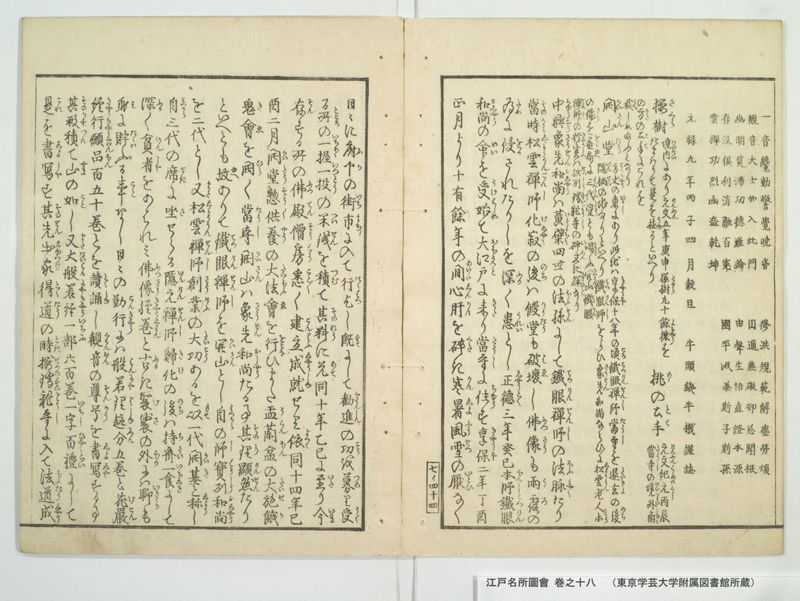
翻刻
一音纔動警覚暁昏 修洪規範解塵労煩
観音大士如人此門 円通無礙卻忘聞根
幽明莫滞功徳難論 由声生悟直証本源
存没倶利消融百寃 国平氓泰斯子斯孫
雲禅巧烈函盍乾坤
元禄九年丙子四月穀旦 牛頭鉄牛機謹誌
桜樹(さくら) 《割書:境内(けいたい)にあり元文(けんふん)五年庚申 桜樹(さくら)九十 余株(よちゆう)を |たまはりて是を植(うゆ)るといへり》
桃(もゝ)の土手(とて) 《割書:元文紀年(けんふんはしめのとし)丙辰|当寺(たうし)の境外(けいくわい)南(みなみ)》
《割書:の方(かた)の土手(とて)にこれを|栽(うへ)しめ給ふとなり》
開山堂(かいさんたう) 《割書:方丈(はうしやう)の東(ひかし)にあり此地は享保(きやうほ)十八年の頃(ころ)鉄眼禅師(てつけんせんし)当寺(たうし)を退去(たいきよ)の後(のち)|隠栖(いんせい)の地なりといへり鉄眼師(てつけんし)をよひ象先(さうせん)和尚ならひに松雲(しよううん)老人 等(とう)》
《割書:の像(さう)を置(をく)故(ゆへ)に三代堂(さんたいたう)とも唱(とな)ふ開山(かいさん)鉄眼(てつけん)|禅師(せんし)の行実(きやうしつ)は摂洲(せつしう)瑞竜寺(すいりうし)の碑文(ひふん)に詳(つまひらか)なり》
中興(ちゆうこう)象先和尚(さうせんおしやう)は黄檗(わうはく)四世の法孫にして鉄眼禅師(てつけんせんし)の法脈(ほふみやく)たり
当時(そのかみ)松雲禅師(しよううんせんし)化寂(けしやく)の後(のち)は仮堂(かりたう)も破壊(はゑ)し仏像(ふつさう)も雨露(うろ)の
為(ため)に侵(をか)されたりしを深(ふか)く患(うれい)とし正徳(しやうとく)三年癸巳 本師(ほんし)鉄眼和尚(てつけんおしやう)の命(めい)を受(うけ)始(はしめ)て大江戸(おほえと)に来(きた)り当寺(たうし)に住(ちゆう)す享保(きやうほ)二年丁酉
正月より十有余年の間(あいた)心肝(しんかん)を砕(くた)き寒暑風雪(かんしよふうせつ)の厭(いとひ)なく
日々に府下(ふか)の街市(いちまち)に入て行乞(たくはつ)し既(すて)にして勧進(くわんしん)の功(こう)を募(つの)り受(うく)
る所(ところ)の一握一投(いちあくいつとう)の米銭(へいせん)を積(つむ)て其料(そのれう)に充(あて)同十年乙巳に至(いた)り今(いま)
存(そん)する所の仏殿(ふつてん)僧房(そうはう)悉(こと〳〵)く建立(こんりふ)成就(しやうしゆ)せり依(よつて)同十四年己
酉二月 開堂総供養(かいたうそうくやう)の大法会(たいほふゑ)を行(おこな)ひまた盂蘭盆(うらんほん)の大施餓(たいせか)
鬼会(きゑ)を開(ひら)く当寺(たうし)開山(かいさん)は象先和尚(さうせんおしやう)たる事 其理(そのり)顕然(けんせん)たり
といへとも故(ゆへ)ありて鉄眼禅師(てつけんせんし)を開山(かいさん)とし自(みつから)の師(し)宝州和尚(はうしうおしやう)
を二代とし又(また)松雲禅師(しよううんせんし)創業(さうけふ)の大功(たいこう)あるを以(もて)一代 開基(かいき)と称(しよう)し
自(みつから)三代の席(せき)に座せらる隠元禅師(いんけんせんし)帰化(きけ)の後(のち)は持斎(ちさい)一食(いちしき)にして
深(ふか)く貧者(ひんしや)をあはれみ仏像(ふつさう)経巻(きやうくわん)と古(ふる)き袈裟(けさ)の外(ほか)には聊(いさゝか)も
身(み)に貯(たくは)ふる事(こと)なし日々の勤行(こんきやう)には般若(はんにや)理趣分(りしゆふん)五巻と花厳(けこん)
経(きやう)行願品(きやうくはんほん)百五十巻とを読誦(とくしゆ)し観音(くわんおん)の尊号(そんかう)を書写(しよしや)する事
其数(そのかす)積(つん)て山(やま)の如(こと)し又(また)大般若経(たいはんにやきやう)一部(いちふ)六百巻 一字百礼(いちしひやくらい)にして
是(これ)を書写(しよしや)す其先(そのせん)出家(しゆつけ)得道(とくたう)の時(とき)摂(せつの)瑞竜寺(すいりうし)に入て法道(ほふたう)成(しやう)
現代語訳
一音わずかに動けば暁昏を警覚し 洪規範を修して塵労の煩いを解く
観音大士、人にこの門の如くあり 円通無礙にして聞根を忘る
幽明滞ることなく功徳論じ難し 声によりて悟りを生じ直ちに本源を証す
存没ともに利し百怨を消融す 国平らかに民泰らかにしてこの子この孫
雲禅巧烈にして天地を函蓋す
元禄九年丙子四月穀旦 牛頭鉄牛機謹誌
桜樹 境内にあり。元文五年(1740年)庚申、桜樹九十余株を賜わってこれを植えたという。
桃の土手 元文元年(1736年)丙辰、当寺の境外南の方の土手にこれを植え始められたという。
開山堂 方丈の東にある。この地は享保十八年(1733年)頃、鉄眼禅師が当寺を退去した後の隠栖の地であったという。鉄眼師及び象先和尚並びに松雲老人等の像を置くため、三代堂とも称する。開山鉄眼禅師の行実は摂州瑞竜寺の碑文に詳しい。
中興象先和尚は黄檗四世の法孫で鉄眼禅師の法脈である。
当時、松雲禅師が亡くなった後は仮堂も破壊し、仏像も雨露のために侵されていたことを深く憂い、正徳三年(1713年)癸巳、本師鉄眼和尚の命を受けて初めて大江戸に来て当寺に住した。享保二年(1717年)丁酉正月より十余年の間、心肝を砕き、寒暑風雪を厭わず、日々府下の街市に入って托鉢し、すでにして勧進の功を募り、受ける所の一握一投の米銭を積んでその料に充て、同十年(1725年)乙巳に至って今存在する所の仏殿・僧房をことごとく建立成就した。よって同十四年(1729年)己酉二月、開堂総供養の大法会を行い、また盂蘭盆の大施餓鬼会を開いた。当寺の開山は象先和尚であることは、その理が顕然であるといえども、故あって鉄眼禅師を開山とし、自らの師宝州和尚を二代とし、また松雲禅師に創業の大功があることをもって一代開基と称し、自ら三代の席に座された。
隠元禅師帰化の後は持斎一食にして深く貧者を哀れみ、仏像・経巻と古い袈裟の外にはいささかも身に蓄える事がない。日々の勤行には般若理趣分五巻と華厳経行願品百五十巻とを読誦し、観音の尊号を書写することその数積んで山の如くである。また大般若経一部六百巻を一字百礼にしてこれを書写した。その先、出家得道の時、摂州瑞竜寺に入って法道を成就した。
英語訳
When one sound barely moves, it awakens dawn and dusk / Cultivating great standards, it resolves the troubles of worldly labor
The great bodhisattva Kannon is like this gate for people / In perfect penetration without obstruction, the root of hearing is forgotten
Neither hidden nor manifest can obstruct it, its merit and virtue are beyond discussion / Through sound enlightenment is born, directly realizing the original source
Benefiting both living and dead, dissolving a hundred grievances / When the country is peaceful and people content, these children and grandchildren
Cloud meditation is skillfully vigorous, encompassing heaven and earth
Ninth year of Genroku, year of the fire rat, fourth month, auspicious day. Respectfully recorded by Tetsugyū Ki of Gozusan.
Cherry Trees Located within the temple grounds. In the fifth year of Genbun (1740), year of the metal monkey, they received over ninety cherry tree saplings and planted them.
Peach Embankment In the first year of Genbun (1736), year of the fire dragon, they began planting these on the embankment south of the temple's outer boundary.
Founder's Hall Located east of the abbot's quarters. This place is said to have been the hermitage of Zen Master Tetsugen around the eighteenth year of Kyōhō (1733), after he left this temple. Since it houses statues of Master Tetsugen, Priest Shōsen, and Elder Shōun, it is also called the Hall of Three Generations. The deeds of founding master Zen Master Tetsugen are detailed in the stone inscription at Suiryū-ji Temple in Settsu Province.
The restoring abbot Priest Shōsen was a fourth-generation dharma descendant of Ōbaku and belonged to Zen Master Tetsugen's dharma lineage.
At that time, after Zen Master Shōun passed away, the temporary hall had also fallen into disrepair and the Buddhist statues were being damaged by rain and dew, which caused him deep concern. In the third year of Shōtoku (1713), year of the water snake, he received orders from his root teacher Priest Tetsugen and came to Edo for the first time to reside at this temple. From the first month of the second year of Kyōhō (1717), year of the fire rooster, for more than ten years, he devoted his whole heart, never minding cold, heat, wind or snow, daily entering the streets and markets of the capital for alms-begging. Having already undertaken the work of fundraising, he accumulated the rice and money received handful by handful, coin by coin, to fund the construction. By the tenth year of the same era (1725), year of the wood snake, he had completely built and completed the Buddha hall and monks' quarters that exist today. Therefore, in the second month of the fourteenth year of the same era (1729), year of the earth rooster, he held a great dharma assembly for the hall opening and general offerings, and also opened a great hungry ghost feeding ceremony for the Ullambana festival. Although it is evident that Priest Shōsen should be the founding master of this temple, for certain reasons Zen Master Tetsugen was designated as the founding master, his own teacher Priest Hōshū as the second generation, and since Zen Master Shōun had great merit in the founding enterprise, he was called the first generation founder, while he himself took the seat of the third generation.
After Zen Master Ingen's naturalization, he maintained a vegetarian diet with one meal per day, deeply pitied the poor, and stored nothing on his person except Buddhist statues, scriptures, and old robes. In his daily religious practices, he recited the five volumes of the Prajñāpāramitā Naya chapter and 150 volumes of the Avataṃsaka Sūtra's chapter on vows and practices, and copied the sacred name of Kannon, the number accumulating like mountains. He also copied the entire Mahāprajñāpāramitā Sūtra in 600 volumes, performing one hundred prostrations for each character. Earlier, when he left home and attained the Way, he entered Suiryū-ji Temple in Settsu Province and accomplished the dharma path.