翻刻
就(しゆ)の誓願(せいくわん)を発(はつ)し三年の間(あいた)双手(そうしゆ)の指(ゆひ)を切(きり)八十巻の花厳経(けこんきやう)を
血書(けつしよ)す其後(そののち)当寺(たうし)殿堂(てんたう)の営(いとなみ)大半(たいはん)成(なる)といへとも宗門(しうもん)の座禅(させん)
夏冬(なつふゆ)の結制(けつせい)行(おこなは)れたるを闕典(けつてん)なりとす依(よつて)後住(こちゆう)栄朝師(えいてうし)命(めい)
を受(うけ)て元文(けんふん)二年丁巳の冬 洞済両首座(とうさいりやうしゆそ)を立(たて)て五千指(こせんし)の僧(そう)を
集(あつ)め江湖(こうこ)の大会(たいゑ)を行(おこな)ふ此時(このとき) 大樹(たいしゆ)こゝに至(いた)らせたまひ
座禅(させん)の行相(きやうさう)をみそなはす則(すなはち)江湖(こうこ)の僧財(そうさい)として米(こめ)五百 俵(へう)
たまふ夫(それ)より後(のち)般若(はんにや)の全文(せんふん)を真読(しんとく)して御札(おむふた)を献(けん)す
竟(つひ)に寛延(くわんえん)三年己丑六月五日七十三歳にして涅槃(ねはん)の大定(たいちやう)
に入 貴賎(きせん)香花(かうけ)を捧(さゝけ)むとつとひ来(きた)る事三日三夜 炎暑(えんしよ)甚(はなはた)
しといへとも遺骸(ゆいかい)聊(いさゝか)変(へんす)る色(いろ)なく荼毘(たひ)して全身(せんしん)舎利(しやり)となる
《割書:其 舌根(せつこん)は宝塔(はうたふ)に収(おさめ)て今猶|中興堂(ちゆうこうたう)に存(そん)せり》
当寺(たうし)は黄檗派(わうはくは)江戸(えと)最大(さいたい)の禅園(せんゑむ)にして仏閣(ふつかく)の巍々(きゝ)たる事
日域(にちいき)にかくれなし元禄(けんろく)年間寺領山(しりやうさん)号等(かうとう)を賜(たまは)り享保(きやうほ)九
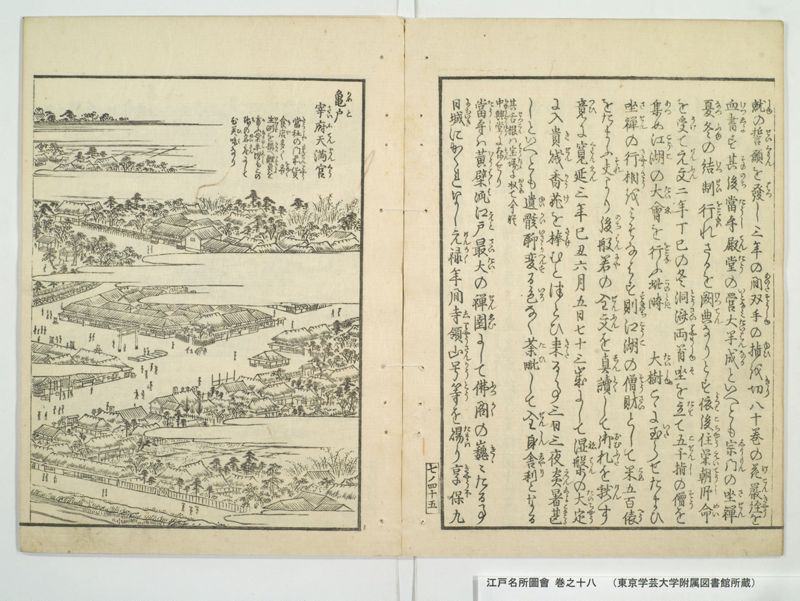
【挿し絵】
亀戸(かめと)
宰府天満宮(さいふてんまんくう)
当社(たうしや)の門前(もんせん)貸(りやう)
食店(りや)多く各(おの〳〵)
生洲(いけす)を構(かま)へ鯉魚(りきよ)を
畜(か)ふ業平蜆(なりひらしゝみ)もこの
地(ち)の名産(めいさん)にして
尤 美味(ひみ)なり
現代語訳
就の誓願を発し、三年の間、両手の指を切って八十巻の華厳経を血書した。その後、当寺の殿堂の営みは大半が成ったといえども、宗門の座禅、夏冬の結制が行われていないのを欠典であるとした。よって後住の栄朝師の命を受けて、元文二年(1737年)丁巳の冬、洞済両首座を立てて五千指の僧を集め、江湖の大会を行った。この時、将軍がここに至らせられて座禅の行相をご覧になった。すなわち江湖の僧財として米五百俵を賜った。それより後、般若の全文を真読して御札を献上した。
ついに寛延三年(1750年)己丑六月五日、七十三歳にして涅槃の大定に入った。貴賎が香花を捧げに集まって来ることが三日三夜続いた。炎暑が甚だしいといえども、遺骸はいささかも変色することなく、火葬して全身が舎利となった。その舌根は宝塔に収めて、今なお中興堂に存在している。
当寺は黄檗派江戸最大の禅園にして、仏閣の巍々たることは日本国中に知れ渡っている。元禄年間に寺領・山号等を賜り、享保九年
【挿絵】
亀戸
太宰府天満宮
当社の門前には料理店が多くあり、それぞれが生簀を構えて鯉を飼っている。業平蜆もこの地の名産で、とても美味である。
英語訳
He made a vow of dedication and for three years cut his fingers to write eighty volumes of the Avatamsaka Sutra in blood. After that, although most of the temple halls had been completed, he considered it a deficiency that the Zen meditation retreats and summer-winter intensive sessions of the sect were not being conducted. Therefore, receiving orders from the subsequent abbot Master Eichō, in the winter of the second year of Genbun (1737), year of the fire snake, he established both Tōzai chief seats, gathered five thousand monks, and held a great assembly of the Buddhist community. At this time, the Shogun came here and observed the practice of seated meditation. Consequently, he bestowed five hundred bales of rice as provisions for the monks of the assembly. From then on, he performed complete recitations of the Prajñāpāramitā and presented sacred amulets.
Finally, on the fifth day of the sixth month of the third year of Kan'en (1750), year of the earth ox, at the age of seventy-three, he entered the great samādhi of nirvana. People of high and low status came to offer incense and flowers for three days and three nights. Although the summer heat was intense, his remains showed no signs of decay whatsoever, and when cremated, his entire body became relics. His tongue was preserved in a precious pagoda and still exists today in the Restoration Hall.
This temple is the greatest Zen garden of the Ōbaku sect in Edo, and the magnificence of its Buddhist halls is renowned throughout Japan. During the Genroku era it was granted temple lands, a mountain name, and other honors. In the ninth year of Kyōhō...
[Illustration]
Kameido
Dazaifu Tenmangū Shrine
In front of this shrine there are many restaurants, each maintaining fish ponds where they raise carp. Narihira clams are also a local specialty of this area and are extremely delicious.