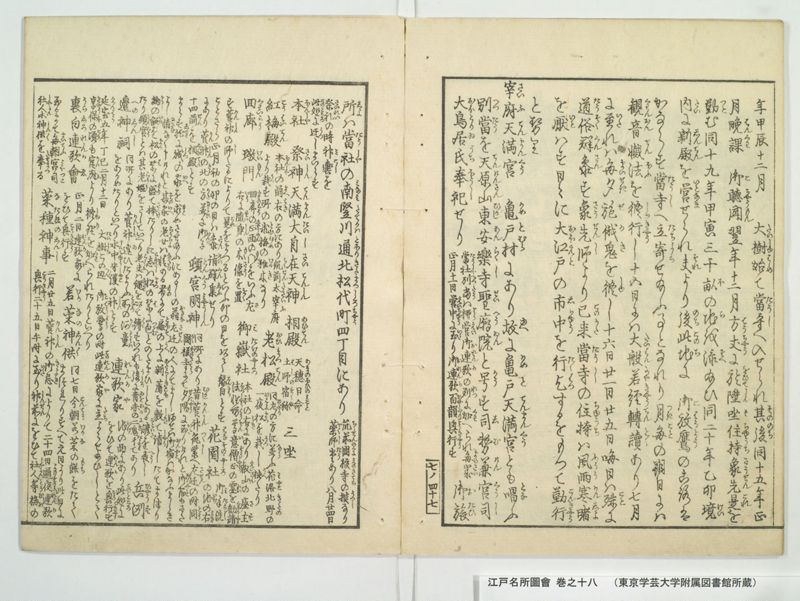
翻刻
【五百羅漢禅寺の続き】
年甲辰十二月 大樹(たいしゆ)始(はしめ)て当寺(たうし)へ入せられ其後(そののち)同十五年正
月 晩課(はんくわ) 御聴聞(こちやうもん)翌年十二月 方丈(はうちやう)に於(おひて)陞座(しんそ)住持(ちゆうち)象先(さうせん)是(これ)を
勤(つと)む同十九年甲寅三十畝(ほ)の地(ち)を添(そへ)給ひ同二十年乙卯境(けい)
内(たい)に新殿(しんてん)を営(いとなま)せられ夫(それ)より後(のち)此地(このち)に 御放鷹(こはうよう)のころは
かならす当寺(たうし)へ立寄(たちよら)せ給ふ事となれり月毎(つきこと)の朔日には
観音(くわんおん)懺法(せんほふ)を修行(しゆきやう)し十五日には大般若経(たいはんにやきやう)転読(てんとく)あり七月
に至(いた)れは毎夕(まいせき)施餓鬼(せかき)を修(しゆ)し十六日廿一日廿五日晦日は殊(こと)に
道俗(たうそく)群参(くんさん)す象先師(さうせんし)より已来(このかた)当寺(たうし)の住持(ちゆうち)は風雨寒暑(ふううかんしよ)
を厭(いと)はす日々に大江戸(おほえと)の市中(しちゆう)を行乞(たくはつ)するをもつて勤行(こんきやう)
とせり
宰府天満宮(さいふてんまんくう) 亀戸村(かめとむら)にあり故(ゆへ)に亀戸天満宮(かめとてんまんくう)とも唱(とな)ふ
別当(へつたう)を天原山東安楽寺聖廟院(てんけんさんひかしあんらくしせいへうゐん)と号(かう)す司務(しむ)兼(けん)宮司(くうし)
大鳥居氏(おほとりゐうち)奉祀(ほうし)せり 《割書:当社(たうしや)別当(へつたう)は柳営(りうえい)御連歌(おれんか)の列(れつ)に加(くわ)へられ毎歳(まいさい)|正月十一日 営中(えいちゆう)に至(いたり)御連歌(おれんか)百韻(ひやくゐん)興行(こうきやう)す》 御旅(おたひ)
所(ところ)は当社(たうしや)の南(みなみ)竪川通(たてかはとほり)北松代町(きたまつしろちやう)四丁目にあり 《割書:筑前国(ちくせんのくに)榎寺(えのきてら)の模(うつし)なり|薬師堂(やくしたう)あり八月廿四日》
《割書:祭礼(さいれい)の時 神輿(みこし)を|此処(このところ)に遷(うつ)しまいらす》
本社(ほんしや) 祭神(さいしん)天満大自在天陣(てんまんたいしさいてんしん) 相殿(あひてん) 《割書:天穂日命(あまのほひのみこと)|土師宿禰(はしのすくね)》 三座
紅梅殿(こうはいてん) 《割書:本社(ほんしや)の前(まへ)右(みき)の方にあり筑前太宰府(ちくせんたさいふ)|より栽(うつ)す所の飛梅(とひむめ)の稚木(わかき)なり》 老松殿(おひまつてん) 《割書:同 左(ひたり)の方に並(なら)ふ花洛(みやこ)北野(きたの)の|法性坊尊意僧正(ほつしやうはうそんいそうしやう)の霊(れい)を勧請(くわんしやう)》
《割書:菅神(かんしん)の師(し)たるによりて是(これ)をまつるといふ卯の日を以て縁日(えんにち)とす|ことさら正月初の卯の日は参詣(さんけい)群集(くんしふ)せり》 花園社(はなそのゝやしろ) 《割書:御手洗(みたらし)|の池(いけ)の右(みき)》
《割書:にあり菅神(かんしん)の北(きた)の方(かた)並(ならひ)に御子(おんこ)|十四 前(せん)を相殿(あひてん)とす》 頓宮明神(とんくうみやうしん) 《割書:同所にあり昔(むかし)菅神(かんしん)筑紫(つくし)へ左遷(させん)の時 同(とう)|国(こく)榎寺(えのきてら)にて夕陽(せきやう)に至(いた)りけれと御宿(おんやと)もさた》
《割書:まらす然(しかる)に賎(しつ)の家(いへ)を求(もと)めさせ給ふにあるしの翁(おきな)左遷(させん)の人にてましませは御宿(おんやと)はかなふましき|よし情(なさけ)なく申けれと其家(そのいへ)の老女(らうちよ)は情(なさけ)ある者(もの)にて扉(とほそ)の上(うへ)に新(あたらしき)薦(こも)を敷(しき)て請(しやう)したてまつり》
《割書:麹(かうし)の飯(いひ)を松(まつ)の葉(は)に盛(もり)て捧(さゝけ)たりしに志(こゝろさし)は松(まつ)の葉(は)に包(つゝむ)とのたまひしとある諺(ことはさ)を表(へう)し|たり頓宮(とんくう)とは其 老嫗(らうう)をさしていへり老夫(らうふ)は縄(なわ)を以て縛(はく)すいつれも後(うしろ)の青赤(あをあか)の二鬼(にき)彳(たゝすみ)てあり》 兵洲(ひやうす)
辺神祠(へのしんし) 《割書:同所にあり菅神(かんしん)逢(あ)ひたまふ所(ところ)の河童(かはわらは)|をあかめたりといへり水中守護(すいちゆうしゆこ)の神(しん)とす》 連歌家(れんかや) 《割書:池(いけ)の西にあり此処(このところ)に|をひて連歌(れんか)を興行(こうきやう)す》
《割書:延宝(えんはう)五年丁巳二月十二日 大樹(たいしゆ)この辺(へん) 後放鷹(こはうよう)の時 此(この)連歌家(れんかや)に立(たち)よらせ給ひしとて|享保(きやうほ)の頃(ころ)も官府(かんふ)より修理(しゆり)を加(くわ)へられたりといへり》
裏白連歌会(うらしろれんかゑ) 《割書:正月二日 連歌家(れんかや)に|をひて興行(こうきやう)す》 若菜神供(わかなのしんく) 《割書:同七日 今朝(こんてう)若菜(わかな)の餅(もち)をたて|まつりすへて元日より此日に》
《割書:至るまて毎朝(まいてふ)宮司(みやつこ)|社人(しやにん)等 神供(しんく)を奉(たてまつ)る》 菜種神事(なたねのしんし) 《割書:二月廿五日菅神(かんしん)の御忌(きよき)によりて二十四日 通夜(よもすから)連歌(れんか)|興行(こうきやう)二十五日午時に至(いた)り神前(しんせん)にをひて社人(しやにん)等(とう)梅(むめ)の》
現代語訳
【五百羅漢禅寺の続き】
甲辰年十二月、将軍が初めて当寺へ参詣され、その後同十五年正月に晩課を御聴聞された。翌年十二月、方丈において住持の象先がこれを勤めた。同十九年甲寅に三十畝の地を加給され、同二十年乙卯に境内に新殿を営まれ、それより後、この地で御放鷹の折には必ず当寺へお立ち寄りになることとなった。毎月の朔日には観音懺法を修行し、十五日には大般若経転読がある。七月に至れば毎夕施餓鬼を修し、十六日・二十一日・二十五日・晦日は殊に僧俗が群参する。象先師より以来、当寺の住持は風雨寒暑を厭わず日々に大江戸の市中を托鉢することを勤行としている。
宰府天満宮 亀戸村にあるため亀戸天満宮とも称する。
別当を天原山東安楽寺聖廟院と号し、司務兼宮司の大鳥居氏が奉祀している。《当社別当は幕府の御連歌の列に加えられ、毎年正月十一日に江戸城中に至り御連歌百韻興行を行う》御旅所は当社の南、竪川通北松代町四丁目にある《筑前国榎寺を模したもので、薬師堂があり八月二十四日祭礼の時、神輿をこの場所に遷し奉る》
本社 祭神天満大自在天神 相殿《天穂日命、土師宿禰》三座
紅梅殿《本社の前右の方にあり、筑前太宰府より移植した飛梅の若木である》老松殿《同じく左の方に並び、京都北野の法性坊尊意僧正の霊を勧請している》
《菅神の師であるためこれを祀るという。卯の日を縁日とし、特に正月初の卯の日は参詣者が群集する》花園社《御手洗の池の右にあり、菅神の北の方並びに御子十四柱を相殿とする》頓宮明神《同所にあり、昔菅神が筑紫へ左遷の時、同国榎寺にて夕方に至ったが御宿もままならず、賤しい家を求めさせ給うに、主人の翁は左遷の人でいらっしゃれば御宿はかなわない旨を情なく申したが、その家の老女は情ある者で、扉の上に新しい薦を敷いてお請いし奉り、麹の飯を松の葉に盛って捧げたところ、志は松の葉に包むとおっしゃったとある諺を表したもの。頓宮とはその老嫗を指していう。老夫は縄で縛られ、いずれも後ろに青赤の二鬼が立っている》兵洲辺神祠《同所にあり、菅神が出会った河童を祀ったといわれる。水中守護の神とする》連歌家《池の西にあり、この場所で連歌を興行する》
《延宝五年丁巳二月十二日、将軍がこの辺りで御放鷹の時、この連歌家にお立ち寄りになったとて、享保の頃も幕府より修理を加えられたという》
裏白連歌会《正月二日、連歌家において興行する》若菜神供《同七日、今朝若菜の餅を立て祀りし上で、元日よりこの日に至るまで毎朝宮司・社人等が神供を奉る》菜種神事《二月二十五日菅神の御忌により二十四日通夜連歌興行、二十五日午時に至り神前において社人等が梅の[続く]》
英語訳
[Continuation of Gohyaku Rakan Zen Temple]
In the year Kinoe-Tatsu, twelfth month, the Shogun first visited this temple, and thereafter in the fifteenth year, first month, he attended the evening service. The following year in the twelfth month, the head priest Zōsen conducted the ceremony in the abbot's quarters. In the same nineteenth year Kinoe-Tora, thirty se of land was granted, and in the twentieth year Kinoto-U, a new hall was built within the precincts. From that time forward, whenever falconry took place in this area, the Shogun would invariably stop by this temple. On the first day of each month, Kannon repentance rituals are performed, and on the fifteenth day there is recitation of the Great Wisdom Sutra. When the seventh month arrives, evening feeding of hungry ghosts is performed daily, and on the 16th, 21st, 25th, and last day of the month, monks and laypeople particularly gather in crowds. Since Master Zōsen's time, the head priests of this temple have made it their religious practice to go begging daily through the streets of great Edo, regardless of wind, rain, cold, or heat.
Dazaifu Tenmangū Located in Kameido Village, hence also called Kameido Tenmangū.
The temple administrator is called Tengenzan Higashi-anrakuji Seibyōin, and it is served by the Ōtorii family as administrative officer and head priest. 《The temple administrator of this shrine is included in the bakufu's linked verse gatherings, and every year on the eleventh day of the first month, goes to Edo Castle to perform a hundred-verse linked poem session》 The temporary shrine is located south of this shrine, in the fourth district of Kita-Matsushiro-chō on Tatekawa Street. 《It is modeled after Enoki Temple in Chikuzen Province, has a Yakushi Hall, and on the twenty-fourth day of the eighth month during festivals, the portable shrine is transferred to this place》
Main Shrine Deity: Tenman Daijizaiten-shin Side shrines: 《Ame-no-hohi-no-mikoto, Haji-no-sukune》 Three seats
Red Plum Hall 《Located to the front right of the main shrine, it is a sapling of the flying plum tree transplanted from Dazaifu in Chikuzen》 Old Pine Hall 《Similarly arranged to the left, enshrining the spirit of Hōshōbō Son'i Sōjō from Kitano in the capital》
《Since he was Kan-shin's teacher, he is worshipped here. The day of the Rabbit is the festival day, and particularly on the first Rabbit day of the New Year, worshippers gather in crowds》 Hanazono Shrine 《Located to the right of the purification pond, enshrining Kan-shin's northern direction and fourteen child deities as side shrines》 Tongū Myōjin 《Located in the same place. Long ago when Kan-shin was exiled to Tsukushi, he arrived at Enoki Temple in that province in the evening but had no lodging. When he sought a humble house, the old man of the house heartlessly said that lodging could not be provided to an exiled person, but the old woman of the house was compassionate and laid fresh straw mats above the door to receive him, offering rice with koji served on pine needles. When he said "sincerity is wrapped in pine needles," this expressed that proverb. Tongū refers to that old woman. The old man is bound with rope, and behind both stand two demons, one blue and one red》 Hyōsube Shrine 《Located in the same place, said to enshrine a kappa that Kan-shin encountered. Considered a deity of water protection》 Linked Verse House 《Located west of the pond, linked verse gatherings are held at this place》
《On the twelfth day of the second month of Enpō 5 (Hinoto-Mi), when the Shogun stopped by this linked verse house during falconry in this area, it is said that even during the Kyōhō period, repairs were ordered by the government》
Urashiro Linked Verse Gathering 《Held at the linked verse house on the second day of the New Year》 Young Greens Divine Offering 《On the seventh day, having prepared rice cakes with young greens this morning as offerings, from New Year's Day until this day, every morning the head priest and shrine attendants offer divine food》 Rapeseed Ritual 《On the twenty-fifth day of the second month, being the anniversary of Kan-shin's death, on the twenty-fourth day there is an all-night linked verse gathering, and at noon on the twenty-fifth day, before the altar, the shrine attendants [offer] plum [continues]》