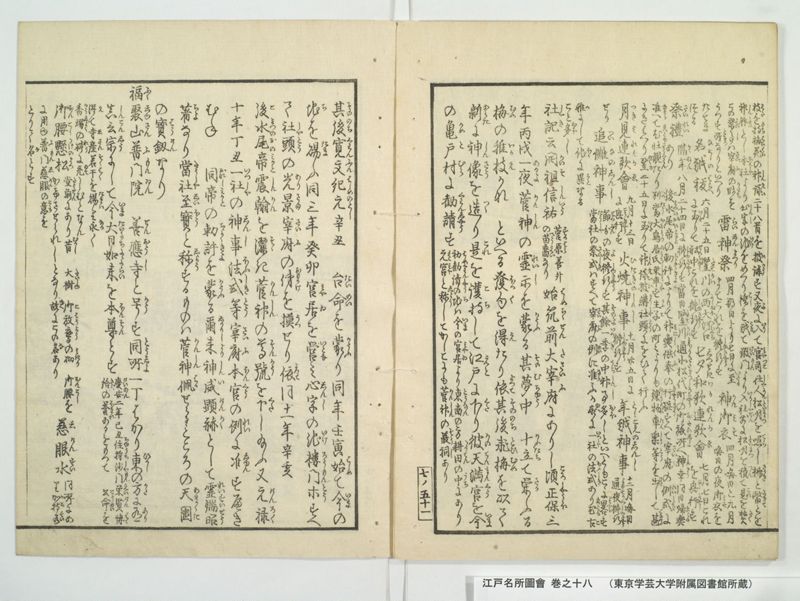
翻刻
《割書:枝(えた)を持(もち)梅花(はいくは)の神詠(しんえい)二十八首を披講(ひかう)す又 夜(よ)に入(いり)て宮司(みやつこ)社人(しやにん)松明(たいまつ)を照(てら)し榊(さかき)と幣(にきて)とを|神体(しんたい)とし本社(ほんしや)より心字(しんし)の池(いけ)をめくり橋(はし)を越(こえ)て璥門(けいもん)より入(いり)社前(しやせん)に松明(たいまつ)を積(つん)て是(これ)を焚(たく)》
《割書:この祭事(さいし)は宰府(さいふ)の形(かたち)を|うつす所(ところ)なりといへり》 雷神祭(らいしんまつり) 《割書:四月朔日より七日に至(いたる)|まてこれを修行(しゆきやう)す》 神御衣(かんみそ) 《割書:四月晦日と九月|晦日の夜御衣(みそ)を》
《割書:たてま|つる》 名越祓(なこしのはらへ) 《割書:六月二十五日 竪川(たてかは)の西大河口(にしおほかはくち)|船中(せんちゆう)これを修行(しゆきやう)す》 七夕和歌連歌会(しつせきわかれんかゑ) 《割書:七月七日これ|を興行(こうきやう)す》
祭礼(さいれい) 《割書:隔年(かくねん)八月二十四日に修行(しゆきやう)す当日 竪川通(たてかはとほり)北松代町(きたまつしろちやう)の御旅所(おたひしよ)へ神幸(しんかう)同日 還輿(きよ)|あり 後水尾帝(こみつのおのみかと)の勅許(ちよくきよ)によりて神輿(みこし)供奉(くふ)の行粧(きやうさう)すへて宰府(さいふ)の礼式(れいしき)に》
《割書:准(なそら)へて尤壮観たり別当(へつたう)大鳥居氏(おほとりゐうち)乗車(しようしや)す生子(うふこ)の町々よりも練物(ねりもの)車楽(たんしり)等(なと)を出(いた)して甚(はなはた)|にきはへり翌(あくる)二十五日に至(いた)りて神詠(しんえい)披講(ひかう)社頭(しやとう)におよひて行ふ》
月見連歌会(つきみれんかゑ) 《割書:九月十三日|に興行(こうきやう)す》 火焼神事(ひたきのしんし) 《割書:十一月廿五日に|修行(しゆきやう)す》 年越神事(としこえのしんし) 《割書:十二月晦日|通夜(よもすから)修行(しゆきやう)》
《割書:せり| 》追儺神事(ついなのしんし) 《割書:節分(せつふん)の夜(よ)修行(しゆきやう)す其余(そのよ)一季(いつき)の中(うち)神事(しんし)多(おほ)しといへともこゝに略(りやく)す|当社(たうしや)の祭式(さいしき)はすへて宰府(さいふ)の例(れい)に准(なら)ふか故(ゆへ)に一社(いつしや)の法式(ほふしき)あり尤(もつとも)古(こ)》
《割書:雅(か)にして他(ほか)に異(こと)なる|こと多(おほ)し》
社記(しやき)云 開祖(かいそ)信祐(しんいう) 《割書:菅原(すかはら)善外|の苗裔(へうえい)なり》 始(はしめ)筑前(ちくせん)太宰府(たさいふ)にありし頃(ころ)正保(しやうほ)三
年丙戌 一夜(あるよ)菅神(かんしん)の霊示(れいし)を蒙(かうふ)る其(その)夢中(むちゆう) 十立(かふたち)て栄(さか)ふる
梅(むめ)の稚枝(わかえ)かな といへる発句(ほつく)を得(え)たり依(よつて)其後(そののち)飛梅(とひむめ)を以て
新(あらた)に神像(しんさう)を造(つく)り是(これ)を護持(こち)して江戸(えと)に下(くた)り彼(かの)天満宮(てんまんくう)を今(いま)
の亀戸村(かめとむら)に勧請(くわんしやう)す 《割書:初(はしめ)勧請(くわんしやう)の地(ち)は今(いま)の宮居(みやゐ)より東南(とうなん)の方 耕田(かうてん)の中(うち)にあり|元宮(もとみや)と称(しよう)してかしこにも菅神(かんしん)の叢祠(そうし)あり》
其後(そののち)寛文紀元(かんふんはしめのとし)辛丑 台命(たいめい)を蒙(かうふ)り同年壬寅 始(はしめ)て今(いま)の
地(ち)を賜(たま)ふ同三年癸卯 宮居(みやゐ)を営(いとな)み心字(しんし)の池(いけ)楼門(ろうもん)等(とう)すへ
て社頭(しやとう)の光景(ありさま)宰府(さいふ)の俤(おもかけ)を模(うつ)せり依(よつて)同十一年辛亥
御水尾帝(こみつのおのみかと)震翰(しんかん)を灑(そゝ)き菅神(かんしん)の尊号(そんかう)を下(くた)し給ふ又 元禄(けんろく)
十年丁丑 一社(いつしや)の神事(しんし)法式(ほふしき)等(とう)宰府(さいふ)本宮(ほんくう)の例(れい)に准(しゆん)すへき
むね 同帝(おなしみかと)の勅許(ちよくきよ)を蒙(かうふ)る爾来(しかりしより)神威顕赫(しんいけんかく)として霊瑞昭(れいすいせう)
著(ちよ)なり当社(たうしや)至宝(しはう)と称(しよう)するものは菅神(かんしん)佩(はか)せらるゝところの天国(あまくに)
の宝剣(はうけん)なり
福聚山普門院(ふくしゆさんふもんゐん) 善応寺(せんおうし)と号(かう)す同所(とうしよ)一丁はかり東(ひかし)の方(かた)に有(あり)
真言宗(しんこんしう)にして今(いま)大日如来(たいにちによらい)を本尊(ほんそん)とす 《割書:慶安(けいあん)二年己丑 住持(ちゆうち)沙門(しやもん)栄賢(えいけん)博(はく)|給(きう)の誉(ほまれ)あるをもつて 公命(こうめい)を》
《割書:得(え)て寺産若干(しさんそくはく)を賜(たまは)り永(なか)く|香燭(かうしよく)の料(れう)に充(あて)しむとなん》
御腰懸松(おんこしかけのまつ) 《割書:堂前(たうせん)にあり昔(むかし) 大樹(たいしゆ) 御放鷹(こはうよう)の砌(みきり) 御腰(おんこし)を|かけさせられしとなり故(ゆへ)にこの名(な)あり》 慈眼水(しけんすい) 《割書:同所にあ|り加持水(かちすい)》
《割書:に用ゆ普門慈眼(ふもんしけん)の意(こゝろ)を|とりて名(な)とす》
現代語訳
【梅の枝を持ち、梅花の神詠二十八首を披講する。また夜に入って宮司や社人が松明を照らし、榊と幣を神体として本社より心字の池を巡り、橋を越えて楼門より入り、社前に松明を積んでこれを焚く】
【この祭事は太宰府の形を写したところであると言われている】
雷神祭【四月朔日より七日に至るまでこれを修行する】
神御衣【四月晦日と九月晦日の夜に御衣を奉る】
名越祓【六月二十五日 竪川の西大河口、船中でこれを修行する】
七夕和歌連歌会【七月七日にこれを興行する】
祭礼【隔年八月二十四日に修行する。当日、竪川通北松代町の御旅所へ神幸、同日還御がある。後水尾帝の勅許により神輿供奉の行装すべて太宰府の礼式に準えて最も壮観である。別当大鳥居氏が乗車する。氏子の町々よりも練物、車楽等を出して甚だ賑やかである。翌二十五日に至って神詠披講を社頭において行う】
月見連歌会【九月十三日に興行する】
火焚神事【十一月二十五日に修行する】
年越神事【十二月晦日、通夜で修行する】
追儺神事【節分の夜に修行する。その他一季の中の神事は多いといえどもここでは省略する。当社の祭式はすべて太宰府の例に準ずるがゆえに一社の法式があり、最も古雅にして他と異なることが多い】
社記によると、開祖信祐【菅原善外の苗裔である】は、始め筑前太宰府にあった頃、正保三年丙戌、ある夜菅神の霊示を受けた。その夢中で「十立ちて栄ふる梅の稚枝かな」という発句を得た。よってその後飛梅を以て新たに神像を造り、これを護持して江戸に下り、かの天満宮を今の亀戸村に勧請した。【初め勧請の地は今の宮居より東南の方、耕田の中にあり、元宮と称してそこにも菅神の叢祠がある】
その後寛文元年辛丑、台命を受け同年壬寅、始めて今の地を賜る。同三年癸卯、宮居を営み心字の池、楼門等すべて社頭の光景を太宰府の面影を模した。よって同十一年辛亥、後水尾帝が震翰を灑ぎ菅神の尊号を下し給う。また元禄十年丁丑、一社の神事法式等太宰府本宮の例に準ずべき旨、同帝の勅許を受ける。それより神威顕赫として霊瑞昭著である。当社至宝と称するものは菅神が佩かせられるところの天国の宝剣である。
福聚山普門院 善応寺と号する。同所一町ばかり東の方にある。真言宗にして今大日如来を本尊とする。【慶安二年己丑、住持沙門栄賢が博給の誉れあるをもって公命を得て寺産若干を賜り、永く香燭の料に充てしむとのことである】
御腰懸松【堂前にあり。昔、大樹御放鷹の砌り、御腰をかけさせられたとのこと。故にこの名がある】
慈眼水【同所にあり。加持水に用いる。普門慈眼の意をとって名とする】
英語訳
[Holding plum branches, twenty-eight sacred poems about plum blossoms are recited. Also, at night, the chief priest and shrine attendants light torches, using sakaki branches and sacred streamers as the divine body, circling the heart-shaped pond from the main shrine, crossing the bridge and entering through the tower gate, piling torches in front of the shrine and lighting them]
[This festival ritual is said to replicate the form of Dazaifu]
Thunder God Festival [Performed from the first to the seventh day of the fourth month]
Sacred Vestments [Vestments are offered on the nights of the last day of the fourth month and the last day of the ninth month]
Nagoshi Purification [June 25th - performed on boats at the mouth of the western great river of Tatekawa]
Tanabata Poetry and Renga Meeting [Held on July 7th]
Festival [Performed every other year on August 24th. On that day, the divine procession goes to the temporary shrine at Kita-Matsushiro-cho on Tatekawa Street, with the return procession on the same day. By imperial permission of Emperor Go-Mizunoo, all the ceremonial dress of the divine palanquin procession follows the ritual style of Dazaifu and is most magnificent. The head priest of the Otorii family rides in a carriage. The parishioner neighborhoods also produce parade floats, musical performances, etc., making it extremely festive. On the following 25th day, sacred poem recitations are performed at the shrine grounds]
Moon-viewing Renga Meeting [Held on September 13th]
Fire Lighting Ritual [Performed on November 25th]
Year-end Ritual [Performed all night on the last day of December]
Demon Expulsion Ritual [Performed on the night of Setsubun. Although there are many other seasonal rituals, they are omitted here. All the ritual styles of this shrine follow the precedent of Dazaifu, so there are unique ceremonial forms, which are most ancient and elegant and differ greatly from others]
According to the shrine records, the founder Shinsuke [descendant of Sugawara Zengo] was originally at Dazaifu in Chikuzen Province when, in the third year of Shoho (1646), Hinoe-Inu, one night he received a divine revelation from Kan-shin (Tenjin). In that dream, he composed the haiku "Ten tatsu te sakau ru ume no wakae kana" (The young plum branches that stand ten and flourish). Therefore, he later created a new divine image using the "flying plum" and, protecting it, came down to Edo and established that Tenmangu shrine in present-day Kameido village. [The original site of enshrinement was in the southeast direction from the present shrine location, in the middle of cultivated fields, called Moto-miya, where there is still a small shrine to Kan-shin]
Later, in the first year of Kanbun (1661), Kanoto-Ushi, he received imperial command, and in the same year Mizunoe-Tora, he was first granted the present land. In the third year, Mizunoto-U, he built the shrine buildings, and the heart-shaped pond, tower gate, and all the shrine scenery modeled the appearance of Dazaifu. Therefore, in the eleventh year, Kanoto-I, Emperor Go-Mizunoo bestowed his imperial calligraphy and granted the honorific title of Kan-shin. Also, in the tenth year of Genroku (1697), Hinoto-Ushi, he received imperial permission from the same emperor that all shrine rituals and ceremonies should follow the precedent of Dazaifu main shrine. Since then, the divine authority has been manifest and the miraculous signs have been evident. What is called the supreme treasure of this shrine is the heavenly sword worn by Kan-shin.
Fukushuzan Fumon-in - Called Zenno-ji temple. Located about one cho to the east of the same place. It belongs to the Shingon sect and now has Dainichi Nyorai as its principal deity. [In the second year of Keian (1649), Tsuchinoto-Ushi, because the head priest monk Eiken had the honor of extensive learning, he received official command and was granted some temple property to permanently provide for incense and candles]
Imperial Rest Pine [Located in front of the hall. Long ago, when the Shogun went hawking, he rested against it. Hence this name]
Jigen Water [Located at the same place. Used as blessed water for prayers. Named after the concept of Fumon Jigen (Universal Compassionate Eye)]