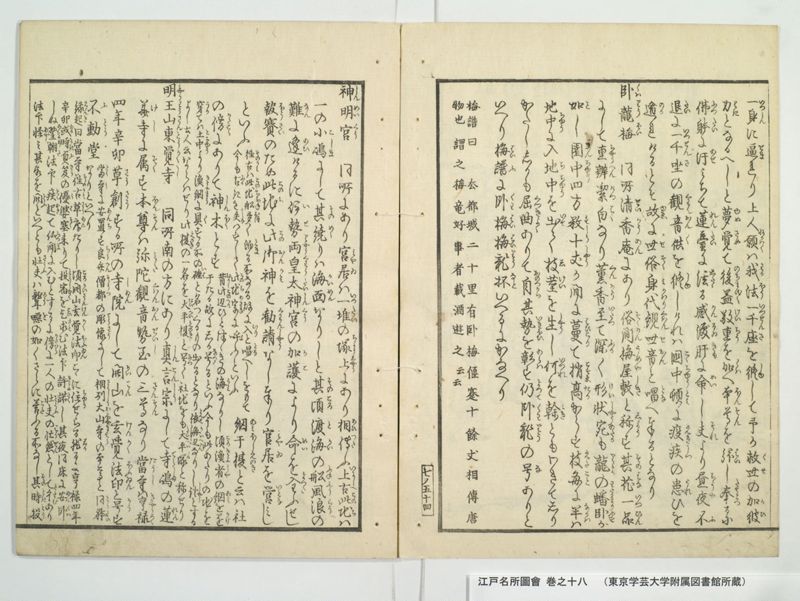
翻刻
【普門院のつづき】
一身(いつしん)に逼(せま)れり上人 願(ねかはく)は我(わが)法一千座(ほういつせんさ)を修(しゆ)して予か救世(くせ)の加彼(かひ)
力(りき)となるへしと夢覚(ゆめさめ)て後(のち)益々(ます〳〵)軽重(けいちう)を加(くは)へ本尊(ほんそん)を拝(はい)し奉(たてまつ)るに
仏体(ふつたい)に汗(あせ)みちて蓮台(れんたい)に法(したゝ)?る感涙(かんるゐ)肝(きも)に命(めい)し夫(それ)より昼夜(ちうや)不(ふ)
退(たい)に一千座(いつせんさ)の観音供(くわんおんく)を修(しゆ)しけれは国中(こくちゆう)頓(とみ)に疫疾(えきしつ)の患(うれ)ひを
遁(のか)れけるとそ故(ゆゑ)に世俗(せそく)身代観世音(みかはりくはんせおん)と唱(とな)へ奉るとなり
臥竜梅(くはりうばい) 同所 清香庵(せいかうあん)にあり俗間(そくかん)梅屋敷(うめやしき)と称(しよう)す其花(そのはな)一品(いつひん)
にして重弁(ちやうへん)潔白(けつはく)なり薫香(くんかう)至(いたつ)て深(ふか)く形状(けいしやう)宛(あたか)も竜(りよう)の蟠臥(わたかまりふす)か
如(こと)し園中(ゑんちゆう)四方 数十丈(すしうしやう)か間に蔓(はひこり)て梢(こすゑ)高(たか)からす枝毎(えたこと)に半(なかは)は
地 中(ちゆう)に入 地中(ちちゆう)を出(いて)て枝茎(ゑけい)を生(しやう)し何(いつれ)を幹(みき)ともわきてしり
かたししかも屈曲(くつきよく)ありて自(おのつから)其 勢(いきほひ)を彰(あらは)す仍(よつて)臥竜(くわりう)の号(な)ありと
いへり梅譜(はいふ)に臥梅(くわはい)梅竜(はいりう)抔(なと)いへるにかなへり
《割書:梅譜曰 去都城二十里有臥梅偃蹇十余丈相伝唐|物也謂之梅竜好事者載酒遊之云々》
神明宮(しんめいくう) 同所にあり宮居(みやゐ)は一堆(いつたい)の塚上(ちようしやう)にあり相伝(あひつた)ふ上古(いにしへ)此地(このち)は
一の小島(こしま)にして其繞(そのめく)りは海面(かいめん)なりしと其頃(そのころ)渡海(とかい)の船(ふね)風浪(ふうらう)の
難(なん)に逢(あひ)けるに伊勢(いせ)両皇太神宮(しやうくわうたいしんくう)の加護(かこ)により命(いのち)を全(まった)ふせし
報賽(ほうさい)のため此地(このち)に此(この)御神(おんかみ)を勧請(くわんしやう)なし奉り宮居(みやゐ)を営(いとな)みし
といふ 《割書:往古(そのかみ)は此地(このち)船(ふね)多(おほ)く泊(とま)る所なる故に入(いり)と唱(とな)へしをもて|今も古(ふる)きを失(うしな)はすして此地(このち)字(あさな)に呼(よふ)といふ》 網干榎(あみほしえのき)と云は社
の傍(かたはら)にありて神木とす 《割書:昔(むかし)此辺(このへん)ひとつゝきの海(うみ)なりし頃(ころ)漁者(きよしや)の網(あみ)を懸(かけ)|干たる故にしか号(なつく)るといふ今も此あたりの地を》
《割書:穿(うか)ては土中(とちゆう)より漁網(きよまう)に具(く)する所の硾(いは)と名つくるもの出るとなり依(よつて)海辺(かいへん)なりし証(しやう)とする|よし土人云ならはせり此 榎(えのき)の一名を太平榎(たいへいえのき)と号(なつ)く社地をも太平塚(たいへいつか)と称せり》
明王山東覚寺(みやうわうさんとうかくし) 同所南の方にあり真言宗(しんこんしう)にして寺島(てらしま)の蓮(れん)
華寺(けし)に属(そく)す本尊(ほんそん)は弥陀(みた)観音(くはんおん)勢至(せいし)の三尊(さんそん)なり当寺(たうし)は享禄(きやうろく)
四年辛卯 草創(さうさう)する所の寺院(しゐん)にして開山(かいさん)を玄覚法印(けんかくほふゐん)と号(かう)す
不動(ふとう)堂 《割書:当寺(たうし)に安置(あんち)す良弁僧都(らうへんそうす)の彫像(てうさう)にして相州(さうしう)大山寺(おほやまてら)の本尊と胴体(とうたい)|なりといへり》
《割書:縁起(えんき)曰当寺 往古(そのかみ)草庵(さうあん)たりし頃(ころ)開山(かいさん)玄覚法印(けんかくほふゐん)こゝに住(ちゆう)せらる然(しか)るに享禄四年|辛卯 或時(あるとき)負笈(ふきう)の優娑塞(うはそく)来りて投宿(とうしゆく)を乞(こひ)求(もと)む法印 許諾(きよたく)し其夜同床に安臥(あんくは)》
《割書:しぬ翌朝(あくるあさ)法印 疾起(とくおき)て仏間(ふつま)に入むとするに傍(かたはら)に一人の壮夫(さうふ)の忙然(はうせん)として彳(たたすむ)あり|法印 怪(あやし)み其故を問(とふ)といへとも壮夫(さうふ)は聾唖(ろうを)の如くさらに答(こた)ふる所なし其時(そのとき)投(とう)》
現代語訳
【普門院の続き】
一身に迫った。上人は願って「私が法華経一千座を修して、私の救世の加護力となるように」と、夢から覚めた後、ますます軽重を加えて本尊を拝礼申し上げると、仏体に汗がみちて蓮台に滴る感涙が肝に命じ、それより昼夜怠ることなく一千座の観音供を修したところ、国中がたちまち疫病の患いを逃れることができたという。故に世俗では身代観世音と唱え申し上げるのである。
臥竜梅 同所の清香庵にあり、俗間では梅屋敷と称する。その花は一品であって重弁で潔白である。薫香はきわめて深く、形状はあたかも竜が蟠り臥すが如くである。園中四方数十丈の間に蔓延って梢は高くなく、枝ごとに半分は地中に入り、地中から出て枝茎を生じ、いずれが幹ともわきて知りがたい。しかも屈曲があって自然にその勢いを現す。よって臥竜の号があるという。梅譜に臥梅、梅竜などというものに適っている。
《割書:梅譜に曰く、都城を去ること二十里に臥梅があり、偃蹇として十余丈、相伝えて唐物なり、これを梅竜と謂い、好事者は酒を載せて遊ぶという》
神明宮 同所にあり、宮居は一つの塚の上にある。相伝によれば、上古この地は一つの小島であって、その周りは海面であったという。その頃、渡海の船が風浪の難に遭ったが、伊勢両皇太神宮の加護により命を全うできたので、その報賽のためこの地にこの御神を勧請申し上げ、宮居を営んだという。
《割書:往古はこの地に船が多く泊まる所であった故に「入」と唱えたので、今も古きを失わずしてこの地の字に呼ぶという》
網干榎というのは社の傍らにあって神木とする。
《割書:昔この辺り一続きの海であった頃、漁者の網を掛け干したが故にそう号するという。今もこのあたりの地を掘ると土中より漁網に具する所の碇と名付けるものが出るといい、海辺であった証拠とするという。土人の慣わしという。この榎の一名を太平榎と号し、社地をも太平塚と称する》
明王山東覚寺 同所の南の方にあり、真言宗にして寺島の蓮華寺に属する。本尊は弥陀・観音・勢至の三尊である。当寺は享禄四年辛卯に草創した寺院にして、開山を玄覚法印と号する。
不動堂《割書:当寺に安置する。良弁僧都の彫像にして、相州大山寺の本尊と同体なりという》
《割書:縁起に曰く、当寺往古草庵であった頃、開山玄覚法印がここに住されていた。しかるに享禄四年辛卯、ある時負笈の優婆塞が来て投宿を乞い求む。法印は許諾し、その夜同床に安臥した。翌朝法印が早起きして仏間に入ろうとすると、傍らに一人の壮夫が茫然として佇んでいる。法印が怪しんでその故を問うといえども、壮夫は聾唖の如くさらに答える所がない。その時投...》
英語訳
【Continuation of Fumon-in Temple】
...pressed upon him personally. The high priest prayed, "May I perform one thousand sessions of the Lotus Sutra so that it may become the power of my salvation and protection." After awakening from his dream, he increasingly added reverence and weight to his worship of the principal image. When he saw that the Buddha statue was covered with sweat and tears of gratitude dripped onto the lotus pedestal, it commanded his heart. From then on, he performed one thousand sessions of Kannon offerings day and night without rest, and the entire country was able to escape the suffering of epidemic disease. Therefore, common people call it Migawari Kanzeon (Substitute Kannon).
Garyū-bai (Reclining Dragon Plum Tree) - Located at Seikō-an in the same place, commonly called "Plum Mansion." Its flowers are of superior quality with double petals and pure white color. The fragrance is extremely deep, and its form resembles a dragon coiled and lying down. It spreads across several dozen jō in all directions within the garden, with branches not reaching high but each branch half-entering the ground and emerging from the earth to produce new stems. It is difficult to distinguish which is the main trunk. Moreover, it has curves that naturally display its vigor, hence the name "Reclining Dragon." This matches what is called "garyū-bai" or "bairyū" in plum catalogs.
《Annotation: The Plum Catalog states: "Twenty ri from the capital there is a reclining plum tree, bent and twisted for over ten jō, traditionally said to be from Tang China, called 'plum dragon,' and refined people bring wine to enjoy it"》
Shinmei-gū Shrine - Located in the same place, the shrine building sits atop a single mound. According to tradition, in ancient times this land was a small island surrounded by sea. At that time, when crossing ships encountered difficulties with wind and waves, they were able to preserve their lives through the protection of the Ise Grand Shrines. In gratitude, they enshrined this deity here and built the shrine.
《Annotation: In ancient times, many ships anchored at this place, so it was called "iri" (entrance), and even now this old name is preserved in the place name》
What is called the "Net-drying Zelkova" stands beside the shrine and serves as the sacred tree.
《Annotation: Long ago when this area was continuous sea, fishermen hung and dried their nets here, hence the name. Even now when digging in this area, objects called "anchors" used with fishing nets emerge from the soil, which serves as proof that this was once seaside, according to local custom. This zelkova is also called "Taihei Zelkova" and the shrine grounds are called "Taihei Mound"》
Myōō-san Tōkaku-ji Temple - Located to the south of the same place, it belongs to the Shingon sect and is affiliated with Renge-ji Temple in Terashima. The principal images are the three honored ones: Amida, Kannon, and Seishi. This temple was founded in the fourth year of Kyōroku (1531), and its founding priest was called Genkaku Hōin.
Fudō Hall 《Annotation: Enshrined at this temple. It is a carved image by Priest Rōben and is said to be of the same body as the principal image of Ōyama-dera Temple in Sagami Province》
《Annotation: The origin story states: In ancient times when this temple was a grass hermitage, the founding priest Genkaku Hōin resided here. However, in the fourth year of Kyōroku (1531), at one time a traveling lay Buddhist practitioner came and requested lodging. The priest granted permission and they slept in the same bed that night. The next morning when the priest rose early to enter the Buddha hall, a robust man stood bewildered nearby. When the priest found this strange and asked the reason, the man was like a deaf-mute and gave no answer at all. At that time...》