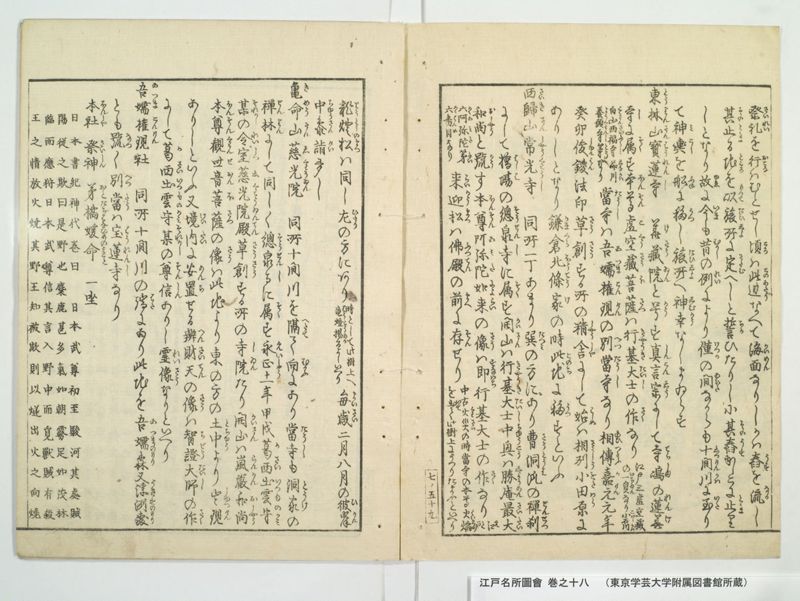
翻刻
【亀戸村、香取大神宮の続き】
祭礼(さいれい)を行(おこな)はむとせし頃(ころ)は此辺(このあたり)なへて海面(かいめん)なりしかは舂(うす)を流(なか)し
其(その)止(とゝま)る地(ところ)を以(もつて)旅所(たひしよ)に定(さたむ)へしと誓(ちか)ひたりしに其舂(そのうす)かしこに止(とゝま)り
しとなり故(ゆゑ)に今(いま)も昔(むかし)の例(れい)により僅(わつか)の間(あひた)なからも十間川(しつけんかは)に至(いた)り
て神輿(みこし)を船(ふね)に移(うつ)し旅所(たひしよ)へ神幸(しむかう)なしまゐらす
東林山宝蓮寺(とうりんさんはうれんし) 華蔵院(けさうゐん)と号(かう)す真言宗(しんこんしう)にして寺島(てらしm)の蓮華寺(れんけし)に属(そく)す本尊(ほんそん)虚空蔵菩薩(こくさうほさつ)は行基大士(きやうきたいし)の作(さく)なり 《割書:江戸三虚空蔵|の一員(いちゐん)なり小石川(こいしかは)》
《割書:白山西福寺(はくさんさいふくし)品川(しなかは)|養願寺(ようくわんし)等(とう)なり》 当寺(たうし)は吾嬬権現(あつまこんけん)の別当寺(へつたうし)なり相伝(あひつたふ)嘉元(かけん)元年
癸卯 俊鑁(しゆんはん)法印 草創(さうさう)する所の精舎(しやうしや)にして始(はしめ)は相州小田原(さうしうをたはら)に
ありしとなり鎌倉(かまくら)北条家(ほうてうけ)の時 此地(このち)に移(うつ)すといふ
西帰山常光寺(さいきさんしやうくわうし) 同所一丁あまり巽(たつみ)の方にあり曹洞派(さうとうは)の禅刹(せんせつ)
にして橋場(はしは)の総泉寺(そうせんし)に属(そく)す開山(かいさん)は行基大士(きやうきたいし)中興(ちゆうこう)は勝庵最大(しようあんさいたい)
和尚(おしやう)と号(かう)す本尊(ほんそん)阿弥陀如来(あみたによらい)の像(さう)は即(すなはち)行基大士の作(さく)なり 《割書:江(え)|戸(と)》
《割書:六阿弥陀(ろくあみた)第(たい)|六番目(ろくはんめ)なり》 来迎松(らいかうまつ)は仏殿(ふつてん)の前(まへ)に存(そん)せり 《割書:中古 火災(くわさい)の時当寺の本尊 火焔(くはえん)|を出(いて)て此樹上にうつりたまふといへり》
竜灯松(りうとうのまつ)は同し左(ひたり)の方にあり 《割書:時として樹上へ|竜灯(りうとう)揚(あか)るよしいへり》 毎歳(まいさい)二月八月の彼岸(ひかん)中(ちゆう)参詣(さんけい)多し
亀命山慈光院(きめうさんしくわうゐん) 同所十間川を隔(へたて)て向(むか)ふにあり当寺(たうし)も洞家(とうけ)の
禅林(せんりん)にして同しく総泉寺(そうせんし)に属(そく)す永正(えいしやう)十一年甲戌 葛西(かさい)出雲守(いつものかみ)
某(それかし)の令室(れいしつ)慈光院殿(しくわうゐんてん)草創(さうさう)する所の寺院(しゐん)たり開山(かいさん)は嵐巌和尚(らんかんおしやう)
本尊(ほんそん)観世音菩薩(くわんせおんほさつ)の像(さう)は此地より東の方の土中(とちゆう)より出現(しゆつけん)
ありしといふ又 境内(けいたい)に安置(あんち)せる弁財天(へんさいてん)の像(さう)は智証大師(ちせうたいし)の作(さく)
にして葛西出雲守某(かさいいつものかみそれかし)の尊信(そんしん)ありし霊像(れいさう)なりといへり
吾嬬権現(あつまこんけん)社 同所十間川の端(はた)にあり此地を吾嬬森(あつまのもり)又 浮州森(うきすのもり)
とも号(なつ)く別当(へつたう)は宝蓮寺(ほうれんし)なり
本社(ほんしや) 祭神(さいしん) 弟橘媛命(おとたちはなひめのみこと) 一座
日本書紀神代巻曰 日本武尊初至駿河其処賊
陽従之欺曰是野也麋鹿甚多気如朝霧足如茂林
臨而応狩日本武尊信其言入野中而覓獣賊有殺
王之情放火焼其野王知被欺則以燧出火之向焼
現代語訳
【亀戸村、香取大神宮の続き】
祭礼を行おうとしていた頃、この辺り一帯は海面であったため、臼を流して、その止まる地を旅所(神輿の仮の安置所)に定めようと誓ったところ、その臼がかしこに止まったのだという。そのため今でも昔の例により、わずかな間ではあるが十間川に至って神輿を船に移し、旅所へ神幸を行っている。
東林山宝蓮寺 華蔵院と号する。真言宗で寺島の蓮華寺に属する。本尊の虚空蔵菩薩は行基大師の作である。江戸三虚空蔵の一つで、他は小石川白山西福寺、品川養願寺などである。当寺は吾嬬権現の別当寺である。伝承によると嘉元元年(1303年)癸卯、俊鑁法印が草創した精舎で、初めは相州小田原にあったという。鎌倉北条家の時代にこの地に移したという。
西帰山常光寺 同所から一町余り巽の方にある。曹洞宗の禅寺で、橋場の総泉寺に属する。開山は行基大師、中興は勝庵最大和尚と号する。本尊阿弥陀如来の像は行基大師の作である。江戸六阿弥陀の第六番目である。来迎松は仏殿の前にある。中古、火災の時に当寺の本尊が火炎を出してこの樹上に移ったという。
竜灯松は同じく左の方にある。時として樹上に竜灯が灯るという。毎年二月八月の彼岸中は参詣者が多い。
亀命山慈光院 同所で十間川を隔てて向かいにある。当寺も曹洞宗の禅林で、同じく総泉寺に属する。永正十一年(1514年)甲戌、葛西出雲守某の令室慈光院殿が草創した寺院である。開山は嵐巌和尚。本尊観世音菩薩の像はこの地より東の方の土中より出現したという。また境内に安置されている弁財天の像は智証大師の作で、葛西出雲守某が尊信していた霊像だという。
吾嬬権現社 同所で十間川の端にある。この地を吾嬬森また浮州森とも呼ぶ。別当は宝蓮寺である。
本社 祭神 弟橘媛命 一座
日本書紀神代巻に曰く 日本武尊が初めて駿河に至った時、その処の賊が表面では従うふりをして欺き「この野は麋鹿が甚だ多く、気は朝霧のよう足は茂林のようです」と言って狩りを勧めた。日本武尊はその言葉を信じて野中に入って獣を探したが、賊は王を殺そうとしてその野に放火した。王は欺かれたことを知ると燧で火を出して向かい火を焼いた...
英語訳
[Continuation of Kameido Village, Katori Grand Shrine]
When they were about to hold the festival, this entire area was covered by sea, so they vowed to float a mortar and determine the temporary resting place (for the portable shrine) where it would stop. The mortar stopped at that place. Therefore, even now following the ancient custom, though for only a brief distance, they proceed to the Jikken River where the portable shrine is transferred to a boat and carried to the temporary resting place.
Tōrinzan Hōrenji Temple - Also called Kezōin. It belongs to the Shingon sect and is affiliated with Renkeji Temple in Terajima. The principal image of Kokūzō Bosatsu (Ākāśagarbha Bodhisattva) is the work of Master Gyōki. It is one of the Three Kokūzō of Edo, along with Saifukuji Temple in Koishikawa Hakusan and Yōganji Temple in Shinagawa. This temple serves as the administrative temple (bettōji) for Azuma Gongen. According to tradition, it was founded in the first year of Kagen (1303), year of the Water Rabbit, by the Dharma Seal Shunban. It was originally located in Odawara in Sagami Province and was moved to this location during the time of the Hōjō family of Kamakura.
Saikisan Jōkōji Temple - Located about one chō southeast of the same area. It is a Zen temple of the Sōtō sect, affiliated with Sōsenji Temple in Hashiba. The founding priest was Master Gyōki, and the restorer was called Zen Master Shōan Saidai. The image of Amida Nyorai is the work of Master Gyōki. It is the sixth temple in the Edo Six Amida pilgrimage. The Raigō Pine stands in front of the Buddha hall. In ancient times, during a fire, the principal image of this temple is said to have emitted flames and moved to the top of this tree.
The Dragon Lantern Pine is on the left side. It is said that dragon lanterns sometimes appear on the tree. Many pilgrims visit during the equinox periods of February and August each year.
Kimyōzan Jikōin Temple - Located across the Jikken River from the same place. This temple is also a Zen forest of the Tōdō school, similarly affiliated with Sōsenji Temple. It was founded in the 11th year of Eishō (1514), year of the Wood Dog, by the wife of Kasai Izumo-no-kami, known as Lady Jikōin. The founding priest was Zen Master Rankan. The image of Kanzeon Bosatsu (Avalokiteśvara) is said to have emerged from the earth east of this location. The image of Benzaiten enshrined in the temple grounds is the work of Master Chishō and was a sacred image revered by Kasai Izumo-no-kami.
Azuma Gongen Shrine - Located at the edge of the Jikken River in the same area. This place is also called Azuma Forest or Ukisu Forest. The administrative temple is Hōrenji.
Main Shrine - Deity: Princess Ototachibanahime - One seat
The Chronicles of Japan, Age of the Gods volume states: When Prince Yamato Takeru first arrived in Suruga, the local rebels pretended to submit and deceived him, saying "This field has many deer, with mist like morning fog and undergrowth like a dense forest," encouraging him to hunt. Prince Yamato Takeru believed their words and entered the field to search for animals, but the rebels intended to kill the prince and set fire to the field. When the prince realized he had been deceived, he used a fire drill to create a counter-fire...