翻刻
【挿し絵】
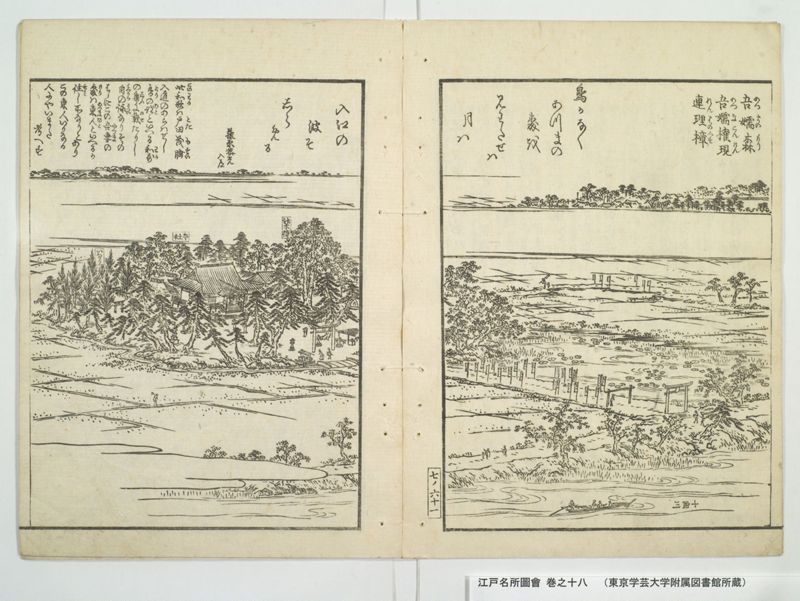
吾嬬森(あつまのもり)
吾嬬権現(あつまこんけん)
連理樟(れんりのくす)
鳥かなく
あつまの
森を
見わたせ
は
月
は
入江の
波そ
しら
め
る
藤原恭光
入道
此(この)和歌(わか)は戸田茂睡(とたもすい)
入道のあらはせし
鳥(とり)の跡(あと)といへる和歌(わか)
の集(しふ)に載(のせ)たりし
自(みつから)の詠(えい)なりその
はしにこの吾妻(あつま)の
森(もり)は東人(あつまひと)といへるか
住(すみ)し所なりとあり
この東人いかなる
人にやいまた
考へす
【図中】
十間川
神木樟
本社
いなり
現代語訳
【挿絵】
吾妻森(あづまのもり)
吾妻権現(あづまごんげん)
連理樟(れんりのくす)
鳥が鳴く
吾妻の
森を
見渡せば
月は
入江の
波ぞ
白く
光
る
藤原恭光
入道
この和歌は戸田茂睡入道が著した『鳥の跡』という和歌集に載せられた自作の歌である。その序文にこの吾妻の森は「東人(あづまびと)」という人が住んでいた所であるとある。この東人がどのような人物であるかは、今もって分からない。
【図中】
十間川
神木樟
本社
稲荷
英語訳
[Illustration]
Azuma Forest (Azuma no Mori)
Azuma Gongen Shrine (Azuma Gongen)
Intertwined Camphor Tree (Renri no Kusu)
Birds sing—
looking out over
Azuma
Forest,
the moon
makes the waves
of the inlet
appear
white
and bright
Fujiwara Kyōkō
Lay Priest
This waka poem is an original composition by the lay priest Toda Mosui, included in his poetry collection called "Tori no Ato" (Traces of Birds). In the preface, it states that this Azuma Forest was the place where a person called "Azumabito" (Eastern Person) lived. The identity of this Eastern Person remains unknown to this day.
[In the diagram]
Jikken River
Sacred Camphor Tree
Main Shrine
Inari [Shrine]