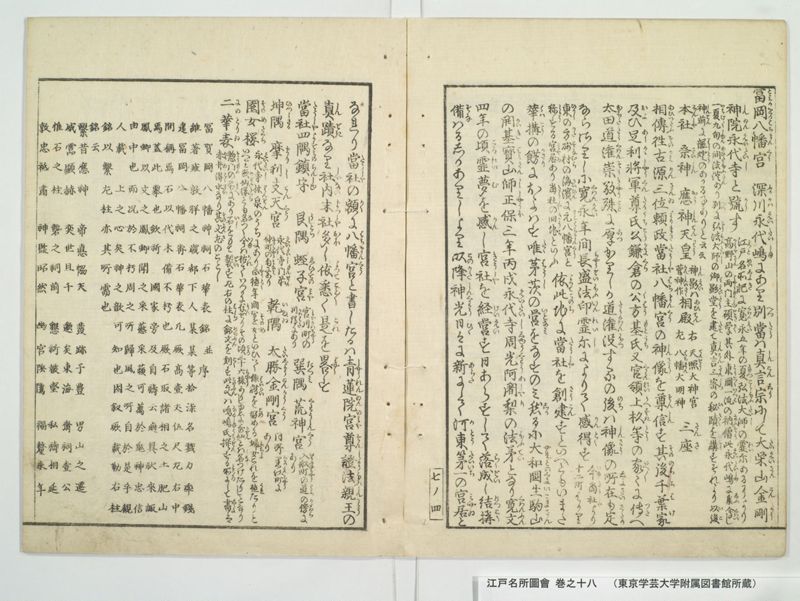
翻刻
富岡八幡宮(とみかをかはちまんくう) 深川永代島(ふかかはえいたいしま)にあり別当(へつたう)は真言宗(しんこんしう)にして大栄山(たいえいさん)金剛(こんかう)
神院(しんゐん)永代寺(えいたいし)と号(かう)す 《割書:江戸名所記(えとめいしよき)に寛永(くはんえい)五年の夏(なつ)弘法大師(こうほふたいし)の霊爾(れいし)あるにより|高野山(かうやさん)の両門主(りやうもんしゆ)碩学(せきかく)其外 東国一派(とうこくいつは)の衲僧(なふそう)此 永代島(えいたいしま)に集会(しふくはい)し》
《割書:一夏九旬(いちけくしゆん)の間(あひた)法談(ほふたん)あり別(へつ)に弘法大師(こうほふたいし)の御影堂(みえいたう)を建(たて)て真言三密(しんこんさんみつ)の秘賾(ひさく)を講(こう)すそれより以後(いこ)|神前(しんせん)に竜灯(りうとう)のあかる事ありと云々》
本社(ほんしや) 祭神(さいしん) 応神天皇(おうしんてんわう) 《割書:神影(しんえい)は|菅神作(かんしんのさく)》 相殿(あひてん) 《割書:右 天照(てんせう)大神宮|左 八幡(はちまん)大明神》 三座(さんさ)
相伝(あひつたふ)往古(そのかみ)源三位頼政(けんさんゐよりまさ)当社(たうしや)八幡宮(はちまんくう)の神像(しんさう)を尊信(そんしん)す其後(そののち)千葉家(ちはけ)
及(およ)ひ足利将軍(あしかゝしやうくん)尊氏公(たかうちこう)鎌倉(かまくら)の公方(くはう)基氏(もとうち)又 官領(くわんれい)上杉(うへすき)等(とう)の家々(いへ〳〵)に伝(つた)へ
太田道潅(おほたたうくはん)崇敬(そうきやう)殊(こと)に厚(あつ)かりしか道潅(とうくはん)没(ほつ)するの後(のち)は神像(しんさう)の所在(しよさい)も定(さたか)
ならさりしに寛永(くはんえい)年間 長盛法印(ちやうせいほふいん)霊爾(れいし)によりて感得(かんとく)す 《割書:今(いま)当社(たうしや)より|十二町はかり》
《割書:東(ひかし)の方(かた)砂村(すなむら)の海浜(かいひん)に元八幡宮(もとはちまんくう)と|称(しよう)する宮居(みやゐ)あり当社(たうしや)の旧地(きうち)といふ》 依(よつて)此地(このち)に当社(たうしや)を創建(さうこん)すといへともいまた
華構(くはこう)の錺(かさり)におよはす唯(たゝ)茅茨(はうし)の営(いとなみ)をなすのみ然(しか)るに大和国(やまとのくに)生駒山(いこまさん)
の開基(かいき)宝山師(はうさんし)正保(しやうほ)三年丙戌 永代寺(えいたいし)周光阿闍梨(しゆうくわうあしやり)の法弟(ほふてい)となり寛文(くはんふん)
四年の頃(ころ)霊夢(れいむ)を感(かん)し宮社(きうしや)を経営(けいえい)す日あらすして落成(らくせい)し結構(けつこう)
備(そな)はるしかありしより以降(このかた)神光(しんくわう)日々(ひゝ)に新(あらた)にして河東(かとう)第一(たいいち)の宮居(みやゐ)と
なれり当社(たうしや)の額(かく)に八幡宮(はちまんくう)と書したるは青蓮院宮尊証法親王(しやうれんゐんのみやそんしようほふしんわう)の
真蹟(しんせき)なり社内(しやない)末社(まつしや)多(おほ)し依(よつて)悉(こと〳〵)く是(これ)を略(りやく)す
当社四隅鎮守(たうしやよすみのちんしゆ) 艮隅(うしとら) 蛭子宮(ゑひすのみや) 《割書:宮川町(みやかはちやう)の|川端(かははた)にあり》 巽隅(たつみ) 荒神宮(くわうしんくう) 《割書:入船町(いりふねちやう)の道(みち)の傍(かたはら)に|あり》
坤隅(ひつしさる) 摩利支天宮(まりしてんくう) 《割書:永代寺門前(えいたいしもんせん)|仲町(なかちやう)の南(みなみ)にあり》 乾隅(いぬゐ) 大勝金剛宮(たいしようこんかうくう) 《割書:同所 黒江町(くろえちやう)に|あり》
園女桜(そのめさくら) 《割書:永代寺(えいたいし)林泉(りんせん)のうちにあり正徳(しやうとく)年間 園女(そのめ)といひて俳諧(はいかい)を好(この)める婦女(ふちよ)これを植(うゑ)たりと|いへり歌仙桜(かせんさくら)とも名(な)つく今(いまは)枯(かれ)てわつかに存(そん)せりその頃(ころ)三十六 株(ちゆう)ありしゆゑに歌仙(かせん)とは名(な)つけたりしとなり》
二華表(にのとりゐ) 《割書:惣門(そうもん)の前(まへ)にあり石(いし)をもて製(せい)す左右の柱(はしら)に銘文(めいふん)を刻(こく)す此文(このふん)は鳴島氏(なるしまうち)撰(せん)する所(ところ)にして書(しよ)は|赤井得水(あかゐとくすい)なり其文(そのふん)左(さ)のことし》
富賀岡八幡神祠石華表銘並序
維著雍敦牂之歳都下人某某等拾柒名戮力率銭
建富岡八播祠歬石華表凡厥高壱丈伍尺左右中
間称焉石以代木備不朽也厥石取諸相之土肥山
焉蓋此挙也欽祈 国家旁及自祷云𨔁具状来諏
鳳卿以文之鳳卿聞之采■#1采蘋可薦於鬼神忠信
由中也而況於不朽周之所帰風之所自於是乎観
人載 上之心矣神之歆可知也因叙厥載勒右柱
銘以繋左柱亦其所需也
銘云
繄昔応神 帝徳恊天 発跡于豊 男山之遷
威霝顕赫 奕世且千 邈矣東海 斎祠壱公
惟石之柱 礱之祠前 懇祈報𤦒 私祷相延
敦忠祗粛 神監昭然 幽宮陰騭 福釐永年
現代語訳
富岡八幡宮(とみおかはちまんぐう) 深川永代島(ふかがわえいたいじま)にあり、別当(べっとう)は真言宗(しんごんしゅう)にして大栄山(だいえいざん)金剛神院(こんごうしんいん)永代寺(えいたいじ)と号する。《江戸名所記によると、寛永五年の夏、弘法大師の霊験があるにより、高野山の両門主、碩学その他東国一派の僧侶が、この永代島に集会し、一夏九旬の間法談を行った。別に弘法大師の御影堂を建てて真言三密の秘奥を講じた。それより以後、神前に竜灯の灯る事があるという》
本社 祭神 応神天皇《神像は管神作》相殿《右 天照大神宮 左 八幡大明神》三座
相伝によると、往古源三位頼政が当社八幡宮の神像を尊信した。その後千葉家および足利将軍尊氏公、鎌倉の公方基氏、また管領上杉等の家々に伝えられ、太田道灌の崇敬殊に厚かったが、道灌没後は神像の所在も定かでなくなった。寛永年間、長盛法印が霊験によって感得した。《今当社より十二町ばかり東の方、砂村の海浜に元八幡宮と称する宮居があり、当社の旧地という》そこでこの地に当社を創建したというが、まだ華麗な装飾には及ばず、ただ茅葺きの営みをなすのみであった。然るに大和国生駒山の開基宝山師が正保三年丙戌、永代寺周光阿闍梨の法弟となり、寛文四年の頃霊夢を感じて宮社を経営した。日もあらずして落成し、結構も備わった。これより以降神光日々に新たにして、河東第一の宮居となった。
当社の額に「八幡宮」と書したるは青蓮院宮尊証法親王の真筆である。社内末社多し。よってことごとくこれを略す。
当社四隅鎮守 艮隅 蛭子宮《宮川町の川端にあり》 巽隅 荒神宮《入船町の道の傍らにあり》 坤隅 摩利支天宮《永代寺門前仲町の南にあり》 乾隅 大勝金剛宮《同所黒江町にあり》
園女桜《永代寺林泉のうちにあり。正徳年間園女といって俳諧を好める婦女がこれを植えたという。歌仙桜とも名づく。今は枯れてわずかに存在する。その頃三十六株あったゆえに歌仙とは名づけたりしとなり》
二の鳥居《総門の前にあり。石をもって製す。左右の柱に銘文を刻む。この文は鳴島氏撰するところにして書は赤井得水なり。その文左のごとし》
富賀岡八幡神祠石華表銘並序
維雍正敦牂の歳、都下人某某等十七名力を戮せ銭を率い、富岡八幡祠前に石華表を建つ。およそその高さ一丈五尺、左右中間これに称う。石をもって木に代え、朽ちざることを備う。その石相の土肥山より取る。けだしこの挙は、恭しく国家を祈り、あまねく自らの祷りに及ぶという。具状来たりて鳳卿に諏り、文をもってこれをす。鳳卿これを聞く、采采蘋は鬼神に薦むべし、忠信は由中なり。而して况んや朽ちざる周の帰する所、風の自ずる所をや。ここにおいて人載の上の心を観る。神の歆うること知るべし。よって叙その載を勒し右柱に銘して左柱に繋ぐ。またその需むる所なり。
銘にいう
それ昔応神、帝徳天に協い、跡を豊に発し、男山のこれに遷る。威霊顕赫、奕世かつ千、邈たる東海、斎祠一公。これ石の柱、これを祠前に礱す。懇祈報謝、私祷相延び、敦忠祗粛、神監昭然。幽宮陰騭、福釐永年。
英語訳
Tomioka Hachiman Shrine is located on Fukagawa Eitai Island. Its Buddhist administrator (bettō) belongs to the Shingon sect and is called Daieizan Kongō Shin'in Eitai-ji Temple. According to the Edo Meisho-ki (Records of Famous Places in Edo), in the summer of Kanen 5 (1628), due to the spiritual manifestation of Kōbō Daishi (Kūkai), the two head priests of Mount Kōya, learned monks, and other monks of the eastern provinces gathered on this Eitai Island and held Buddhist discussions for ninety days of one summer. They separately built a portrait hall of Kōbō Daishi and lectured on the esoteric mysteries of Shingon's three secrets. From then on, dragon lanterns are said to appear before the shrine.
Main Shrine - Enshrined deity: Emperor Ōjin (the divine image is said to be made by Kan'shin). Auxiliary shrines: right - Amaterasu Ōmikami, left - Hachiman Daimyōjin - three seats in total.
According to tradition, in ancient times, Minamoto no Yorimasa (Gen Sani Yorimasa) venerated the divine image of this Hachiman Shrine. Later it was transmitted to the Chiba family, Shogun Ashikaga Takauji, Kamakura Kubō Motouji, Kanrei Uesugi and other families. Ōta Dōkan's reverence was particularly deep, but after Dōkan's death, the whereabouts of the divine image became uncertain. During the Kan'ei era, the priest Chōsei obtained it through spiritual revelation. About twelve chō east of the current shrine, on the seashore of Sunamura, there is a shrine called Moto-Hachiman Shrine, said to be the old site of the current shrine. Therefore, the current shrine was founded on this site, but it had not yet achieved magnificent decoration, being only a simple thatched structure. However, Hōzan-shi, the founder of Mount Ikoma in Yamato Province, became a dharma disciple of Eitai-ji's Shūkō Ajari in Shōhō 3 (1646), and around Kanbun 4 (1664), inspired by a divine dream, he managed the shrine construction. It was completed in a short time and became well-appointed. From then on, the divine light renewed daily, and it became the foremost shrine east of the river.
The plaque inscribed "Hachiman Shrine" at the current shrine is the authentic calligraphy of Prince Shōren'in-no-miya Sonshō Hōshin'nō. There are many subsidiary shrines within the compound, so they are all omitted here.
Four Corner Guardian Shrines of the Current Shrine: Northeast corner - Ebisu Shrine (located at the riverbank of Miyakawa-chō); Southeast corner - Kōjin Shrine (located beside the road in Irifune-chō); Southwest corner - Marishiten Shrine (located south of Nakachō in front of Eitai-ji gate); Northwest corner - Taishō Kongō Shrine (located in Kuroe-chō in the same area).
Sonome Cherry Tree: Located within the garden of Eitai-ji. During the Shōtoku era, a woman called Sonome who loved haikai poetry is said to have planted this. It is also called Kasen (Immortal Poet) Cherry. Now it is withered and barely exists. At that time there were thirty-six trees, hence the name Kasen.
Second Torii Gate: Located in front of the main gate, made of stone. Inscriptions are carved on the left and right pillars. This text was composed by Mr. Narushima and written by Akai Tokusui. The text is as follows:
"Inscription and Preface for the Stone Torii of Tomigaoka Hachiman Shrine
In the year of Yongzheng Dun Zang, seventeen townspeople joined forces and contributed money to build a stone torii in front of Tomioka Hachiman Shrine. Its height is about one jō five shaku, with left and right proportionally spaced. Stone replaces wood to ensure permanence. The stone was taken from Mount Dohi in Sagami Province. This undertaking was to respectfully pray for the nation and extend to personal prayers. A detailed account was brought to consult Master Hōkei for the text. Master Hōkei heard this: 'Even humble water plants can be offered to the gods and spirits through sincere faith.' How much more so for this permanent structure where devotion gathers and virtue originates. Here we observe the hearts of the people toward their superiors. The gods' pleasure can be known. Therefore, I record this account, engrave it on the right pillar as an inscription, and connect it to the left pillar as required.
The inscription says:
Long ago Emperor Ōjin, his imperial virtue harmonizing with Heaven, originated in Toyo and moved to Otokoyama. His awesome spiritual power manifest and glorious, through generations for a thousand years. In the distant eastern sea, this sacred shrine for one lord. These stone pillars, polished before the shrine. Earnest prayers of gratitude, private supplications extending continuously. Sincere loyalty and reverent respect, divine observation clearly evident. The hidden palace's mysterious blessings, fortune and prosperity for eternal years."