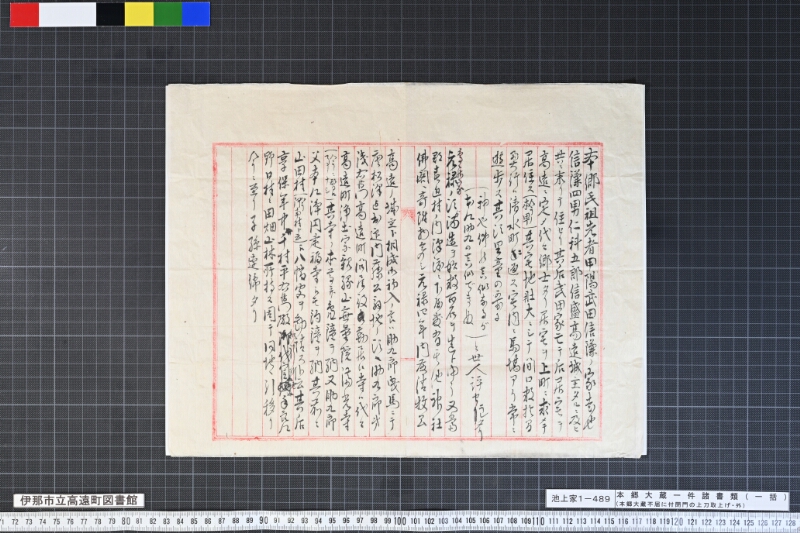
翻刻
本郷氏祖先者甲陽武田信鎌ノ家老也
信鎌四男高遠城主タルニ及ㇶ
共ニ来リテ住セリ其后武田家亡テ后居宅ヲ
高遠ニ定メ代々郷士タリ居宅ヲ上町ニ求メテ
居住ス(《割書:今ノ|本町》)其宅地壮大ニシテ間口数拾間
奥行ハ清水町ニ通ス宅内ニ馬場アリ常ニ
遊歩ス其頃里童の歌に
(神や仏の真似なるが
本郷助九の真似できぬ)と世人評セラレタリ
《見せ消ち:元禄|鳥居家》ノ頃ゟ酒造ヲ始数百石ヲ造トゆう又当
郡春近村ノ内沢渡ニ下屋敷有其他神社
仏閣へ寄附物多シ元禄四年内藤清枚公
高遠ノ城主ト相成御初入ノ節ハ助九郎曳馬ニテ
唐松澤迄出迎内藤公拝地ノ頃ニ助九郎弟
浅右衛門高遠町問屋役《見せ消ち:相》勤居候寺ハ代々
高遠町浄土宗親縁山無量院満光寺
(《割書:今ニ替ㇽ|事ナシ》)其寺ノ本尊幷鳧鐘ヲ納又助九郎
父本郷浄円建福寺江モ釣鐘ヲ納其前 ニ
山田村(《割書:今|河南村ト云》)江八幡宮ヲ勧請スト云其后
享保年中千村平右衛門殿《見せ消ち:御代官地|知行所地》手良郷
野口村ニ田畑山林所持ス因テ同地へ引移り
今ニ至り子孫連綿タリ
現代語訳
本郷氏の祖先は甲斐国武田信鎌の家老であった。信鎌の四男が高遠城主となった際、共に来て住み着いた。その後武田家が滅亡した後、居住地を高遠に定め、代々郷士として暮らした。居宅を上町(今の本町)に求めて居住した。その宅地は壮大で、間口数十間、奥行きは清水町に通じていた。宅内に馬場があり、常に散歩していた。その頃里の子供たちの歌に「神や仏の真似はできるが、本郷助九の真似はできない」と世間の人々に評価されていた。
元禄年間頃から酒造業を始め、数百石を醸造したという。また当郡春近村内の沢渡に別邸があり、その他神社仏閣への寄付も多かった。元禄四年(1691年)内藤清枚公が高遠の城主となり、初入国の際には助九郎が引き馬で唐松沢まで出迎えた。内藤公着任の頃に助九郎の弟浅右衛門が高遠町問屋役を務めていた。菩提寺は代々高遠町浄土宗親縁山無量院満光寺(今に至るまで変わらない)で、その寺の本尊並びに梵鐘を納めた。また助九郎の父本郷浄円は建福寺にも釣鐘を納めた。その以前に山田村(今は河南村という)に八幡宮を勧請したという。その後享保年中、千村平右衛門殿の手良郷野口村に田畑山林を所持していたため、同地へ引き移り、今に至るまで子孫が連綿と続いている。
英語訳
The ancestors of the Hongo clan were retainers of Takeda Nobukama of Kai Province. When Nobukama's fourth son became lord of Takato Castle, they came and settled there together. After the fall of the Takeda house, they established their residence in Takato and lived as rural samurai (gōshi) for generations. They acquired a residence in Kamimachi (present-day Honmachi) where they lived. Their estate was magnificent, with a frontage of several dozen ken and a depth extending to Shimizu-machi. There was a riding ground within the estate where they regularly took walks. At that time, local children sang: "One can imitate gods and buddhas, but cannot imitate Hongo Sukeku," and he was thus praised by the people of the world.
From around the Genroku era, they began sake brewing, producing several hundred koku. They also had a secondary residence in Sawatari within Haruchika village of the district, and made many donations to shrines and temples. In Genroku 4 (1691), when Lord Naito Kiyohira became castle lord of Takato, Sukuro went out to welcome him at Karamatsu-sawa with a led horse during his initial entry. Around the time of Lord Naito's appointment, Sukuro's younger brother Asaemon served as the wholesale merchant representative (ton'ya-yaku) of Takato town. Their family temple was traditionally the Jodo sect temple Shinnen-zan Muryoin Manko-ji in Takato town (which remains unchanged to this day), and they donated the principal Buddhist image and temple bell to that temple. Sukuro's father, Hongo Jōen, also donated a hanging bell to Kenpuku-ji temple. Before that, it is said they invited the spirit of Hachiman Shrine to Yamada village (now called Kanan village). Later, during the Kyoho era, because they possessed rice fields, dry fields, and mountain forests in Noguchi village of Tera district under Lord Chimura Heiemon, they moved to that area, where their descendants have continued in an unbroken line to the present day.