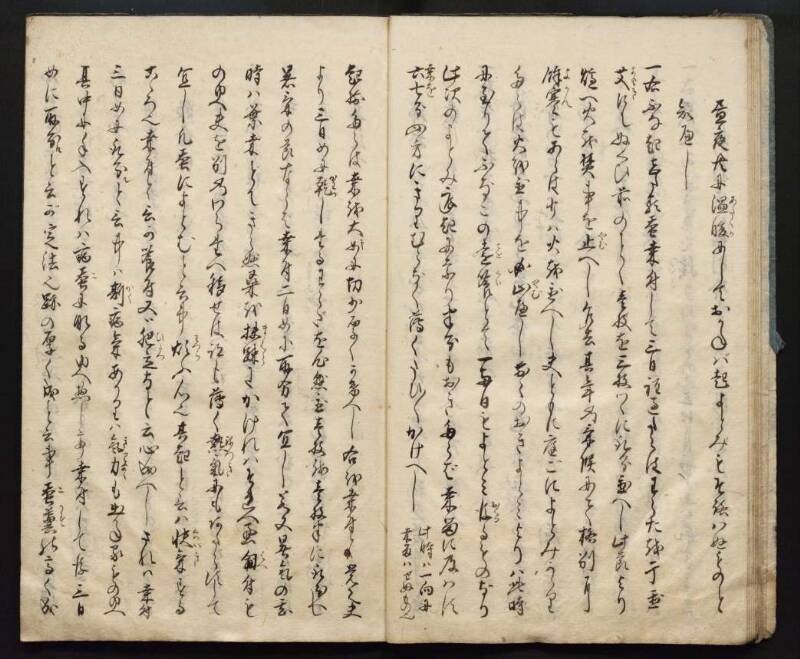
翻刻
【右丁】
昼夜共に温暖(あたゝか)にしておかねば起よとみもそろはぬものと
知へし
一右ふな起したる蚕桑付して三日程過たらはわらたを干置
艾(よもき)にてぬくひ前のことく壱枚を三枚ツヽに取分置へし此節より
爐へ火を焚事を止(やむ)へし乍_レ去其年の気候にて格別に
余寒(よかん)もあらは少は火を置へし夫ともに庭ごによとみかゝり
たらは火を置事を必 止(やむ)へし前々のおきよとみよりは此時
に至りてふなこの遠喰(とをくい)とて一両日もよとみ後(おくる)るものなり
此次のよとみ庭起になり半分もおきたらば桑留に及はす
桑を#1六七分四方にきりむらなく薄くたひ〳〵かけへし《割書:此時は一向に|桑留はせぬもの也》
【左丁】
起揃たらは桑を大きめに切少厚くかけへし右を桑付と覚え夫
より三日め乾(かわか)したるわらだを心懸置壱枚を壱枚半に取分へし
暑気の節ならば桑付二日めに取分て宜し若又暑気の甚
時は葉桑とてきらぬ桑を扶疎(まはら)にかけれはそれへ蚕 匍(はへ)付も
のゆへ夫を別のわらたへ移せは跡も薄く熱気(ねつき)にもあたらすして
宜し凡蚕によとむと云事 煩(わつら)ふ心也其起と云は快気(くはいき)する
こゝろ也桑付と云か喰付又は肥立(ひたつ)なと云心成へしされは桑付
三日めに取分ると云事は斯(かく)病気あかりは気力(きりよく)も出かねるものゆへ
其中に手入すれは病 蚕(こ)になるゆへ惣して桑付して後三日
めに取分ると云が定法也跡の厚く成と云う事 蚕糞(こかす)の高く成
現代語訳
【右丁】
昼夜ともに温暖にしておかなければ脱皮も揃わないものと
知るべきである。
一右のふな脱皮した蚕に桑を与えて三日程過ぎたら、わらだを干しておき、
よもぎで温め、前のように一枚を三枚ずつに取り分け置くべきである。この時期より
炉に火を焚くことを止めるべきである。しかしながらその年の気候で格別に
余寒もあれば少しは火を置くべきである。それとともに全体的に脱皮が始まったら
火を置くことを必ず止めるべきである。前々の脱皮よりもこの時
に至ってふな子の遠食いといって一、二日も脱皮が遅れるものである。
この次の脱皮は全体脱皮になり、半分も脱皮したならば桑止めに及ばず、
桑を六、七分四方に切り、むらなく薄く度々かけるべきである。《割書:この時は一切桑止めはしないものである》
【左丁】
脱皮が揃ったら桑を大きめに切り、少し厚くかけるべきである。右を桑付けと覚え、それ
より三日目に乾かしたわらだを心がけて置き、一枚を一枚半に取り分けるべきである。
暑気の季節ならば桑付け二日目に取り分けて良い。もしまた暑気の甚だしい
時は葉桑といって切らない桑をまばらにかければ、それに蚕が這い付くもの
ゆえ、それを別のわらだに移せば、跡も薄く熱気にもあたらずして
良い。おおよそ蚕が脱皮するということは煩う心である。その脱皮というのは快気する
心である。桑付けというのが食い付き又は肥立ちなどという心であるべきである。されば桜付け
三日目に取り分けるということは、このように病気明けは気力も出にくいものゆえ、
その中に手入れすれば病蚕になるゆえ、総じて桑付けして後三日
目に取り分けるというのが定法である。跡の厚くなるということは蚕糞の高くなる
英語訳
[Right page]
You should know that if you do not keep them warm day and night, the molting will not occur uniformly.
One: After feeding mulberry to the silkworms that have completed the "funa" molt for about three days, dry the straw mats,
warm them with mugwort, and divide one mat into three pieces as before. From this time onward,
you should stop lighting fires in the hearth. However, if there is particularly
lingering cold weather that year, you should maintain a small fire. At the same time, when molting begins overall,
you must stop using fire. Compared to previous molts, at this time
there is what is called "funa-ko's distant eating," where molting may be delayed by one or two days.
The next molt becomes a general molt, and when about half have molted, there is no need to stop feeding mulberry;
cut the mulberry into pieces about 6-7 bu square and feed thinly and frequently without unevenness. {{Note: At this time, you should not stop feeding mulberry at all}}
[Left page]
When molting is complete, cut the mulberry larger and feed somewhat thickly. Remember this as "mulberry attachment," and
three days later, prepare dried straw mats and divide one mat into one and a half mats.
In hot weather, it is good to divide them on the second day of mulberry attachment. If the heat is particularly
severe, use what is called "leaf mulberry" - uncut mulberry leaves placed sparsely, and the silkworms will crawl onto them.
By moving these to separate straw mats, the remaining area becomes thin and is not affected by heat,
which is good. Generally, when silkworms molt, it is a time of distress. The molt itself is a time of recovery.
"Mulberry attachment" should be understood as feeding attachment or healthy growth. Therefore, dividing on the
third day of mulberry attachment - since after such illness the energy is slow to return,
if you handle them during this period they will become diseased silkworms. Generally, dividing three days
after mulberry attachment is the established method. The thickening mentioned refers to the accumulation of silkworm droppings.