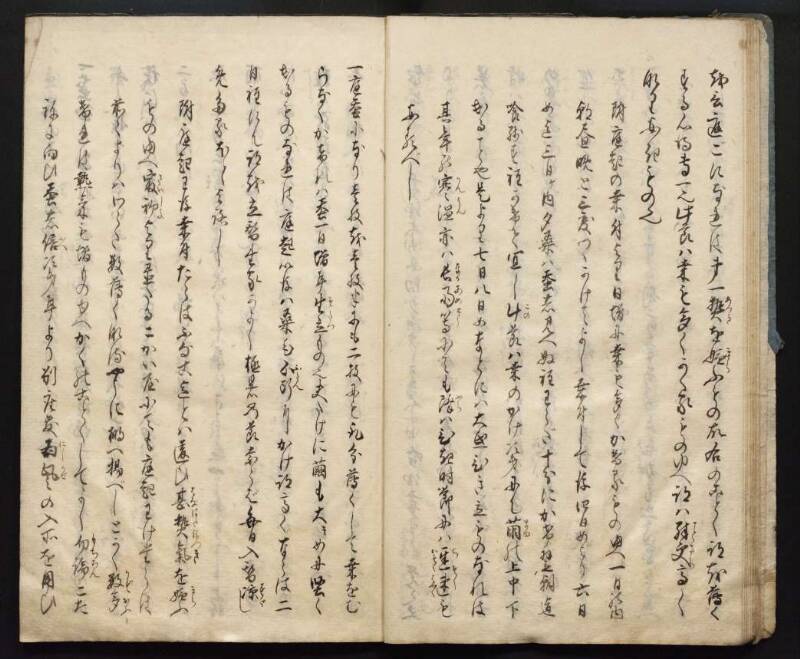
翻刻
【右丁】
を云庭ごになれは第一 熱(あつき)を嫌(きら)ふもの故右のことく跡を薄く
する心得専一也此節は桑も多くかゝるものゆへ跡は殊更(ことさら)高く
なり安きもの也
附庭起の桑付より日増に桑も多くかけるものゆへ一日の内
朝昼晩と三度ツヽかけてよし桑付して後四日めより六日
め迄三日ヶ内夕桑は蚕の見へぬ程わらだ十分にかけ翌朝迄
喰残す程かけて宜し此(この)節は桑のかけ次第にて繭(まゆ)の上中下
出ること也是より七日八日めなとには大氐ひき立ものなれは
其年の寒温(かんうん)亦は長雨等(なかあめとう)にても降(ふら)はひき時節には《振り仮名:遅速|ちそく|おそくはやく》も
あるべし
【左丁】
一庭蚕になり壱枚を壱枚半にも二枚にも取分薄くして桑をむ
らなくかけれは蚕一日増に 生立(そたつ)もの也夫たけに繭も大きめに堅く
出るものなれは庭起以後は桑も不断(ふたん)にかけ跡高くならは二
日程にて跡を立替たるかよし極暑の節ならば毎日入替 涼(すゞ)し
めたるほとよろし
附庭起已後桑付たらはふなこ迄とは違ひ甚(はなはた)熱気(ねつき)を嫌(きら)ふ
ものゆへ最初(さいしよ)より置たるこかい屋にても庭起わけたらは
前々よりはわらた数薄くなるやうに棚へ揚べしとかく数多(かずおふ)
けれは熱気も増ものゆへかくのことくしてよし勿論(もちろん)こた
ねに向ひ蚕の 倍(ふへ)次第により別座敷 西風(にしかせ)の入所を用ひ
現代語訳
【右丁】
を言う。三眠蚕になれば第一に熱気を嫌うものゆえ、右のように跡を薄く
する心得が専一である。この時期は桑も多く必要になるものゆえ、跡は特に高く
なりやすいものである。
附記:三眠起きの桑付けより日増しに桑も多くかけるものゆえ、一日のうち
朝昼晩と三度ずつかけて良い。桑付けして後四日目より六日
目まで三日間のうち、夕桑は蚕の見えぬ程わらだに十分にかけ、翌朝まで
食べ残す程かけて良い。この時期は桑のかけ方次第で繭の上中下の
出来が決まることである。これより七日八日目などには大体引き立てるものだが、
その年の寒暖や長雨などが降れば、引き立て時期にも遅速が
あるだろう。
【左丁】
一、三眠蚕になり一枚を一枚半にも二枚にも取り分けて薄くし、桑を均一に
かければ蚕は日増しに成長するものである。それだけに繭も大きめに堅く
出るものなので、三眠起き以後は桑も不断にかけ、跡が高くなれば二
日程で跡を入れ替えるのが良い。極暑の時期なら毎日入れ替えて涼し
くするほどが良い。
附記:三眠起き以後桑付けしたら二眠までとは違い、甚だ熱気を嫌う
ものゆえ、最初から置いた蚕飼い屋でも三眠起きを分けたら、
前々よりはわらだ数を薄くなるように棚へ上げるべきである。とにかく数多く
なれば熱気も増すものゆえ、このようにして良い。もちろん蚕種
に向かい蚕の増加次第により、別座敷で西風の入る所を用い
英語訳
[Right page]
This refers to the situation. When they become third-molt silkworms, they particularly dislike heat, so
the understanding of keeping the substrate thin as described above is most important. During this period, much mulberry is needed, so the substrate
tends to become particularly high.
Note: From the mulberry feeding after the third molt, increasingly more mulberry is needed daily, so it is good
to feed three times a day - morning, noon, and evening. From the fourth to sixth day after mulberry attachment,
during these three days, for evening mulberry feeding, cover the straw mats completely so the silkworms cannot be seen, feeding enough
to last until the next morning with leftovers. During this period, the quality of cocoons (superior, medium, inferior) is determined
by how mulberry is provided. From about the seventh or eighth day, they are generally ready for mounting, but
depending on that year's temperature conditions or long rains, there may be variations in timing
for mounting.
[Left page]
One: When they become third-molt silkworms, divide one mat into one and a half or even two mats to thin them out, and if mulberry is applied evenly,
the silkworms will grow daily. Accordingly, the cocoons will be large and firm,
so after the third molt, mulberry should be fed continuously, and when the substrate becomes high, it is good to replace it
every two days or so. In extremely hot weather, it is best to replace daily to keep
them cool.
Note: After third-molt mulberry attachment, unlike up to the second molt, they greatly dislike heat,
so even in the silkworm-rearing house set up from the beginning, when third-molt division is done,
the straw mats should be placed on shelves more sparsely than before. In any case, when numbers increase,
heat also increases, so it is good to do this. Of course, depending on the silkworm variety
and the increase in silkworms, separate rooms with western breezes should be used