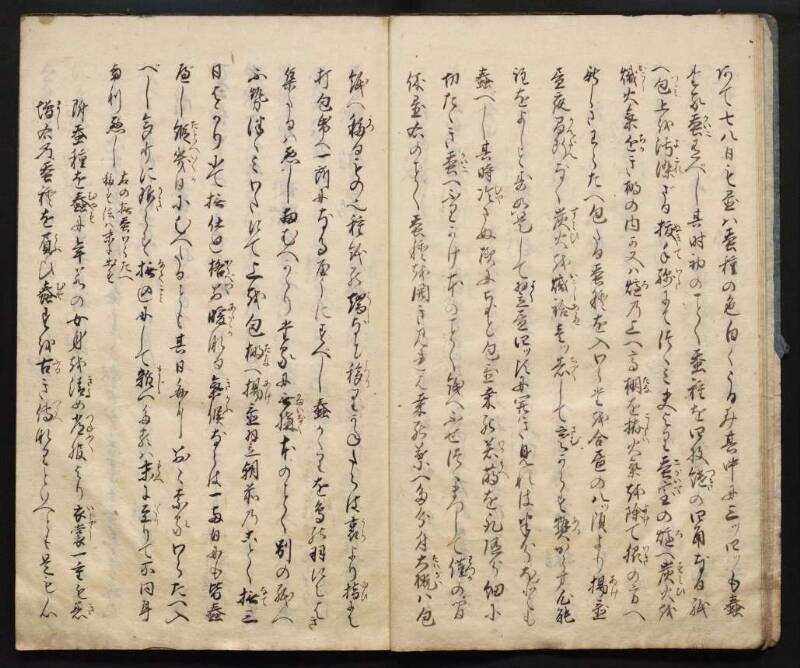
翻刻
【右丁】
あて七八日も置は蚕種の色白くうるみ其中に三ツ四ツも蠢
たる蚕(かいこ)有べし其時初のことく蚕種を四枚 継(つき)の四角なる紙
へ包(つゝみ)上を汚染(よこれ)ざる抜手綿(ぬきてわた)にてつゝみ夫より蚕室(こがいや)の爐(ろ)へ炭火(すみひ)を
熾(おこし)火気 近(ちか)き棚の内か又は爐(ろ)の上へ高 棚(たな)を拵(こしらい)火気を除(よけ)て脇(わき)の方へ
新しきわらたへ包たる蚕種を入わらたを合昼の八ツ頃より揚(あけ)置
昼夜 間断(かんだん)なく炭火(すみひ)を熾(おこし)袷(あわせ)壱ツ着(ちやく)して寒(さむ)からす熱(あつ)からす心能
程をよしとす如_レ是して翌(よく)昼四ツ頃に開き見れは半分ほとも
蠢べし其時 冷(ひや)さぬ様にちよと包置桑の若萌(わかもへ)を取随分細に
切たゝき蚕(かいこ)へふりかけ本のことく紙へふせつゝまつして僅(わつか)の間
休置右のことく蚕種を開き見れは桑の葉へ多分付 大概(たいがい)は包
【左丁】
紙へ移(うつ)るもの也種紙の端(はし)なと移(うつり)りかねたらは裏(うら)より指(ゆひ)にて
打包紙へ一所になるやうにすべし蠢かゝりを鳥の羽にてはき
集たるは悪し扨むへかゝりたるに無搆(かまいなく)本のことく別の紙へ
ふせつゝみわたにて上を包 棚(たな)へ揚(あけ)置翌朝前のことく撫(なて)三
日ばかりにて撫仕廻 格別(かくべつ)暖(あたゝか)なる気候(きかふ)ならは一両日にも皆蠢
べし縦(たとへ)幾日(いくか)にむへたることも其日毎に別々なるわらたへ入
べし多少に限(かき)らす撫込(なてこみ)にして雑(まじ)へたるは末(すへ)に至(いた)りて不同に
なり悪し《割書:右の撫蚕わらたへ|移す法は末に出す》
附蚕種を蠢(むやす)に年若の女身を清(きよ)め常服(つねふく)より衣裳(いしやう)一重も着(き)
増(まし)右の蚕種を負(うぶ)ひ蠢(むや)すを古(ふる)き伝(つたへ)なりといへとも是も心
現代語訳
【右丁】
当てて七八日も置けば蚕種の色が白くなり潤み、その中に三つ四つも孵化
した蚕があるべし。その時、初めの如く蚕種を四枚継ぎの四角な紙
へ包み、上を汚さない抜手綿で包み、それから蚕室の炉へ炭火を
起こし、火気の近い棚の内か又は炉の上へ高い棚を作り、火気を避けて脇の方へ
新しい藁苞で包んだ蚕種を入れ、藁苞を合わせて昼の八つ頃より開け置き、
昼夜間断なく炭火を起こし、袷一つ着て寒くもなく暑くもない適度な
程度をよしとする。このようにして翌日昼四つ頃に開いて見れば半分ほども
孵化すべし。その時冷やさぬように少し包み置き、桑の若芽を取り随分細かに
切り刻み、蚕へふりかけ、元の如く紙へ伏せて包み、僅かの間
休ませ置く。右の如く蚕種を開いて見れば、桑の葉へ多分付き、大概は包み
【左丁】
紙へ移るものなり。種紙の端などで移りかねるなら、裏より指で
打って包み紙へ一所になるようにすべし。孵化しかかりを鳥の羽で掃き
集めるのは悪し。さて孵化しかかったものに構わず、元の如く別の紙へ
伏せて包み、綿で上を包んで棚へ上げ置き、翌朝前の如く撫で、三
日ばかりで撫で仕舞い。格別暖かな気候なら一両日にも皆孵化
すべし。たとえ幾日に孵化したとしても、その日毎に別々の藁苞へ入れ
るべし。多少に限らず撫で込みにして混ぜたものは末に至って不揃いに
なり悪し。(右の撫蚕を藁苞へ移す法は末に出す)
附 蚕種を孵化させるのに、年若の女が身を清め、常服より衣装一重も
着増し、右の蚕種を負い孵化させるのを古い伝えなりと言えども、これも心
英語訳
【Right Page】
After placing them for seven to eight days, the silkworm eggs will turn white and become moist, and among them there should be three or four hatched
silkworms. At that time, as before, wrap the silkworm eggs in square paper made of four sheets joined together,
cover the top with clean cotton batting to avoid contamination, then make a charcoal fire
in the hearth of the silkworm room, construct a high shelf inside a shelf near the fire or above the hearth, avoiding direct heat and placing it to the side
the silkworm eggs wrapped in fresh straw bundles, join the straw bundles and leave them open from around the eighth hour of the day,
maintain charcoal fire day and night without interruption, wearing one lined garment so it is neither cold nor hot, maintaining an appropriate
temperature. Doing this, when opened and examined around the fourth hour of the following day, about half should have
hatched. At that time, wrap them briefly so they don't get cold, take young mulberry shoots and cut them very finely,
sprinkle them on the silkworms, cover with paper as before and wrap, let them rest for a short
while. When opening and examining the silkworm eggs as described, most will attach to the mulberry leaves, and generally will move to the wrapping
【Left Page】
paper. If some at the edges of the seed paper don't transfer easily, tap from behind with a finger
to make them gather on the wrapping paper. It is bad to sweep up the hatching silkworms with bird feathers.
Now, without disturbing those in the process of hatching, as before, cover with separate paper and
wrap, cover the top with cotton and place on the shelf, tend them the next morning as before, and finish tending in about three
days. If the weather is particularly warm, they should all hatch within a day or two.
Even if they hatch over several days, they should be placed in separate straw bundles each day.
Regardless of the number, those that are tended together and mixed will become uneven at the end and
this is bad. (The method of transferring these tended silkworms to straw bundles is explained later)
Note: For hatching silkworm eggs, having a young woman purify herself and wear one extra layer of clothing
over her regular clothes while carrying the silkworm eggs to incubate them is an old tradition, but this too requires careful