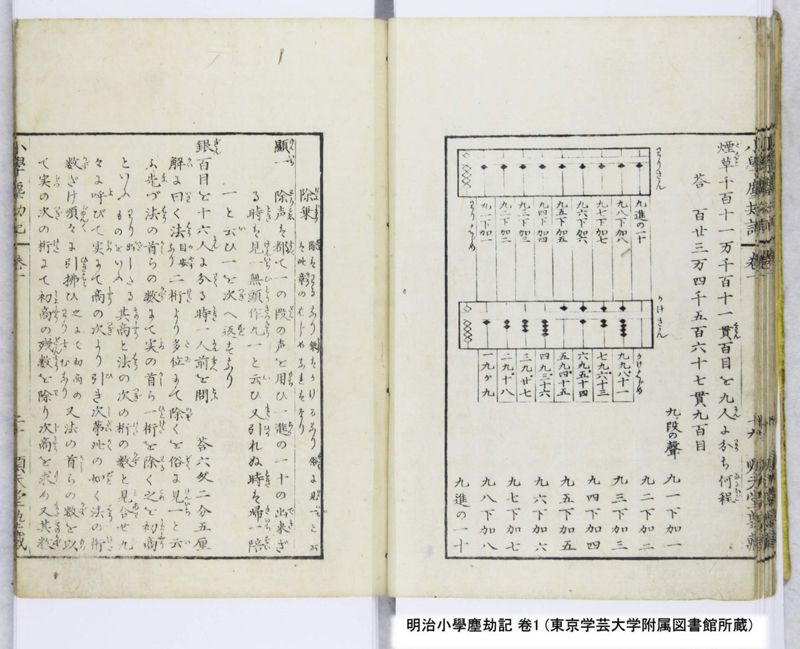
翻刻
【右丁】
煙草(たばこ)千百十一万千百十一 貫(くわん)百目を九 人(にん)に分(わか)ち何程(なにほど)
答 百廿三万四千五百六十七貫九百目
【2個の算珠盤図の夫々の下】
わりさん かけさん
九進の一十 かけはじめ
九八下加八 九九.八十一
九七下加七 七九.六十三
九六下加六 六九.五十四
九五下加五 五九.四十五
九四下加四 四九.三十六
九三下加三 三九.廿七
九二下加二 二九.十八
九一下加一 一九《割書:が》九
わりはじめ
【図解の下】
九《割書:ノ》段の声 九一下加一
九二下加二
九三下加三
九四下加四
九五下加五
九六下加六
九七下加七
九八下加八
九進の一十
【左丁】
除乗(ぢよじよう) 《割書:除(ぢよ)はわるなり乗(じよう)はかけるなり俗(ぞく)に見一(けんいち)と云|は此 章(くだり)のはじめなれはなり》
顕一(けんいち) 除声(わりこゑ)は都(すべ)て一の段(だん)の声を用(もち)ひ一 進(ちん)の一十の出来(でき)ざ
る時(とき)は見一無頭作九(けんいちむとうさつきう)一と云(い)ひ又(また)引(ひか)れぬ時(とき)は帰一賠(きいちばい)
一と云(い)ひ一を次(つぎ)へ返(もど)すなり
銀(ぎん)百目を十六 人(にん)に分(わく)る時(とき)一 人(にん)前(まえ)を問(とふ) 答六匁二分五厘
解(かい)に曰(いわ)く法(はう)《割書:目安(めやす)|なり》二 桁(けた)より多位(たゐ)にて除(のぞ)くを俗(ぞく)に見一(けんいち)と云(い)
ふ先(ま)づ法(はう)の首(かし)らの数(かず)にて実(じつ)の首(かし)ら一桁(ひとけた)を除(わる)く之(これ)を初商(しよしやう)
といふ《割書:わり出(いだ)したる|ものをいふ》其商(そのしやう)と法(はう)の次(つぎ)の桁(けた)の数(かず)と見合(みあわ)せ九
々に呼(よ)びて実(じつ)にて商(しやう)の次(つぎ)より引(ひ)き次第(しだい)此(かく)の如(ごと)く法(はう)の桁(けた)
数(かず)だけ順々(じゆん〳〵)に引払(ひきはら)ひ《割書:之にて初商の|わりすむなり》又法の首(かし)らの数(かず)を以(もつ)
て実(じつ)の次(つぎ)の桁(けた)にて初商(しよしやう)の残数(ざんすう)を除(わ)り次商(じしやう)を求(もと)め又(また)其数(そのかず)
現代語訳
【右丁】
煙草(たばこ)千百十一万千百十一貫百目を九人に分けるといくらになるか
答 百二十三万四千五百六十七貫九百目
【2個の算盤図それぞれの下】
割り算 掛け算
九進の一十 掛け始め
九八・下加八 九九・八十一
九七・下加七 七九・六十三
九六・下加六 六九・五十四
九五・下加五 五九・四十五
九四・下加四 四九・三十六
九三・下加三 三九・二十七
九二・下加二 二九・十八
九一・下加一 一九が九
割り始め
【図解の下】
九の段の声(九九)
九一・下加一
九二・下加二
九三・下加三
九四・下加四
九五・下加五
九六・下加六
九七・下加七
九八・下加八
九進の一十
【左丁】
除乗(じょじょう) (「除」は割ることであり、「乗」は掛けることである。俗に「見一(けんいち)」と言うのは、この章の始めにあるからである)
見一(けんいち) 割り声はすべて一の段の声を用い、一進の一十ができない時は「見一無頭作九(けんいちむとうさっきゅう)」と言い、また引けない時は「帰一倍一(きいちばいいち)」と言い、一を次へ戻すのである。
銀百目を十六人に分ける時、一人前を問う 答 六匁二分五厘
解説:「法」(割る数のこと)が二桁以上の位で割ることを、俗に「見一(けんいち)」という。まず法の先頭の数で実(割られる数)の先頭一桁を割る。これを「初商(しょしょう)」という(割り出したものをいう)。その商と法の次の桁の数を見合わせ、九九で呼んで実から商の次より引き、順々にこのように法の桁数だけ順に引き払い(これにより初商の割りが済む)、また法の先頭の数をもって実の次の桁で初商の残数を割り、次商を求め、またその数…
英語訳
【Right Page】
How much is 11,110,111 kan 100 me of tobacco when divided among 9 people?
Answer: 1,234,567 kan 900 me
【Below each of the two abacus diagrams】
Division Multiplication
Nine-advance one-ten Start of multiplication
Nine-eight, down add eight Nine-nine, eighty-one
Nine-seven, down add seven Seven-nine, sixty-three
Nine-six, down add six Six-nine, fifty-four
Nine-five, down add five Five-nine, forty-five
Nine-four, down add four Four-nine, thirty-six
Nine-three, down add three Three-nine, twenty-seven
Nine-two, down add two Two-nine, eighteen
Nine-one, down add one One-nine is nine
Start of division
【Below diagram】
Recitation for the 9 times table:
Nine-one, down add one
Nine-two, down add two
Nine-three, down add three
Nine-four, down add four
Nine-five, down add five
Nine-six, down add six
Nine-seven, down add seven
Nine-eight, down add eight
Nine-advance one-ten
【Left Page】
Division and Multiplication ("Division" means to divide; "Multiplication" means to multiply. The common term "ken'ichi" is used because this is the beginning of this chapter.)
Ken'ichi (見一) The division recitations all use the recitations of the "one" row. When "one-advance one-ten" cannot be performed, one says "ken'ichi mutō sakkyū" (見一無頭作九), and when subtraction is not possible, one says "kiichi baiichi" (帰一倍一), returning one to the next position.
When dividing 100 me of silver among 16 people, what is each person's share? Answer: 6 monme 2 bu 5 rin
Explanation: Dividing by a "divisor" (hō) of two or more digits is commonly called "ken'ichi." First, divide the leading digit of the dividend (jitsu) by the leading digit of the divisor. This is called the "initial quotient" (shoshō) (referring to what has been calculated). Comparing that quotient with the number in the next digit of the divisor, recite the multiplication table and subtract from the dividend starting from the position after the quotient digit. Continue in this manner, subtracting through as many digits as the divisor has (at which point the division of the initial quotient is complete). Then, using the leading digit of the divisor, divide the next digit of the remaining dividend to obtain the next quotient (jishō), and again that number…