翻刻
【右丁】
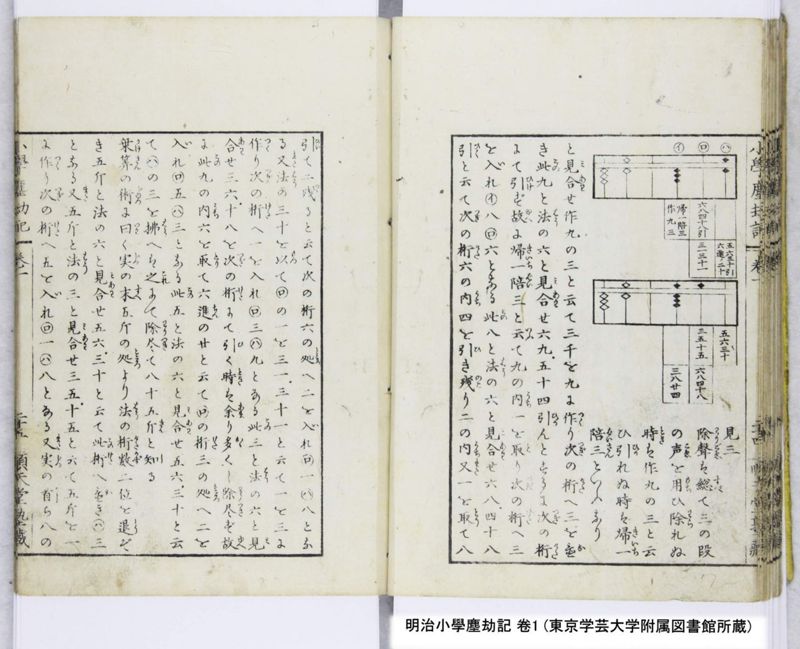
【2個の算珠盤図を挟み上中下】
㋩ 《割書:五六三十引|六進《割書:ノ》二十》 五六.三十
㋺ 六八四十八引 三一三十一 三五十五 六八四十八
㋑ 《割書:帰一陪三|作九三》 三八廿四
【図解の下】
見三
除声(わりごゑ)は総(すべ)て三の段
の声(こゑ)を用(もち)ひ除(わら)れぬ
時(とき)は作九の三と云
ひ引(ひか)れぬ時は帰一(きいち)
陪三(ばいさん)といふなり
【図解の左 前コマから続き】
と見合(みあわ)せ作九の三と云て三千を九に作(つく)り次(つぎ)の桁(けた)へ三を置(お)
き此(この)九と法(はう)の六と見合(みあわ)せ六九.五十四 引(ひか)んとするに次(つぎ)の桁(けた)
にて引(ひけ)ず故(ゆへ)に帰一陪(きいちばい)三と云(いふ)て九の内(うち)一を取(と)り次(つぎ)の桁(けた)へ三
を入(い)れ㋑八㋺六となる此(この)八と法(はう)の六と見合(みあわ)せ六八.四十八
引(ひく)と云て次(つぎ)の桁(けた)六の内(うち)四を引(ひ)き残(のこ)り二の内(うち)又(また)一を取(とり)て八
【左丁】
引(ひい)て二 残(のこ)ると云て次の桁六の処(ところ)へ二を入(い)れ㋺一㋩八とな
る又(また)法(はう)の三十を以(もつ)て㋺の一を三一.三十一と云て一を三に
作(つく)り次(つぎ)の桁(けた)へ一を入れ㋺三㋩九となる此(この)三と法(はう)の六と見(み)
合(あわ)せ三六.十八を次(つぎ)の桁(けた)にて引(ひ)く時(とき)は余(あま)り多(おゝ)くし除尽(わりつき)ず故(ゆへ)
に此(この)九の内(うち)六を取(とり)て六 進(ちん)の廿と云て㋺の桁(けた)三の処(ところ)へ二を
入(い)れ㋺五㋩三となる此(この)五と法の六と見合(みあわ)せ五六.三十と云
て㋩の三を払(はら)へは之(これ)にて除尽(わりつき)て八十五 斤(きん)と知(し)る
乗算(かけさん)の術(じゆつ)に曰(いわ)く実(じつ)の末(すへ)五斤の処(ところ)より法(はう)の桁数(けたかず)二位を退(しり)ぞ
き五斤と法の六と見合(みあわ)せ五六.三十と云て此桁(このけた)へ置(お)き㋩三
となる又(また)五斤と法(はう)の三と見合(みあわ)せ三五.十五と云て五斤を一
に作(つく)り次(つぎ)の桁(けた)へ五を入(い)れ㋺一㋩八となる又(また)実(じつ)の首(かし)ら八の
現代語訳
【右丁】
【算珠盤図2個(上中下に配置)】
㋩ 《五六三十引/六進二十》 五六・三十
㋺ 六八四十八引 三一・三十一 三五・十五 六八・四十八
㋑ 《帰一陪三/作九三》 三八・二十四
【図解の下】
「三の段の口唱え」(除声)
除声(わり声)はすべて三の段の声を用いて割り、割れない時は「作九の三」と言い、引けない時は「帰一陪三」と言う。
【図解の左・前頁より続き】
(法の三十)と見合わせ「作九の三」と言って三千を九に作り、次の桁へ三を置く。この九と法の六とを見合わせ「六九・五十四」を引こうとするが、次の桁にて引けないので、「帰一陪三」と言って九の内一を取り、次の桁へ三を入れ、㋑は八、㋺は六となる。この八と法の六とを見合わせ「六八・四十八」を引くと言って、次の桁の六の内四を引き、残り二の内またさらに一を取って八
【左丁】
引いて二残ると言って次の桁の六の位置へ二を入れ、㋺は一、㋩は八となる。また法の三十を用いて㋺の一を「三一・三十一」と言って一を三に作り、次の桁へ一を入れ、㋺は三、㋩は九となる。この三と法の六とを見合わせ「三六・十八」を次の桁にて引く時は余りが多くなって割り切れないので、この九の内六を取って「六進の二十」と言って㋺の桁の三のところへ二を入れ、㋺は五、㋩は三となる。この五と法の六とを見合わせ「五六・三十」と言って㋩の三を払えば、これにて割り切れて八十五斤と知る。
乗算の術に言う。実の末尾5斤の位置より法の桁数2位を退き、5斤と法の6とを見合わせ「五六・三十」と言ってこの桁へ置き、㋩は三となる。また5斤と法の3とを見合わせ「三五・十五」と言って5斤を一に作り、次の桁へ五を入れ、㋺は一、㋩は八となる。また実の最上位(首)の八の
英語訳
【Right Page】
【Two abacus diagrams arranged vertically】
㋩ 《5×6=30, subtract / advance 6 = 20》 5×6=30
㋺ 6×8=48, subtract 3×1=31 3×5=15 6×8=48
㋑ 《return one, triple three / complement of 9 for 3》 3×8=24
【Below the diagrams】
Mnemonic chant for division (除声):
All division chants use the multiplication table for 3. When division is not possible, say "complement of 9 for 3" (作九の三); when subtraction is not possible, say "return one, triple three" (帰一陪三).
【Left side of diagram — continued from previous page】
Matching with (the divisor's 30), say "complement of 9 for 3," change 3,000 to 9, and place 3 in the next position. Match this 9 with the divisor's 6, attempt to subtract "6×9=54," but it cannot be subtracted at the next position, so say "return one, triple three," take 1 from 9, enter 3 into the next position, making ㋑ equal to 8 and ㋺ equal to 6. Match this 8 with the divisor's 6, saying "6×8=48," subtract: from the 6 in the next position take away 4, then from the remaining 2, take 1 more and subtract 8,
【Left Page】
leaving 2, and say "subtract 8, 2 remains," place 2 into the position of 6 in the next position, making ㋺ equal to 1 and ㋩ equal to 8. Using the divisor's 30, apply "3×1=31" to ㋺'s 1, change 1 to 3, enter 1 into the next position, making ㋺ equal to 3 and ㋩ equal to 9. Matching this 3 with the divisor's 6, when "3×6=18" is subtracted from the next position, the remainder becomes too large and does not divide evenly, so take 6 from this 9, say "advance 6 = 20," enter 2 into the position of 3 at ㋺, making ㋺ equal to 5 and ㋩ equal to 3. Matching this 5 with the divisor's 6, say "5×6=30," and when 3 is cleared from ㋩, the division is complete, giving 85 kin.
The method of multiplication states: Retreat 2 positions (the number of digits in the divisor) from the last digit of 5 kin in the multiplicand, match 5 kin with the divisor's 6, say "5×6=30," place this in the position, making ㋩ equal to 3. Also match 5 kin with the divisor's 3, say "3×5=15," change 5 kin to 1, enter 5 into the next position, making ㋺ equal to 1 and ㋩ equal to 8. Then, the highest digit (首) 8 of the multiplicand...