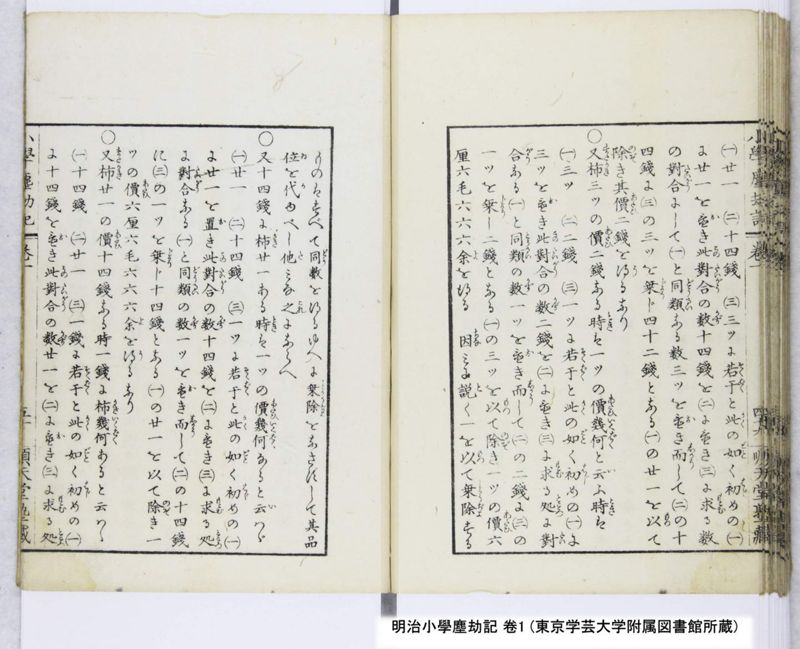
翻刻
【右丁】
㈠廿一 ㈡十四銭 ㈢三ツに若干(そくばく)と此(かく)の如(ごと)く初(はじ)めの㈠
に廿一を置(お)き此(この)対合(たいがう)の数(かず)十四銭を㈡に置き㈢に求(もとむ)る数
の対合(たいがう)にして㈠と同類(どうるい)なる数三ツを置(お)き而(しかう)して㈡の十
四銭に㈢の三ツを乗(じよう)じ四十二銭となる㈠の廿一を以(もつ)て
除(のぞ)き其 価(あたひ)二銭を得(う)るなり
○又(また)柿(かき)三ツの価(あたひ)二銭なる時(とき)一ツの価(あたひ)幾何(いくばく)と云(い)ふ時(とき)は
㈠三ツ ㈡二銭 ㈢一ツに若干(そくばく)と此(かく)の如(ごと)く初(はじ)めの㈠に
三ツを置(お)き此(この)対合(たいがう)の数(かず) 二銭を㈡に置き㈢に求(もとむ)る処(ところ)に対(たい)
合(がう)なる㈠と同類(とうるい)の数(かず)一ツを置(お)き而(しかう)して㈡の二銭に㈢の
一ツを乗(じよう)し二銭となる㈠の三ツを以(もつ)て除(のぞ)き一ツの価(あたひ)六
厘六毛六六六 余(よ)を得る 因(ちな)みに説(と)く一を以(もつ)て乗除(しようぢよ)する
【左丁】
ものはすべて同(どう)数を得るゆへに乗除(しようぢよ)をなさずして其品
位(ゐ)を代(か)ゆべし他(た)みな之(これ)にならへ
○又十四銭に柿(かき)廿一ある時(とき)は一ツの価(あたひ)幾何(いくばく)なると云(い)はゞ
㈠廿一 ㈡十四銭 ㈢一ツに若干(そくばく)と此(かく)の如(ごと)く初(はじ)目の㈠
に廿一を置(お)き此(この)対合(たいがう)の数(かず)十四銭を㈡に置き㈢に求(もとむ)る処(ところ)
に対合(たいがう)なる㈠と同類(どうるい)の数(かず)一ツを置(お)き而(しかう)して㈡の十四銭
に㈢の一ツを乗(じよう)じ十四銭となる㈠の廿一を以て除(のぞ)き一
ツの価(あたひ)六厘六毛六六六 余(よ)を得(う)るなり
○又(また)柿(かき)廿一の価(あたひ)十四銭なる時一銭に柿(かき)幾何(いくばく)あると云はゝ
㈠十四銭 ㈡廿一 ㈢一銭に若干(そくばく)と此(かく)の如(ごと)く初(はじ)めの㈠
に十四銭を置(お)き此(この)対合(たいがう)の数(かず)廿一を㈡に置(お)き㈢に求(もとむ)る処(ところ)
現代語訳
【右丁】
「㈠二十一 ㈡十四銭 ㈢三つに対していくらか」というように、初めの㈠に二十一を置き、この対となる数、十四銭を㈡に置き、㈢に求める数の対合であり㈠と同類の数、三つを置く。そして㈡の十四銭に㈢の三つを掛けると四十二銭となる。㈠の二十一で割ると、その値段は二銭と得られる。
○また、柿三つの値段が二銭であるとき、一つの値段はいくらかというときは、
「㈠三つ ㈡二銭 ㈢一つに対していくらか」というように、初めの㈠に三つを置き、この対となる数、二銭を㈡に置き、㈢に求めるところに対合である㈠と同類の数、一つを置く。そして㈡の二銭に㈢の一つを掛けると二銭となる。㈠の三つで割ると、一つの値段は六厘六毛六六六…余りを得る。ちなみに説く――一を掛けたり割ったりする
【左丁】
ものは、すべて同じ数を得るがゆえに、掛け算・割り算をせずに、その品の単位をそのまま置き換えるべきである。他の場合もみなこれに倣え。
○また、十四銭に柿が二十一個あるとき、一つの値段はいくらかというならば、
「㈠二十一 ㈡十四銭 ㈢一つに対していくらか」というように、初めの㈠に二十一を置き、この対となる数、十四銭を㈡に置き、㈢に求めるところに対合である㈠と同類の数、一つを置く。そして㈡の十四銭に㈢の一つを掛けると十四銭となる。㈠の二十一で割ると、一つの値段は六厘六毛六六六…余りと得られる。
○また、柿二十一個の値段が十四銭であるとき、一銭で柿は何個あるかというならば、
「㈠十四銭 ㈡二十一 ㈢一銭に対していくらか」というように、初めの㈠に十四銭を置き、この対となる数、二十一を㈡に置き、㈢に求めるところ
英語訳
[Right page]
Set up as "㈠ 21 ㈡ 14 *sen* ㈢ three items — how much?", placing 21 at the first position as ㈠; place its paired number, 14 *sen*, as ㈡; and in position ㈢, place three — which is paired with the quantity sought and is of the same kind as ㈠. Multiply ㈡ (14 *sen*) by ㈢ (three) to get 42 *sen*. Divide by ㈠ (21), and the price is found to be 2 *sen*.
○Next, when the price of three persimmons is 2 *sen*, and one asks what the price of one persimmon is:
Set up as "㈠ three items ㈡ 2 *sen* ㈢ one item — how much?", placing three at the first position as ㈠; place its paired number, 2 *sen*, as ㈡; and in position ㈢, place one — which is paired with the quantity sought and is of the same kind as ㈠. Multiply ㈡ (2 *sen*) by ㈢ (one) to get 2 *sen*. Divide by ㈠ (three), and the price of one persimmon is found to be 6 *rin* 6 *mō* 666… with a remainder. Incidentally, it is noted: when multiplying or dividing by one,
[Left page]
the result is always the same number; therefore, one should not perform the multiplication or division but simply replace the unit of the item accordingly. All other similar cases should follow this example.
○Further, if there are 21 persimmons for 14 *sen*, and one asks what the price of one persimmon is:
Set up as "㈠ 21 ㈡ 14 *sen* ㈢ one item — how much?", placing 21 at the first position as ㈠; place its paired number, 14 *sen*, as ㈡; and in position ㈢, place one — which is paired with the quantity sought and is of the same kind as ㈠. Multiply ㈡ (14 *sen*) by ㈢ (one) to get 14 *sen*. Divide by ㈠ (21), and the price of one persimmon is found to be 6 *rin* 6 *mō* 666… with a remainder.
○Further, when the price of 21 persimmons is 14 *sen*, and one asks how many persimmons there are for 1 *sen*:
Set up as "㈠ 14 *sen* ㈡ 21 ㈢ 1 *sen* — how many?", placing 14 *sen* at the first position as ㈠; place its paired number, 21, as ㈡; and in position ㈢, the place for the quantity sought