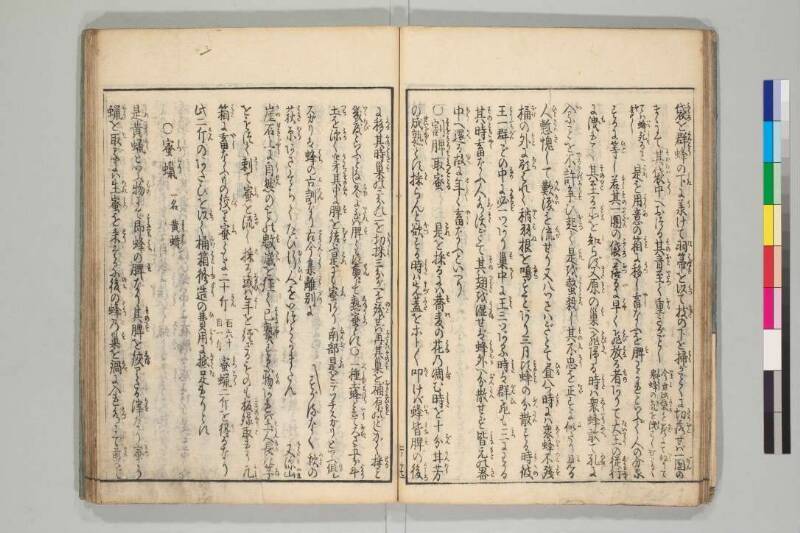
翻刻
【右丁】
袋(ふくろ)を群蜂(くんはう)の下(した)に承(う)けて羽箒(ははばき)を以(もつ)て枝(えだ)の下を掃(はく)がごとくに切落(きりおと)せば一/団(だん)の
まゝにて其(その)袋中(たいちう)へおつる其音(そのおと)至(いたつ)て重(おも)きがごとし《割書:今世(いまよ)此/袋(ふくろ)を籠(かご)にて作(つく)りて|衆蜂(しゆはう)の気(き)を洩(もら)さしむさなく》
《割書:ては蜂(はち)死(しす)ること|多(おゝ)し》是(これ)を用意(ようゐ)の箱(はこ)に移(うつ)し畜(やし)なふを脾(す)わかれといふて人の分家
するに等(ひと)し若(もし)其(その)一団(いつだん)の袋(ふくろ)へ落(おつ)るに早(はや)く飛放(とびはな)る者(もの)ありて大王(たいわう)の従行(じうぎやう)
に洩(も)れて其(その)至(いた)る所(ところ)を知(し)らず又(また)原(もと)の巣(す)へ飛帰(とびかへ)る時(とき)は衆蜂(しうはう)敢(あへ)て孔(あな)に
入(い)ることを不許(ゆるさず)争(あらそ)ひ起(おこり)て是(これ)を螫殺(さしころ)し其(その)不忠(ふちう)を正(たゞ)すに似(に)たり見(み)る
人(ひと)慙愧(さんき)して歎涙(かんるい)を流(なが)せり又八ツさはぎとて昼(ひる)八ツ時(とき)には衆蜂(しうはう)不残(のこさす)
桶(おけ)の外(そと)に顕(あら)はれて稍(やゝ)羽根(はね)を鳴(なら)すことあり三月/頃(ころ)蜂(はち)の分散(ぶんさん)する時(とき)彼(かの)
王(わう)一群(いちぐん)ごとの中(なか)に必(かならず)一ツあり巣中(すちう)に王(わう)三ツある時(とき)は群飛(ぐんひ)も三(みつ)にわかる
其時(そのとき)畜(やし)なふ人/水(みず)沃(そゝ)ぎて其翅(そのつばさ)を湿(うるほ)せば蜂(はち)外(ほか)へ分散(ぶんさん)せず皆(もと)元(もと)の器(き)
中(ちう)へ還(かへ)る故(ゆへ)に年々(とし〳〵)畜(やし)なふといへり
○割脾(すをきりて)取蜜(みつをとる) 是(これ)を採(と)るには蕎麦(そば)の花(はな)の凋(しぼ)む時(とき)を十/分(ぶん)甘芳(かんはう)
の成熟(せいじゆく)とす採(と)らんと欲(ほつ)する時(とき)は先(まづ)蓋(ふた)をホト〳〵叩(たゝ)けば蜂(はち)皆(みな)脾(す)の後(うしろ)
【左丁】
に移(うつる)其時(そのとき)巣(す)の三分の二を切採(きりとり)三分が一を残(のこ)せば再(ふたゝひ)其巣(そのす)を補(おきなひ)原(もと)のごとしかく採(とる)こと
幾度(いくたび)といふことなし冬(ふゆ)に至(いたれ)ば脾(す)ともに煎(せん)じて熟蜜(しほりみつ)とす○一種(いつしゆ)土蜂(つちはち)と云(いう)て大(おゝき)さ五分/斗(ばかり)
土を深(ふか)く穿(うかち)其中(そのなか)に脾(す)を結(むす)ぶ是(これ)にも蜜(みつ)あり南部(なんぶ)是(これ)をデツチスガリといふ但(たゞ)し
スガリは蜂(はち)の古訓(こくん)なり古今集(こきんしう)離別(りべつ)に 〽すがるなく秋(あき)の
萩原(はきはら)あさたちてたび行人(ゆくひと)をいつとかまたん 又(また)深山(みやま)
崖石上(かいせきじやう)に自然(しせん)のもの数歳(すさい)を経(へ)て已(すてに)熟(じゅく)する物(もの)あれば土人(としん)長(なか)き竿(さほ)
をもつて刺(さし)て蜜(みつ)を流(なが)し採(と)る或(あるひ)は年(とし)を経(へ)ざるものも板縁(よちのほり)取(と)れり凡(およそ)
箱(はこ)に畜(やし)なふもの絞(しぼ)り蜜(みつ)ともに二十/斤(きん)《割書:百六十|目一斤》蜜蝋(みつらう)二斤を得(う)るなり
此二/斤(きん)のあたひを以(もつ)て桶箱(おけはこ)修造(しゆざう)の費用(ひよう)に抵(あてゝ)足(た)れりとす
○蜜蝋(みつらう) 一名 黄蜡(わうさく)
是(これ)黄蝋(わうらう)といふ物(もの)にて即(すなはち)蜂(はち)の脾(す)なり其(その)脾(す)を絞(しぼ)りたる滓(かす)なり蜜(みつ)より
蝋(らう)を取(と)るには生蜜(たれみつ)を采(とり)たる後(のち)の蜂(はち)の巣(す)を鍋(なべ)に入れ水(みづ)にて煎(せん)じ
現代語訳
袋を群蜂の下に受けて、羽箒を以て枝の下を掃くがごとくに切り落とせば、一団のままにてその袋中へ落つる。その音至って重きがごとし。《今世この袋を籠にて作りて衆蜂の気を漏らさしむるさなくては蜂死すること多し》これを用意の箱に移し畜うを巣分かれといって、人の分家するに等し。
若しその一団の袋へ落つるに早く飛び放る者ありて、大王の従行に漏れてその至る所を知らず、また元の巣へ飛び帰る時は、衆蜂敢えて孔に入ることを許さず、争い起こりてこれを刺し殺し、その不忠を正すに似たり。見る人慙愧して歎涙を流せり。
また八つ騒ぎとて、昼八つ時には衆蜂残さず桶の外に現れて、やや羽根を鳴らすことあり。三月頃蜂の分散する時、かの王一群ごとの中に必ず一つあり。巣中に王三つある時は群飛も三つに分かる。その時畜う人水を注ぎてその翅を湿せば、蜂外へ分散せず皆元の器中へ還る故に、年々畜うといえり。
○巣を切りて蜜を取る これを採るには蕎麦の花の凋む時を十分甘芳の成熟とす。採らんと欲する時は、先ず蓋をほとほと叩けば、蜂皆巣の後ろに移る。その時巣の三分の二を切り採り、三分が一を残せば、再びその巣を補い元のごとし。かく採ること幾度ということなし。冬に至れば巣ともに煎じて熟蜜とす。
○一種土蜂という大きさ五分ばかり、土を深く穿ち、その中に巣を結ぶ。これにも蜜あり。南部これをデッチスガリという。ただしスガリは蜂の古訓なり。古今集離別に「すがる鳴く秋の萩原朝立ちて旅行く人をいつとかまたん」。
また深山崖石上に自然のもの数歳を経て已に熟する物あれば、土人長き竿をもって刺して蜜を流し採る。あるいは年を経ざるものも縁取れり。凡そ箱に畜うもの絞り蜜ともに二十斤《百六十匁一斤》、蜜蝋二斤を得るなり。この二斤の値を以て桶箱修造の費用に充て足れりとす。
○蜜蝋 一名黄蠟
これ黄蝋という物にて、即ち蜂の巣なり。その巣を絞りたる滓なり。蜜より蝋を取るには、生蜜を採りたる後の蜂の巣を鍋に入れ、水にて煎じ
英語訳
They place a bag beneath the swarm of bees and sweep it down as if brushing the underside of the branch with a feather broom, causing the entire cluster to fall into the bag. The sound is extremely heavy. (In modern times, if this bag is made of bamboo and does not allow the bees' air to escape, many bees will die.) Moving this to a prepared box for keeping is called "nest division," which is like humans establishing a branch family.
If some bees quickly fly away when the cluster falls into the bag, missing the great king's procession and their destination becoming unknown, or when they fly back to the original nest, the other bees absolutely refuse to let them enter the holes. Fighting breaks out and they sting them to death, seemingly correcting their disloyalty. People who witness this feel ashamed and shed tears of admiration.
There is also something called "eight o'clock commotion" - at the eighth hour of the day, all the bees without exception appear outside the container and flutter their wings somewhat. Around March when the bees disperse, there is always one king in each group. When there are three kings in the nest, the swarm also divides into three. At this time, if the beekeeper sprinkles water to moisten their wings, the bees do not disperse elsewhere but all return to the original container, which is why they can be kept year after year.
○Cutting the comb to extract honey: To harvest this, the time when buckwheat flowers wither is considered the peak of sweet fragrance maturation. When wanting to harvest, first tap the lid repeatedly, and all the bees move to the back of the comb. At that time, cut and take two-thirds of the comb, leaving one-third, and they will again repair that comb as before. This harvesting can be done countless times. When winter comes, both comb and honey are boiled together to make pressed honey.
○There is one type called ground bee, about five bu in size, that digs deep into the earth and builds nests inside. These also contain honey. In Nanbu, this is called "Decchi-sugari." However, "sugari" is the ancient reading for bee. In the Kokin-shū, in the section on partings: "When will I again meet the traveler who departs in the morning from the autumn bush clover fields where sugari cry?"
Also, on deep mountain cliff rocks, there are natural ones that have matured over several years, and local people use long poles to pierce them and collect the flowing honey. Some also harvest those that have not aged for years. Generally, from those kept in boxes, about twenty kin of pressed honey (160 monme per kin) and two kin of beeswax can be obtained. The value of these two kin is sufficient to cover the cost of repairing the containers and boxes.
○Beeswax (also called yellow wax)
This is what is called yellow wax, which is the bee's comb itself - the residue after the comb has been pressed. To extract wax from honey, the bee's comb after harvesting raw honey is put in a pot and boiled with water...