翻刻
【右丁】
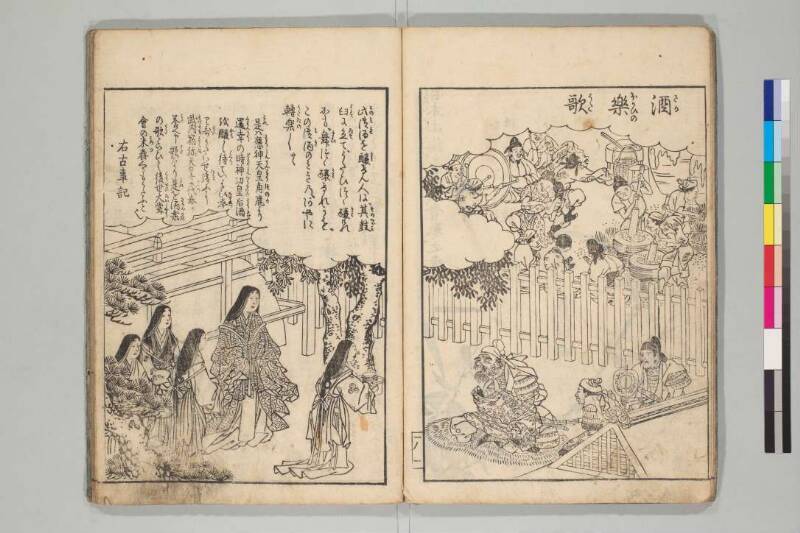
酒(さか)
楽(ほかひの)
歌(うた)
#1
【左丁】
此(この)御酒(みき)を醸(かみ)けん人は。其鼓(そのつゞみ)
臼(うす)に立(たて)て。うたひつゝ醸(かみ)けれ
かも。舞(まひ)つゝ醸(かみ)けれかも。
この御酒(みき)のみきの。あやに
転楽(うたたの)し#2《割書:サヽ》
是(これ)は応神天皇(わうしんてんわう)角鹿(つのか)より
還幸(くわんかう)の時(とき)神功皇后(しんくうくわうこう)酒(さけ)
を醸(かも)し待(はへり)#3ていはひ奉(たてまつ)
り哥(うた)うたはせ給(たま)ふに
武内宿祢(たけうちすくね)天皇に代(かはり)奉り
答(こた)へ申/歌(うた)なり是(これ)を酒楽(さかほかひ)
の歌(うた)といひて後世(こうせい)大嘗(たいしやう)
会の米(こめ)舂(つ)くにもうたふと也
右古事記#4
現代語訳
【右丁】
酒楽の歌
【左丁】
この御酒を醸した人は、その鼓を
臼に立てて、歌いながら醸したのだろう
か。舞いながら醸したのだろうか。
この御酒の御酒の、なんと
楽しいことよ(ささ)
これは応神天皇が角鹿より
還幸の時、神功皇后が酒を
醸して待ち奉り、祝いを奉り
歌を歌わせ給うたところ、
武内宿祢が天皇に代わり奉って
答え申し上げた歌である。これを酒楽
の歌といって、後世大嘗
会の米を搗くときにも歌うという。
右古事記より
英語訳
【Right Page】
Song of Sake Celebration
【Left Page】
The person who brewed this sacred sake—did they
set up that drum at the mortar
and brew while singing?
Did they brew while dancing?
This sacred sake, this sacred sake—how
utterly delightful it is! (sasa)
This is from when Emperor Ōjin was
returning from Tsunoga,
Empress Jingū brewed sake
and waited to serve it, offering celebration
and having songs sung.
Takeuchi no Sukune answered
on behalf of the Emperor—
this is that song. This is called the song of sake celebration,
and in later generations it is sung even when
pounding rice for the Daijōsai ceremony.
From the Kojiki