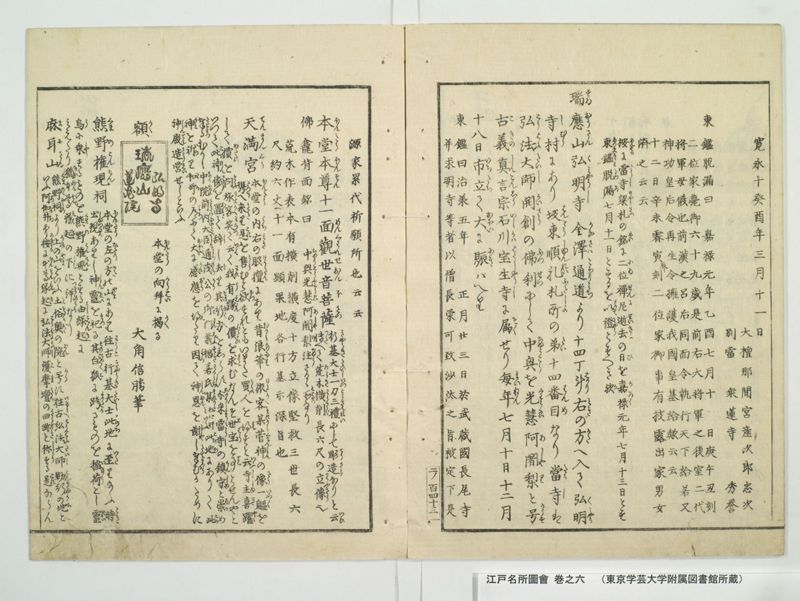
翻刻
【右丁】
寛永十癸酉年三月十一日
大檀那間宮産次郎忠次
別當 乗蓮寺 秀誉
東鑑脫漏曰 嘉禄元年乙酉七月十一日庚午丑刻
二位家薨御六十九歳是前右大将軍之後室二代
将軍母儀也前漢之呂后同而令執行天下給若又
神功皇后令再生令擁護我國皇基給歟云云
十二日辛未霄 寅(辰イ)刻二位家御事有披露出家男女
済之云云
《割書:按(あんする)に當寺(たうし)梁札(りやうさつ)の銘(めい)に二位禪尼(にゐせんに)逝去(せいきよ)の日(ひ)を嘉禄(かろく)元年七月十三日とす|東鑑脱漏(あつまかゝみたつろ)七月十一日とするを以(もつて)證(しやう)とすへき欤(か)》
瑞應山(すゐおうさん)弘明寺(くみやうし) 金澤通道(かなさはとほりみち)より十四丁 斗(はかり)右(みき)の方(かた)へ入て弘明(くみやう)
寺村(しむら)にあり坂東順礼札所(はんとうしゆんれいふたしよ)の弟十四番目(たい はんめ )なり當寺(たうし)は
弘法大師(こうはふたいし)開創(かいさう)の佛刹(ふつせつ)にして中興(ちゆうこう)を光慧阿闍梨(くわうゑあしやり)と号(かうす)
古義真言宗(こきのしんこんしう)石川(いしかは)宝生寺(はうしやうし)に属(そく)せり毎年(まいねん)七月十日十二月
十八日 市(いち)立(たち)て大(おほい)に賑(にき)はへり
東鑑曰治承五年 正月廿三日於武蔵國長尾寺
幷求明寺等者以僧長栄可致沙汰之旨被定下是
【左丁】
源家累代祈願所也云云
本堂(ほんたう)本尊(ほんそん)十一面觀世音菩薩( めんくわんせおんほさつ)《割書:行基大士(きやうしたいし)一刀三禮(いつとうさんれい)にして彫造(てうさう)なりと云(いひ) |傳(つた)へて荒木(あらき)横削(わうさく)長六尺の立像(りふさう)也》
佛龕背面銘曰 中興(ちゆうこう)光慧阿闍梨(くわうゑあしやり)注(ちゆう)さるゝ所(ところ)なり
荒木作表本有横削横度十方立像堅救三世長六
尺約六丈十一面顕果地各行基示深旨也
天満宮(てんまんくう)《割書:本堂(ほんたう)の内(うち)右(みき)の脇檀(けうたん)にあり昔(むかし)浪華(なには)の旅客(りよかく)某(それかし)菅神(くわんしん)の像(さう)一軀(いつく)を|携(たつさ)へ来(きた)り是(これ)を售(うら)むと欲(ほつ)すれともいまた買(かふ)人を得(え)すと云(いふ)寺主(ししゆ)喜躍(きやく) 》
《割書:して價(あたひ)を問(とふ)旅客(りよかく)笑(わらつ)て云(いは)く我(われ)有縁(うえん)の價(あたひ)を求(もと)むなんそ世宝(せはう)を事(こと)とせんやと|いつて此(この)神像(しんさう)を置(おき)て辞(し)し去(さ)り其(その)行方(ゆくへ)をしらす尒来(しかりしより)當寺(たうし)の鎮守(ちんしゆ)と崇(あか)め》
《割書:奉(たてまつ)るむかし中院前内大臣通茂公(なかのゐんさきのないたいしんみちもちかう)の御門(こもん)葉椙若氏(えふすきわかうち)某(それかし)《割書:松口軒|といふ》此地(このち)にありて此(この)|神(かみ)を祈(いの)り和哥(わか)の道(みち)にて大(おほい)に感應(かんおう)を得(え)たり因(よつ)て神恩(しんおん)を謝(しや)し奉(たてまつら)むかために》
《割書:神殿(しんてん)造営(さうえい)せしといふ|》
額(かく)
【額銘 二重線で囲む】
弘明寺
瑞應山
蓮花院
【額図の下】
本堂(ほんたう)の向拜(かうはい)に掲(かく)る
大角信勝筆
熊野権現祠(くまのこんけん )《割書:本堂(ほんたう)の左(ひたり)の方(かた)の山(やま)にあり往古(わうこ)行基大士(きやうきたいし)此地(このち)に至(いた)り給ふ時(とき) |出現(しゆつけん)ありし神靈(しんれい)を祀(まつ)る其(その)白狐(ひやくこ)に跨(またか)るものを稲荷(いなり)とし靈(れい)》
《割書:烏(う)に乗(しやう)するものを熊野権現(くまのこんけん)とする由(よし)縁起(えんき)に|みえたり猶(なほ)本尊縁起(ほんそんえんき)の下(しも)に詳(つまひらか)なり》
麻耳山(まにさん)《割書:熊野祠(くまのゝやしろ)より上(かみ)の山(やま)をいふ土俗(とそく)《振り仮名:奥の院|おく ゐん》と号(かう)す往古(いにしへ)弘法大師(こうはふたいし)勒行(こんきやう)#1の地(ち)と|いふ阿伽井(あかゐ)あり按(あんする)に本尊縁起(ほんそんえんき)に弘法大師(こうはふたいし)護摩壇(こまたん)の旧跡(きうせき)と称(しよう)する是(これ)ならん》
現代語訳
【右丁】
寛永十年癸酉三月十一日
大檀那 間宮産次郎忠次
別当 乗蓮寺 秀誉
『吾妻鏡』脱漏に曰く、嘉禄元年乙酉七月十一日庚午、丑の刻、
二位家薨去、御年六十九歳。これは前の右大将軍(頼朝)の後室、二代
将軍(頼家)の母儀である。前漢の呂后と同じく、天下の政を執り行われた。また
神功皇后が再び生まれ変わり、我が国の皇基を擁護されたのであろうか、云々。
十二日辛未の夜寅(あるいは辰)の刻、二位家の御事が披露され、出家した男女が
供養を行ったという、云々。
《割書:考えるに、当寺の梁札の銘では二位禅尼の逝去の日を嘉禄元年七月十三日とし、『吾妻鏡』脱漏では七月十一日としているが、いずれを証拠とすべきだろうか》
瑞応山(ずいおうさん)弘明寺(こうみょうじ) 金沢通り道より十四丁ばかり右の方へ入ったところの弘明
寺村にある。坂東順礼札所の第十四番目である。当寺は
弘法大師が開創した仏刹であり、中興を光慧阿闍梨と号する。
古義真言宗で石川宝生寺に属している。毎年七月十日・十二月
十八日に市が立ち、大いに賑わう。
『吾妻鏡』に曰く、治承五年正月二十三日、武蔵国長尾寺
ならびに求明寺等については、僧の長栄をもって沙汰致すべき旨を定め下された。これは
【左丁】
源家累代の祈願所である、云々。
本堂の本尊は十一面観世音菩薩《割書:行基大士が一刀三礼にて彫造したと伝え、荒木横削で長さ六尺の立像である》
仏龕背面の銘は、中興・光慧阿闍梨が注されたところである。
荒木作、表には本来横削があり、横に十方を度り立像として堅く三世を救う。長さ六
尺、約六丈、十一面は果地を顕し、各々行基が深い旨を示したものである。
天満宮《割書:本堂の内、右の脇壇にある。昔、浪華(大坂)からの旅人某が菅神(菅原道真)の像一躯を携えてきて、これを売ろうとしたがまだ買い手が得られないと言った。寺主が喜び躍り上がって》
《割書:値を尋ねると、旅人は笑って言った。「私は有縁の値を求めるのであって、どうして世の宝を問題にしようか」と言って、この神像を置いて辞し去り、その行方が知れない。それ以来、当寺の鎮守として崇め》
《割書:奉っている。昔、中院前内大臣通茂公の御門葉(一門)である椙若氏某《割書:松口軒という》がこの地にあって、この神に祈り、和歌の道にて大いに感応を得た。よって神恩を謝し奉るために》
《割書:神殿を造営したという》
額
【額銘 二重線で囲む】
弘明寺
瑞応山
蓮花院
【額図の下】
本堂の向拝に掲げる
大角信勝筆
熊野権現祠《割書:本堂の左の方の山にある。往古、行基大士がこの地に至られた時、出現のあった神霊を祀る。その白狐に跨るものを稲荷とし、霊烏(八咫烏)に乗するものを熊野権現とする由が縁起に》
《割書:見えている。なお本尊縁起の下に詳しい》
麻耳山(まにさん)《割書:熊野祠より上の山をいう。土地の人々は「奥の院」と号す。往古、弘法大師が勤行の地と言う。阿伽井がある。考えるに、本尊縁起に弘法大師護摩壇の旧跡と称するのがこれであろう》
英語訳
【Right page】
Kan'ei 10, year of the water rooster (1633), 3rd month, 11th day
Chief Patron: Mamiya Sanjirō Tadatsugu
Head Priest of Jōren-ji: Shūyo
The supplementary records of the Azuma Kagami state: On the 11th day of the 7th month of Karyaku 1 (1225), year of the wood rooster, the Kanoe-Uma day, at the hour of the Ox (around 2 a.m.),
Lady Nii passed away at the age of sixty-nine. She was the widow of the former Right General (Yoritomo) and the
mother of the Second Shogun (Yoriie). Like Empress Lü of the Former Han dynasty, she wielded power over the realm. Was she perhaps
a reincarnation of Empress Jingū, who protected the imperial foundations of our land? And so on.
On the 12th day, the Kanoto-Hitsuji day, at the hour of the Tiger (or Dragon according to another reading), the news of Lady Nii's passing was announced, and monks and nuns in her retinue
took holy orders, it is said. And so on.
《Small text: Upon reflection, the beam plaque inscription at this temple gives the date of Lady Nii-zenni's death as the 13th day of the 7th month of Karyaku 1, while the supplementary Azuma Kagami gives the 11th day of the 7th month — which should be taken as reliable evidence?》
Zuiōzan (Mount Zuiō) Kōmyō-ji Temple Approximately fourteen chō (about 1.5 km) to the right off the Kanazawa road, located in
Kōmyō-ji village. It is the fourteenth site on the Bandō Pilgrimage circuit. This temple was
founded by Kōbō Daishi (Kūkai), and the restorer is called Kōe Ajari.
It belongs to the Kogi Shingon sect, under Ishikawa Hōshō-ji. Every year on the 10th day of the 7th month and the 18th day of the 12th month,
a market is held and the area is greatly enlivened.
The Azuma Kagami states: On the 23rd day of the 1st month of Jishō 5 (1181), at Nagao-dera
and Kyūmei-ji, etc. in Musashi Province, it was decreed that the monk Chōei should be placed in charge of their affairs. These are
【Left page】
the prayer sites (kiganjo) for successive generations of the Minamoto clan, and so on.
The principal image in the main hall is the Eleven-faced Kannon (Ekādaśamukha Avalokiteśvara) 《Small text: Said to have been carved by the Great Monk Gyōki with three bows for every stroke of the chisel; it is a standing image of rough-hewn wood, six shaku (approx. 1.8 m) in height》
The inscription on the back of the altar cabinet was annotated by the restorer Kōe Ajari.
[The inscription reads:] Made of rough timber (araki), the surface is originally carved crosswise; measuring across the ten directions as a standing image that firmly saves all three worlds. Six shaku in height, approximately six jō, the eleven faces reveal the fruition realm; each face shows the profound intent that Gyōki demonstrated.
Tenmangū Shrine 《Small text: Located on the right altar within the main hall. Long ago, a traveler from Naniwa (Osaka) brought a statue of the Kan deity (Sugawara no Michizane) and wished to sell it, but had not yet found a buyer, he said. The head priest leaped with joy and》
《Small text: asked the price. The traveler laughed and said: "I seek a price from those with karmic connection — why would I concern myself with the world's treasures?" With these words, he left the statue behind and departed, and his whereabouts became unknown. Since then, the deity has been venerated as the guardian of this temple.》
《Small text: Long ago, a certain man named Sugiwaka-uji, also known by the literary name Shōkōken, a descendant of the household of Former Middle Counselor and Minister of the Interior Nakanoin Michishige, resided in this area and prayed to this deity, gaining great divine response in the way of waka poetry. Wishing to express gratitude for this divine grace,》
《Small text: he had a shrine hall constructed, it is said.》
Plaque
【Plaque inscription, enclosed in double border】
Kōmyō-ji
Zuiōzan
Renge-in
【Below the plaque illustration】
Displayed on the worship porch (kōhai) of the main hall
Written by Ōkado Nobukatu
Kumano Gongen Shrine 《Small text: Located on the mountain to the left of the main hall. From ancient times, when the Great Monk Gyōki arrived at this place, divine spirits appeared and are enshrined here. According to the temple's founding records (engi), the spirit riding a white fox is identified as Inari, and the spirit》
《Small text: riding a sacred crow is identified as Kumano Gongen. Further details are given below in the account of the principal image's origins.》
Mani-zan (Mount Mani) 《Small text: This refers to the mountain above the Kumano Shrine. Local people call it "Oku-no-in" (Inner Sanctuary). From ancient times it is said to be the place where Kōbō Daishi performed religious austerities. There is a sacred well (akagai) here. Upon reflection, this is likely what the temple's founding records call the former site of Kōbō Daishi's goma fire ritual altar.》