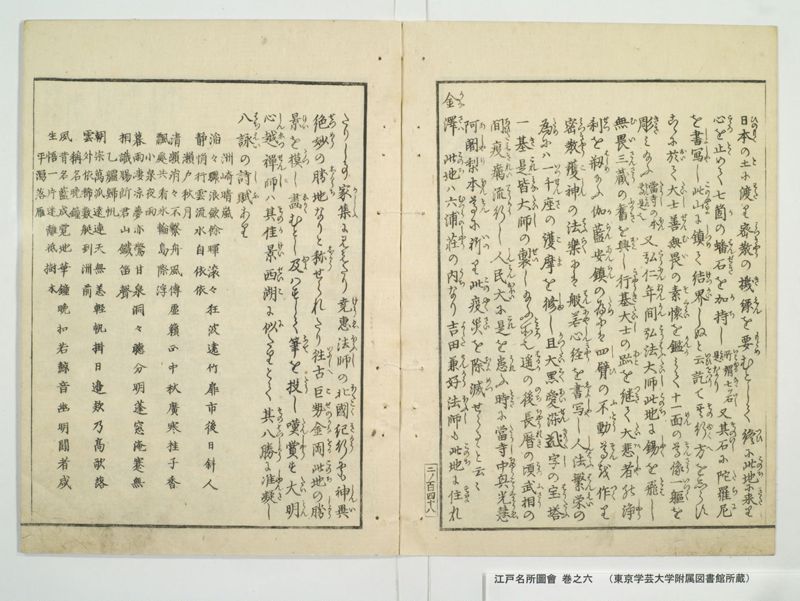
翻刻
【右丁】
日本(ひのもと)の土(と)に渡(わた)り密教(みつきやう)の機緣(きえん)を要(もとめ)むとして終(つひ)に此地(このち)に来(きた)り
心(こゝろ)を止(とゝ)めて七箇( か)の蟠石(はんせき)を加持(かち)し《割書:所謂(いはゆる)《振り仮名:七ッ石|なゝ いし》|是(これ)なり》又 其石(そのいし)に陀羅尼(たらに)
を書冩(しよしや)し此山(このやま)に鎮(しつめ)て結界(けつかい)しぬと云訖(いひをはり)て其(その)行方(ゆくへ)をしらす
こゝに於(おい)て大士(たいし)善無畏(せんむい)の素懐(そくわい)を鑑(かんか)みて十一面( めん)の尊像(そんさう)一軀(いつく)を
彫(きさ)み給ふ《割書:當寺(たうし)の本(ほん)|尊(そん)是(これ)也》又 弘仁年間(こうにんねんかん)弘法大師(こうはふたいし)此地(このち)に錫(しやく)を飛(とは)し
無畏三蔵(むいさんさう)の𦾔(ふるき)を興(おこ)し行基大士(きやうきたいし)の跡(あと)を継(つき)て大悲者(たいひしや)の浄(しやう)
刹(せつ)を剏(はしめ)給ふ伽藍(からん)安鎮(あんちん)の為(ため)には四臂(しひ)の不動尊(ふとうそん)を作(つく)り
密教(みつきやう)護神(こしん)の法樂(はふらく)には般若心経(はんにやしんきやう)を書写(しよしや)し人法(しんはふ)繁栄(はんえい)の
為(ため)には一千座(いつせんさ)の護摩(こま)を修(しゆ)し且(かつ)大黑(たいこく)愛染(あいせん)《振り仮名:■字|きりくし》#1の宝塔(はうたふ)
一基( き )是皆(これみな)大師(たいし)の製(せい)し給ふ所(ところ)也 遥(はるか)の後(のち)長歷(ちやうれき)の頃(ころ)武相(ふさう)の
間(あひた)疫癘(えきれい)流行(りうかう)し人民(しんみん)大(おほひ)に是(これ)を患(うれ)ふ當寺(たうし)中興(ちゆうこう)光慧(くわうゑ)
阿闍梨(あしやり)本尊(ほんそん)に祈(いの)り此(この)疫災(やくさい)を除滅(ちよめつ)せらるゝと云々
金澤(かなさは) 此地(このち)は六浦荘(むつうらのしやう)の内(うち)なり吉田兼好法師(よしたけんかうはふし)も此地(このち)に住(すま)れ
【左丁】
たりし事 家集(かしふ)に見えたり堯惠法師(けうゑほふし)の北國紀行(ほくこくきかう)にも神異(しんい)
絶妙(せつめう)の勝地(しようち)なりと称(しよう)せられたり往古(いにしへ)巨㔟金岡(こせのかなをか)此地(このち)の勝(しよう)
景(けい)を摸(うつ)し畫(ゑかゝ)むとし及(およ)はすして筆(ふて)を投(たう)し嘆賞(たんしやう)す大明(たいみん)
心越禪師(しんゑつせんし)は其(その)佳景(かけい)西湖(せいこ)に似(に)たりとて其(その)八勝(はつしよう)に准凝(しゆんき)し
八詠(はちえい)の詩賦(しふ)あり
洲崎晴嵐
㴞々驟浪歛餘暉滾々狂波遶竹扉市後日斜人
静悄行雲流水自依依
瀬戸秋月
清瀬㳙々不繋舟風傳虚籟正中秋廣寒桂子香
飄處共看氷輪島際浮
小泉夜雨
暮雨凄凉夢亦驚甘泉洞々聽分明蓬窓淹蹇無
相識腸断君山鐡笛聲
乙艫歸帆
朝宗萬派遠連天無恙軽帆掛日邉欤乃髙歌落
雲外依稀數艇到洲前
稱名晩鐘
夙昔名藍成覚地華鐘晩扣若鯨音幽明聞者咸
生悟一片迷離祗樹木
平㵼落雁
現代語訳
【右丁】
日本の土地に渡り、密教の機縁を求めようとして、ついにこの地に来て、心を留めて七つの蟠石を加持した(いわゆる七ツ石がこれである)。また、その石に陀羅尼を書写して、この山に鎮めて結界したと言い終えて、その行方を知らない。ここにおいて大士(行基)は善無畏の素懐を察して、十一面観音の尊像一体を彫刻された(当寺の本尊がこれである)。また、弘仁年間に弘法大師がこの地に錫杖を飛ばし、無畏三蔵の古きを興し、行基大士の跡を継いで、大悲者(観音)の清浄な寺院を創建された。伽藍安鎮のためには四臂の不動尊を作り、密教護神の法楽には般若心経を書写し、人法繁栄のためには一千座の護摩を修し、かつ大黒・愛染明王の宝塔一基を建立した。これらは皆、大師が製作されたものである。はるか後の長暦の頃、武蔵・相模の間に疫病が流行し、人民が大いにこれを患った。当寺中興の光慧阿闍梨が本尊に祈り、この疫災を除滅されたという。
金沢 この地は六浦荘の内である。吉田兼好法師もこの地に住んでいた
【左丁】
ことが家集に見えている。堯恵法師の『北国紀行』にも神異絶妙の勝地であると称されている。往古、巨勢金岡がこの地の勝景を模写して画に描こうとしたが及ばずして筆を投げ、嘆賞した。大明の心越禅師は、その佳景が西湖に似ているとして、その八勝になぞらえて八詠の詩賦がある。
洲崎晴嵐
滔々として驟浪は余暉を歛め、滾々として狂波は竹扉を遶る。市後日斜にして人静悄たり、行雲流水おのずから依依たり。
瀬戸秋月
清瀬涓々として舟を繋がず、風は虚籟を伝えて正に中秋なり。広寒の桂子香り飄う処、共に看る氷輪の島際に浮かぶを。
小泉夜雨
暮雨凄涼として夢もまた驚く、甘泉洞々として聴くこと分明なり。蓬窓淹蹇として相識る無く、腸断す君山鉄笛の声。
乙艫帰帆
朝宗万派遠く天に連なり、恙無く軽帆日辺に掛かる。欤乃高歌雲外に落ち、依稀数艇洲前に到る。
称名晩鐘
昔昔の名藍覚地と成り、華鐘晩に扣いて鯨音の若し。幽明聞く者咸く悟りを生ず、一片迷離祗樹の木。
平潟落雁
英語訳
【Right page】
Seeking to come to the land of Japan to find the opportunity for esoteric Buddhism, he finally came to this place. He focused his mind and performed ritual blessings on seven coiled stones (these are the so-called Seven Stones). He also copied dharani onto these stones and settled them on this mountain to create a sacred boundary. After saying this, his whereabouts became unknown. Here, the great master (Gyōki) perceived Śubhakarasiṃha's original aspiration and carved a statue of the Eleven-faced Kannon (this is the principal image of this temple). Also, during the Kōnin era, Kōbō Daishi cast his staff to this place, revived the ancient traditions of Śubhakarasiṃha Tripitaka, followed in the footsteps of the great master Gyōki, and founded a pure temple of the Great Compassionate One (Kannon). For the pacification of the temple complex, he created a four-armed Fudō Myōō; for the ritual offerings to the protective deities of esoteric Buddhism, he copied the Heart Sutra; for the prosperity of the Dharma and people, he performed a thousand fire rituals (goma), and built a treasure pagoda of Daikoku and Aizen Myōō. All of these were created by the great master. Much later, around the Chōryaku era, an epidemic spread between Musashi and Sagami provinces, causing great suffering among the people. Kōe Ajari, who revived this temple, prayed to the principal image and eliminated this epidemic disaster.
Kanazawa: This place is within Mutsuura-no-shō. The monk Yoshida Kenkō also lived in this place,
【Left page】
as recorded in his poetry collection. In the monk Gyōe's "Northern Provinces Travel Record," it is praised as a place of divine mystery and absolute beauty. In ancient times, Kose no Kanaoka attempted to sketch and paint the scenic beauty of this place but, finding it beyond his ability, threw down his brush in admiration. The Ming dynasty Zen master Shinnetsu, saying that the beautiful scenery resembled West Lake, composed eight poems based on the eight famous views:
Susaki Clear Breeze
The surging waves gather the remaining glow, the rolling mad waves circle the bamboo gate. After the market closes and the sun slants, people become quiet, while flowing clouds and water naturally remain gentle.
Seto Autumn Moon
The clear stream flows gently without mooring boats, the wind carries ethereal sounds in mid-autumn. Where the fragrant osmanthus of the moon palace drifts, we watch together the ice wheel floating by the island's edge.
Koizumi Night Rain
The evening rain is desolate and even dreams are startled, the sweet spring's sound is clear and distinct. At the thatched window, lingering without acquaintances, heartbroken by the iron flute's sound from Mt. Junzan.
Otomo Returning Sails
Ten thousand tributaries flow toward the sea connecting to distant heavens, the light sails hang safely by the sun's edge. High songs fall beyond the clouds, several boats dimly arrive before the sandbar.
Shōmyō Evening Bell
The famous temple of old has become a place of enlightenment, the splendid bell strikes in the evening like a whale's sound. All who hear it in light and darkness gain awakening, a single piece lost among the Jetavana trees.
Hirakata Falling Geese