翻刻
【右丁】
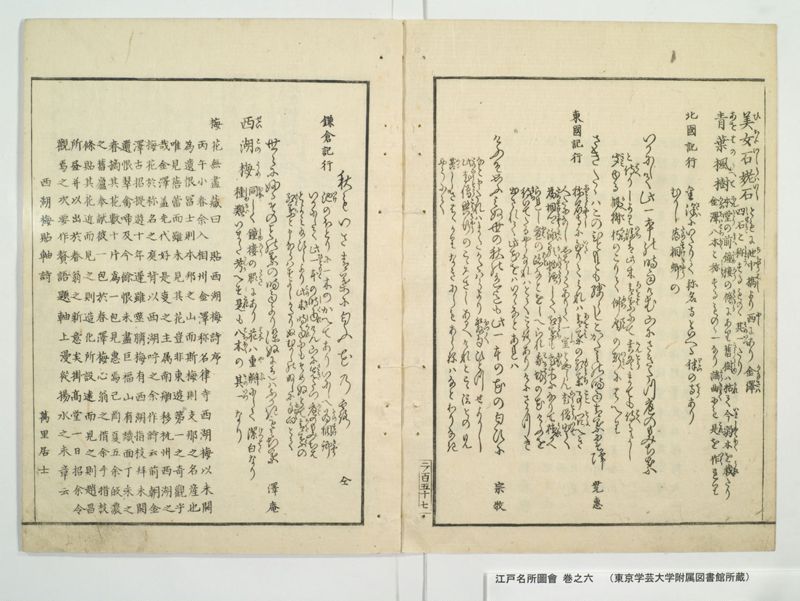
美女石(ひちよいし)姥石(うはいし)《割書:ともに池中橋(ちちゆうはし)より西(にし)にあり金澤(かなさは)|四石(しせき)と称(しよう)するものゝ其一(そのいつ)たり》
青葉楓樹(あをはのかへて)《割書:本堂(ほんたう)の前(まへ)鐘樓(しゆろう)の傍(かたはら)にあり《振り仮名:𦾔樹|きうしゆ》は枯(かれ)て今(いま)弱木(しやくほく)を栽(うゑ)たり|金澤八木(かなさははちほく)と称(しよう)するものゝ一なり謡曲(ようきやく)にも是(これ)を作(つく)れり》
北國記行 金澤( さは)にいたりて称名寺といへる律(りつ)の寺(てら)あり
むかし爲相卿(ためすけきやう)の
いかにして此一本の時雨けむ山にさきたつ庭のもみち葉
と侍(はへ)りしより後(のち)は此木 青葉(あをは)にて玄冬(けんとう)まても侍(はへ)るよし
聞(きこ)ゆる楓樹(かへて)朽(くち)のこりて佛殿(ふつてん)の軒(のき)にはへり
さきたゝはこのひともとも残らしとかたみの時雨青葉にそ降 堯惠
東國記行 称名寺(しようみやうし)に至(いた)りてみれは青葉(あをは)の紅葉(もみち)事問(こととふ)へき
人たになししはらくありて一室( しつ)とやらん老僧(らうそう)出(いて)て
為相卿(ためすけきやう)詠歌(えいか)物語(ものかたり)して紅葉(もみち)も老木(おひ )になりて植(うゑ)かへ
られし庭(には)の跡(あと)なとをしへられ我坊(わかはう)の花けふを
待(まち)いてたるやうなれはとてこゝろありけにさかつき
出されて此花をはいかゝなとあれは
けふそ思ふみぬ世の秋の色迄も此一本の花匂ひに 宗牧
なと申たれはまたかたはらより發句(ほつく)ひとつせよかし
此(この)老僧(らうそう)興行(こうきやう)のこゝろさしあるへけれとこゝほとの見
苦(くる)しさはゝかりなきにしもあらねはなとわりなき
やうにて
【左丁】
秋もいさ青葉に匂ふ花の露 仝
鎌倉記行 池(いけ)のほとりに一木のかへてありいにしへ為相卿(ためすけきやう)
いかにして此 一本(ひともと)の時雨(しくれ)けん山に先(さき)たつ庭(には)のもみちは
をよみ給うひしより此木(このき)時雨(しくれ)にもそめぬとて青葉(あをは)の
紅葉(もみち)と申ならはすよしかたりぬむかしのぬしに手向(たむく)とて
世々にふるそのことの葉の時雨より染ぬに色はふかきもみち葉 澤庵
西湖梅(せいこのうめ)《割書:同(おな)しく鐘樓(しゆろう)の脇(わき)にあり花(はな)は重瓣(やゑ)にして潔白(けつはく)なり|種類(しゆるい)いまた考(かんか)へす是(これ)も八木(はちほく)の其一(そのいつ)なり》
梅花無盡藏曰 貼西湖梅詩序
丙午小春余入相州金澤称名律寺西湖梅以未開
為遺恨冨士則本邦之山而斯梅則支那之名産也
唯見蓓蕾而雖未見其花豈非東遊第一之奇觀乎
哉金澤盖先代好是叓之主属南舶移杭州西湖之
梅花於称名之庭背以西湖呼之余作詩云前朝金
澤古招提遊十年遅雖噬臍梅有西湖指枝拜未開
遺恨翠禽啼及今餘恨未盡巨福山有職面丁未之
春摘其花數十片爲一包見惠焉己酉夏五余皈濃
之𦾔廬奉献彼一包於春澤梅心翁之借余手措枝
條貼其花近而見之則造化所設遠而見之則趙昌
所昼幷以出於春翁之新意矣掛髙堂一日招余令
觀焉之次要作贅語題軸上漫從揚水之未章云
西湖梅貼軸詩 萬里居士
現代語訳
【右丁】
美女石(びじょいし)姥石(うばいし)《割書:ともに池中橋より西にあり金沢四石と称するもののその一つである》
青葉楓樹(あおばのかえで)《割書:本堂の前、鐘楼のそばにある。旧樹は枯れて今は若木を植えてある。金沢八木と称するもののひとつである。謡曲にもこれを題材にしたものがある》
北国記行 金沢に至って称名寺という律の寺がある
昔、為相卿の
いかにしてこの一本の時雨けむ山に先立つ庭の紅葉葉
という歌を詠んで以来、この木は青葉で玄冬(冬)まで保たれるということが
聞こえる楓樹が朽ち残って仏殿の軒に生えている
先立たばこのひともとも残らじとかたみの時雨青葉にぞ降る 尭恵
東国記行 称名寺に至ってみると青葉の紅葉のことを問う
べき人もいない。しばらくありて一室とやら老僧が出てきて
為相卿詠歌の物語をして紅葉も老木になって植え替え
られた庭の跡などを教えられた。我が坊の花今日を
待っていたようなのでということで心ありげに盃を
出されてこの花をいかがかなどと言うので
今日ぞ思う見ぬ世の秋の色までもこの一本の花匂いに 宗牧
などと申したら、またかたわらより発句ひとつせよと。
この老僧、興行の志があるようだがこここどの見
苦しさははかりなきにしもあらねばなどわりなき
ようで
【左丁】
秋もいざ青葉に匂う花の露 同
鎌倉記行 池のほとりに一木の楓があり昔為相卿が
いかにしてこの一本の時雨けん山に先立つ庭の紅葉葉
をお詠みになってからこの木は時雨にも染まぬといって青葉の
紅葉と申し習わすよしを語った。昔の主に手向けとして
世々に振るその言の葉の時雨より染まぬに色は深き紅葉葉 沢庵
西湖梅(せいこのうめ)《割書:同じく鐘楼の脇にある。花は八重で潔白である。種類はまだ考えていない。これも八木のその一つである》
梅花無尽蔵曰く 西湖梅詩序を貼す
丙午小春、余は相州金沢称名律寺に入ったが、西湖梅がまだ開いていないのを遺恨とした。富士はこの国の山であり、この梅は中国の名産である。
ただ蕾を見ただけで、まだその花を見ていないが、どうして東遊第一の奇観でないことがあろうか。
金沢は先代この道を好んだ主が南船に託して杭州西湖の梅花を称名の庭に移し、背景として西湖と呼んでいる。余が詩を作って云う「前朝金沢古招提、遊ぶこと十年遅しといえども臍を噬む、梅に西湖の枝を指して拝す、未開の遺恨翠禽啼く」と。今に至るまで余恨尽きず。巨福山の有職、丁未の春その花数十片を摘んで一包として見恵してくれた。己酉夏五、余は濃の旧廬に帰り、彼の一包を春沢梅心翁に奉献し、余の手に借りて枝条を措き、その花を貼った。近くで見れば造化の設けるところ、遠くで見れば趙昌の描くところ、併せて春翁の新意より出たものである。高堂に掛けて一日余を招いて観させ、次に贅語を作って軸上に題することを要求した。漫ろに揚水の未章に従って云う
西湖梅貼軸詩 万里居士
英語訳
【Right page】
Beautiful Woman Stone (Bijōishi) and Old Woman Stone (Ubaishi) 《Marginal note: Both located west of Chichūhashi bridge, they are among what is called the Four Stones of Kanazawa》
Blue-leafed Maple Tree 《Marginal note: Located in front of the main hall, beside the bell tower. The old tree withered and now a young tree has been planted. This is one of what is called the Eight Trees of Kanazawa. It has also been made into a Noh play》
Record of Northern Provinces Journey: Arriving at Kanazawa, there is a Ritsu sect temple called Shōmyōji
Long ago, Lord Tamesuke composed:
How is it that this single tree could be touched by winter rain, the maple leaves in the garden that lead the mountain?
It is said that since this poem was composed, this tree has remained in green leaf even until deep winter (xuandong).
The maple tree has decayed and what remains grows by the eaves of the Buddha hall.
If it were to go first, this single tree would not remain either - the memorial winter rain falls on green leaves Gyōe
Record of Eastern Provinces Journey: Arriving at Shōmyōji to see the green-leafed autumn colors, there was
no one to ask about it. After a while, an elderly monk from some quarters came out and
told stories of Lord Tamesuke's poetry, showing us traces of the garden where the maple,
having become an old tree, was replanted. As if our temple's flowers had been
waiting for this day, he meaningfully offered sake cups and asked
how these flowers were, so I replied:
Today I think of even the autumn colors of an unseen world through the fragrance of this single tree's flowers Sōboku
When I said this, someone nearby said "compose one starting verse (hokku)!"
This old monk seemed to have aspirations for poetry gatherings, but the awkwardness
of the situation was not inconsiderable, so in a rather forced manner:
【Left page】
Autumn too, come now - flower dew fragrant on green leaves Same author
Record of Kamakura Journey: By the pond there is a single maple tree. Long ago Lord Tamesuke composed
"How is it that this single tree could be touched by winter rain, the maple leaves in the garden that lead the mountain?"
Since he composed this, they say this tree does not change color even in winter rain, and it has become customary to call it "green-leafed autumn colors." As an offering to its ancient master:
Generation after generation, from the winter rain of those words, though unstained, the color is deep maple leaves Takuan
West Lake Plum 《Marginal note: Similarly located beside the bell tower. The flowers are double-petaled and pure white. The variety has not yet been studied. This is also one of the Eight Trees》
From Baika Mujinzō: Pasting a Preface to West Lake Plum Poetry
In the small spring of hinoe-uma year, I entered Shōmyōji, the Ritsu temple in Kanazawa, Sagami Province, and regretted that the West Lake plum had not yet bloomed. Fuji is a mountain of this country, while this plum is a famous product of China.
Though I only saw the buds and had not yet seen the flowers, how could this not be the finest spectacle of eastern travel?
Kanazawa's former generation master, who loved this way, entrusted a southern vessel to transplant plum blossoms from West Lake in Hangzhou to Shōmyōji's garden, calling it West Lake as its background. I composed a poem saying "Former dynasty Kanazawa old temple, though ten years late to visit and gnashing teeth, pointing to West Lake branches among plums and bowing, the regret of unopened buds while emerald birds cry." Even now this regret remains unfinished. A court official of Daitokuyama, in the spring of hinoto-hitsuji year, picked several dozen petals and made them into a package as a gift. In the fifth month of summer in tsuchinoto-tori year, I returned to my old hermitage in Mino and offered that package to the plum-hearted old man Shunsawa. Borrowing my hands, he arranged branches and pasted the flowers. Seen from near, it is what creation has arranged; seen from afar, it is what Zhao Chang painted, together emerging from the old man's new conception. He hung it in the high hall and one day invited me to observe it, then requested that I compose superfluous words to inscribe on the scroll. Casually following the final chapter of Yōsui, I say:
Poem on West Lake Plum Pasted Scroll Banri Koji