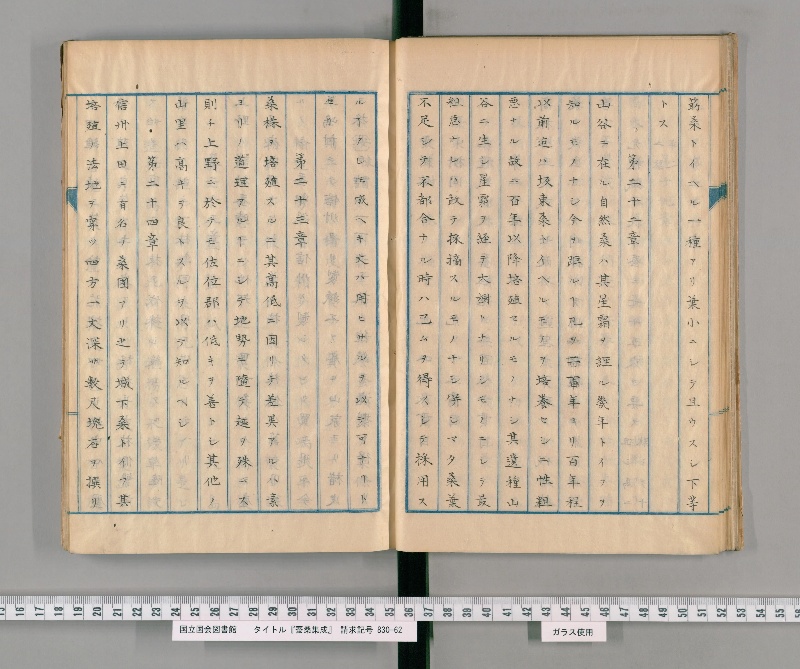
翻刻
【右丁】
筋桑トイヘル一種アリ葉小ニシテ且ウスシ下等
トス
第二十二章
山谷ニ在ル自然桑ハ其星霜ヲ経ル幾年トイフヲ
知ルモノナシ今ヲ距ルコト凡ソ二百年ヨリ百年程
以前迄ハ坂東桑トイヘルモノヲ培養セシニ性粗
悪ナル故ニ百年以降培殖セルモノナシ其遺種山
谷ニ生シ星霜ヲ経テ大樹トナリシモノニシテ最
粗悪ナレハ敢テ採摘スルモノナシ併シマタ桑葉
不足シテ不都合ナル時ハ已ムヲ得スシテ採用ス
【左丁】
ルコトアレトモ成ヘキ丈ハ用ヒサルヲ以テ可ナリト
セリ
第二十三章
柔株ヲ培殖スルニ其高低ニ因リテ差異アルハ素
ヨリノ道理アルコトニシテ地勢ニ随テ趣ヲ殊ニス
則チ上野ニ於テモ佐位郡ハ低キヲ善トシ其他ノ
山里ハ高キヲ良トスルヲ以テ知ルヘシ
第二十四章
信州上田ニ有名ノ桑圃アリ之ヲ城下桑トイフ其
培殖ノ法地ヲ穿ツ四方一丈深サ数尺塊石ヲ撰リ
現代語訳
【右丁】
筋桑という一種がある。葉が小さくて、かつ薄い。下等とする。
第二十二章
山谷にある自然桑は、その年月を経ること何年というのを知るものはない。今から遡ること約二百年より百年程前までは、坂東桑というものを栽培していたが、性質が粗悪であるため、百年以降栽培するものはない。その遺種が山谷に生じ、年月を経て大樹となったものであって、最も粗悪であるから、あえて採摘するものはない。しかしまた桑葉が不足して都合が悪い時は、やむを得ずして採用する
【左丁】
ことはあるが、できる限りは用いないことを良いとしている。
第二十三章
低株を栽培するのに、その高低によって差異があるのは当然の道理があることで、地勢に従って趣を異にする。すなわち上野においても佐位郡は低いものを良いとし、その他の山里は高いものを良いとすることで知るべきである。
第二十四章
信州上田に有名な桑圃がある。これを城下桑という。その栽培の方法は、地面を掘って四方一丈、深さ数尺とし、塊石を選んで
英語訳
【Right Page】
There is a variety called suji-mulberry (streaked mulberry). Its leaves are small and thin. It is considered inferior quality.
Chapter Twenty-Two
For the natural mulberries in mountain valleys, no one knows how many years they have weathered. From about two hundred years ago until about one hundred years ago, a variety called Bandō mulberry was cultivated, but because its nature was coarse and poor, none have been cultivated for the past hundred years. Its remnant varieties grew in mountain valleys and became large trees over the years, but they are of the poorest quality, so no one deliberately harvests them. However, when mulberry leaves are insufficient and inconvenient, they are reluctantly used,
【Left Page】
but it is considered best not to use them as much as possible.
Chapter Twenty-Three
In cultivating low stumps, there are naturally differences depending on their height and low positioning, varying in character according to the terrain. This can be understood from the fact that even in Kōzuke Province, Sai County favors low ones, while other mountain villages prefer high ones.
Chapter Twenty-Four
There is a famous mulberry plantation in Ueda, Shinshū. This is called castle-town mulberry. The cultivation method involves digging the ground in squares of one jō on each side and several shaku deep, selecting large stones