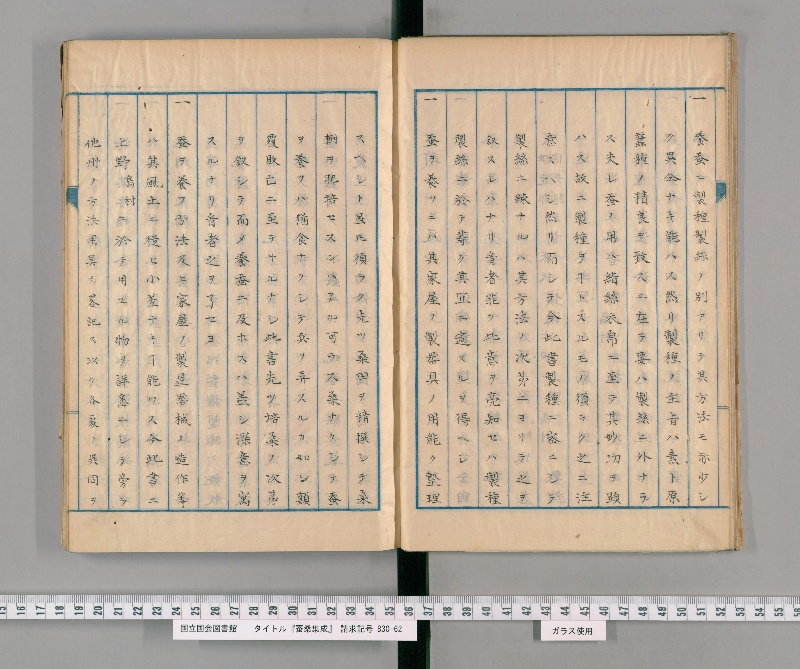
翻刻
【右丁】
一 養蚕ニ製種製糸ノ別アリテ其方法モ亦少シ
ク異仝ナキ能ハス然リ製種ノ主旨ハ素ト原
蚕種ノ精良ヲ致スニ在テ要ハ製糸ニ外ナラ
ス夫レ蚕ノ用ハ絹糸衣帛ニ至テ其妙功ヲ顕
ハス故ニ製種ヲコトトスルモノ須ラク之ニ注
意スヘシ然リ而シテ今此書製種ニ密ニシテ
製糸ニ疎ナルハ其方法ノ次第ニヨリテ之ヲ
叙スレハナリ看者能ク此意ヲ亮知セハ製種
製糸ニ於テ等ク其宜ニ適スルヲ得ヘシ
一 蚕ヲ養フニハ其家屋ノ製器具ノ用能ク整理
【左丁】
スヘシト虽トモ須ラク先ツ桑田ヲ精撰シテ桑
樹ヲ肥培セスンハアル可ラス桑ナクシテ蚕
ヲ養フハ猶食ナクシテ兵ヲ弄スルカ如シ顛
覆敗亡ニ至ラサルナシ此書先ツ培桑ノ次第
ヲ叙シテ而シテ養蚕ニ及ホスハ蓋シ深意ヲ寓
スルナリ看者之ヲ了セヨ
一 蚕ヲ養フ方法及ヒ家屋ノ製置器械ノ造作等
ハ其風土ニ従ヒ小差ナキコト能ワス今此書ニ
上野《割書:島村|》ニ於テ用ユル物ヲ詳悉ニシテ旁ラ
他州ノ方法用具ヲ略記ス以テ各処ノ異同ヲ
現代語訳
【右丁】
一 養蚕には製種と製糸の区別があり、その方法もまた少し
異なることは避けられない。しかし、製種の主旨はもともと原
蚕種の精良さを実現することにあり、要は製糸にほかならない。
そもそも蚕の用途は絹糸や絹織物に至ってその妙なる功を顕
わすのである。故に製種を事業とする者は必ずこれに注
意すべきである。しかしながら、今この書が製種について詳細で
製糸について簡略なのは、その方法の順序によってこれを
叙述するからである。読者がよくこの意味を理解すれば、製種・
製糸において等しくその適切さを得ることができるであろう。
一 蚕を養うには、その家屋の設備や器具の使用をよく整理
【左丁】
すべきであるとはいえ、必ず先ず桑田を精選して桑
樹を肥培しなければならない。桑なくして蚕
を養うのは、なお食糧なくして兵を用いるようなもので、顛
覆敗亡に至らないことはない。この書でまず培桑の順序
を叙述して、そして養蚕に及ぶのは、思うに深い意味を込
めるものである。読者はこれを理解せよ。
一 蚕を養う方法および家屋の設置や器械の製作等
は、その風土に従い、小さな差がないことはできない。今この書では
上野《割書:島村|》において用いる物を詳細にして、かたわら
他州の方法・用具を略記する。以って各所の異同を
英語訳
【Right Page】
1. In sericulture, there is a distinction between seed production and silk reeling,
and their methods inevitably differ somewhat. However, the main purpose of
seed production is fundamentally to achieve excellence in the original silkworm
eggs, and the essence lies in silk reeling. Originally, the purpose of silkworms
is to manifest their wonderful efficacy when made into silk thread and silk
fabrics. Therefore, those who engage in seed production must pay attention
to this. However, the reason this book is detailed about seed production
and brief about silk reeling is that it describes them according to the
sequence of their methods. If readers understand this intention well, they
should be able to achieve equal appropriateness in both seed production
and silk reeling.
1. In raising silkworms, one should organize well the facilities of the buildings
and the use of equipment,
【Left Page】
but first one must carefully select mulberry fields and cultivate mulberry
trees. Raising silkworms without mulberry is like deploying troops without
food—it inevitably leads to collapse and defeat. That this book first describes
the procedures for mulberry cultivation before proceeding to sericulture
contains, I believe, a profound meaning. Readers should understand this.
1. The methods of raising silkworms as well as the installation of buildings
and construction of equipment cannot help but have small differences according
to the local climate and customs. Now this book details the things used in
Kōzuke (Shimamura), while also briefly recording the methods and tools of
other provinces, in order to show the similarities and differences of each place.