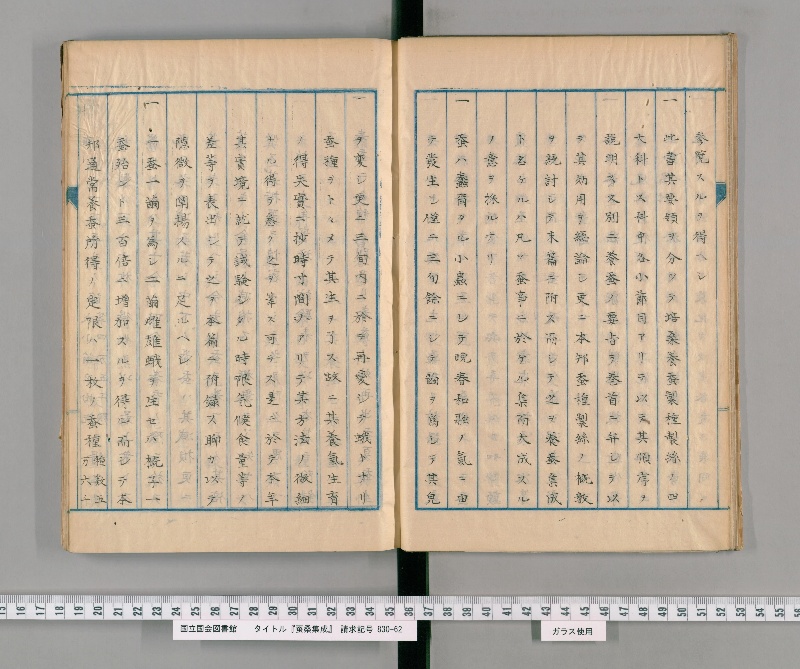
翻刻
【右丁】
参覧スルヲ得ヘシ
一 此書其要領ヲ分ツテ培桑養蚕製種製糸ノ四
大科トス科中各小節目アリテ以テ其順序ヲ
説明ス又別ニ養蚕ノ要旨ヲ巻首ニ弁シテ以
テ其効用ヲ総論シ更ニ本邦蚕種製糸ノ概数
ヲ統計シテ末篇ニ附ス而シテ之ヲ養蚕集成
ト名ケルハ凡ソ蚕事ニ於ケル集而大成スル
ノ意ヲ採ルナリ
一 蚕ハ蠢爾タル小虫ニシテ晩春和融ノ気ニ由
テ発生シ僅ニ三旬余ニシテ繭ヲ為シテ其皃
【左丁】
ヲ変シ更ニ三旬内ニ於テ再変シテ蛾トナリ
蚕種ヲトヽメテ其生ヲ了ス故ニ其養気生育
ノ得失実ニ抄時寸間《見せ消ち:ノ|ニ》アリテ其方法ノ微細
ナル得テ悉ク之ヲ筆ス可ラス是ニ於テ本年
其実境ニ就テ試験シタル時限気候食量等ノ
差等ヲ表出シテ之ヲ本篇ニ附録ス聊カ以テ
隠微ヲ闡揚スルニ足ルヘシ
一 一蚕一繭ヲ為シ二繭雌雄蛾ヲ生セハ概ネ一
蚕殆ント三百倍ニ増加スルヲ得ル而シテ本
邦通常養蚕所得ノ定限ハ一枚ノ蚕種《割書:種数五|万六千》
現代語訳
【右丁】
参照することができるであろう。
一 この書はその要領を分けて、培桑・養蚕・製種・製糸の四
大科とする。科の中に各々小さな節目があって、それによってその順序を
説明する。また別に養蚕の要旨を巻頭において弁じて、それによって
その効用を総論し、さらに本邦蚕種製糸の概数
を統計して末篇に付す。そしてこれを養蚕集成
と名づけるのは、およそ蚕事において集めて大成する
という意味を採るからである。
一 蚕は小さな虫であって、晩春の穏やかな暖気によって
発生し、わずかに三十日余りで繭を作ってその姿
【左丁】
を変じ、さらに三十日以内においてもう一度変化して蛾となり、
蚕種を留めてその生を終える。故にその養育・生育
の得失は実に短時間にあって、その方法の微細
なることはすべてを筆に尽くすことができない。ここにおいて本年
その実際の状況について試験した時限・気候・食量等の
差異を表に示して、これを本篇に附録する。いささか以って
奥深いところを明らかにするのに足りるであろう。
一 一匹の蚕が一つの繭を作り、二つの繭が雌雄の蛾を生めば、概ね一匹の
蚕がほとんど三百倍に増加することができる。そして本
邦で通常養蚕によって得られる定限は、一枚の蚕種《割書:種数五万六千》
英語訳
【Right Page】
can be referenced for comparison.
1. This book divides its essentials into four major sections: mulberry cultivation,
sericulture, seed production, and silk reeling. Within each section there are
various small subsections that explain their sequence. Additionally, the essentials
of sericulture are discussed separately at the beginning of the volume to provide
a general overview of their utility, and furthermore, statistics on the approximate
numbers of domestic silkworm eggs and silk reeling are compiled and attached
at the end. The reason this is named "Sericulture Compendium" is that it adopts
the meaning of gathering and achieving greatness in all matters related to silkworms.
1. Silkworms are small insects that emerge due to the gentle warm air of late spring,
and in merely thirty-odd days they form cocoons and transform their appearance.
【Left Page】
They transform once more within thirty days to become moths, deposit their
eggs, and complete their lives. Therefore, the success or failure of their rearing
and growth truly occurs within a brief time, and the minutiae of their methods
cannot all be fully described in writing. Here, the differences in timing, climate,
food amounts, etc., that were tested under actual conditions this year are
presented in tables and attached as an appendix to this main text. This should
be sufficient to somewhat illuminate the subtle mysteries.
1. When one silkworm makes one cocoon, and two cocoons produce male and female
moths, generally one silkworm can increase nearly three hundredfold. The standard
limit usually obtained from sericulture in our country is from one sheet of silkworm
eggs (marginal note: 56,000 eggs)