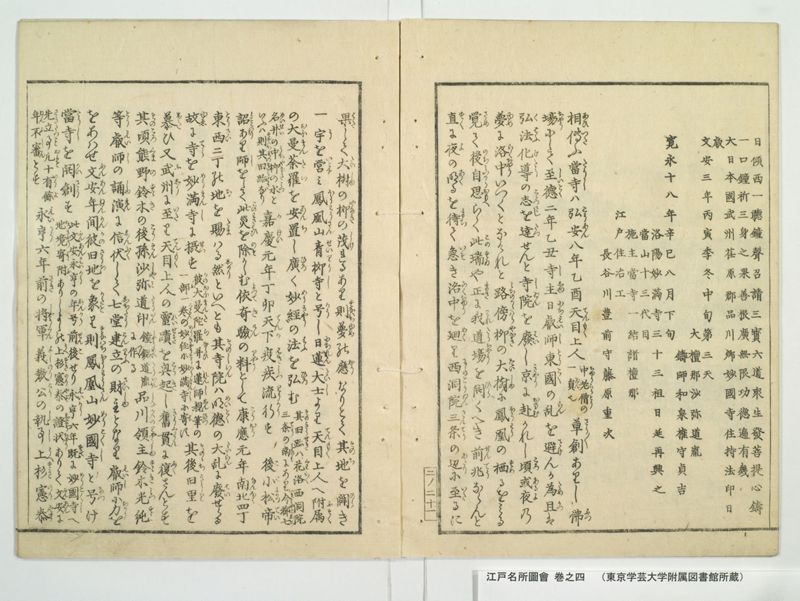
翻刻
【右丁】
日傾西一聽鐘聲召請三寳六道衆生發菩提心鑄
一口鐘祈三身之果善根廣無限功德遍有幾
大日本國武州荏原郡品川郷妙國寺住持法印日
叡
文安三年丙寅季冬中旬第三天
大檀那沙弥道胤
鑄師和泉権守貞吉
寛永十八年辛巳八月下旬
洛陽妙満寺三十三祖日延再興之
當山十三代目
施主當寺一結諸檀那
江戸住冶工
長谷川豊前守藤原重次
相傳(あひつた)ふ當寺(たうし)は弘安(こうあん)八年乙酉 天目上人(てんもく )《割書:中老僧(ちゆうらうそう)の|一員( ゐん)也》草創(さう〳〵)ありし佛(ふつ)
塲(ちやう)にして至徳(しいとく)二年乙丑 寺主(ししゆ)日叡師(にちえいし)東國(とうこく)の乱(らん)を避(さけ)んか為(ため)且(かつ)は
弘法(くはふ)化導(けたう)の志(こゝろさし)を達(たつ)せんと寺院(しゐん)を廢(はい)し京(きやう)に赴(おもむ)かれし頃(ころ)或夜(あるよ)の
夢(ゆめ)に洛中(らくちゆう)いつくとなけれと路傍(みちのかたはら)栁(やなき)の大樹(たいしゆ)に鳳凰(ほうわう)の栖(すめ)るをみる
覚(さめ)て後(のち)自(みつから)思(おもへ)らく此瑞(このすゐ)や正(まさ)に我(われ)道塲(たうちやう)を開(ひら)くへき前兆(せんてう)ならんと
直(すく)に夜(よ)の明(あく)るを待(まち)て急(いそ)き洛中(らくちゆう)を廻(めく)り西桐院(にしのとうゐん)三条(さんてう)の辺(あたり)に至(いた)るに
【左丁】
果(はた)して大樹(たいしゆ)の栁(やなき)の茂(しけ)れるあり則(すなはち)夢(ゆめ)の應(おう)なりとて其地(そのち)を闢(ひら)き
一宇( う)を営(いとな)み鳳凰山(ほうわうさん)青栁寺(せいりうし)と号(かう)し日蓮大士(にちれんたいし)より天目上人(てんもく )へ附属(ふそく)
の大曼荼羅(おほまんたら)を安置(あんち)し廣(ひろ)く妙經(めうきやう)の法(はふ)を弘(ひろ)む《割書:其(その)旧跡(きうせき)は花洛(くわらく)西洞院|三条( てう)の南(みなみ)にあり今(いま)都七(みやこしち)》
《割書:名井(めいせい)の中(うち)《振り仮名:栁の水|やなき みつ》と|いふは則(すなはち)其(その)旧跡(きうせき)なり》嘉慶(かけい)元年丁卯 天下(てんか)疫疾(えきしつ)流行(りうかう)す 後小松帝(ここまつてい)
詔(みことのり)あり師(し)をして此災(このわさはひ)を除(のそ)かしむ依(よつて)奇驗(きけん)の料(りやう)として康應(こうおう)元年 南北(なんほく)四丁
東西(とうさい)二丁の地(ち)を賜(たま)はる然(しかり)といへとも其(その)寺院(しいん)は明徳(めいとく)の大乱(たいらん)に廢(はい)せらる
故(ゆゑ)に寺(てら)を妙満寺(めうまんし)に摂(せつ)す《割書:彼(かの)大曼荼羅(おほまんたら)幷(ならひ)に蓮師親筆(れんししんひつ)の|一部一巻( ふ くわん)の妙經(めうきやう)等(とう)妙満寺(めうまんし)に寄(よ)す》其後(そのゝち)旧里(きうり)を
慕(した)ひ又 武州(ふしう)に至(いた)り天目上人(てんもく )の靈蹟(れいせき)を興起(こうき)し《振り仮名:𦾔貫|きうくわん》に復(ふく)さんとす
其頃(そのころ)熊野(くまの)鈴木(すゝき)の後孫(こうそん)沙弥(しやみ)道印(たういん)《割書:鐘銘(しやうめい)道胤(たういん) |に作(つく)る》品川領主(しなかはのりやうしゆ)鈴木光純(すゝきみつすみ)
等(とう)叡師(えいし)の誦演(しゆえん)に信伏(しんふく)して七堂(しちたう)建立(こんりふ)の財主(さいしゆ)となり叡師(えいし)に力(ちから)を
をあはせ文安年間(ふんあんねんかん)彼(かの)旧地(きうち)を象(かたと)り則(すなはち)鳳凰山(ほうわうさん)妙國寺(めうこくし)と号(なつ)け
當寺(たうし)を開創(かいさう)す《割書:此 文安(ふんあん)永亨(えいかう)の年号(ねんかう)前後(せんこ)せり永亨(えいかう)六年 既(すて)に妙國寺(めうこくし)へ|地境(ちきやう)寄附(きふ)ありしよしの上杉憲泰(うへすきのりやす)の證状(しようちやう)ありて文安(ふんあん)に》
《割書:先立事(さきたつこと)凡(およそ)十有餘( いうよ) |年(ねん)不審(ふしん)とす》永亨(えいかう)六年 前(さき)の将軍(しやうくん)義教公(よしのりこう)の執事(しつし)上杉憲泰(うへすきのりやす)
現代語訳
【右丁】
日が西に傾く時、一度鐘の音を聞けば三宝六道の衆生を召し請い、菩提心を発させる。この鐘一口を鋳造し、三身の果を祈り、善根は広く無限で、功徳はあまねく行き渡る。
大日本国武蔵国荏原郡品川郷妙国寺住持法印日叡
文安三年丙寅季冬中旬第三天
大檀那沙弥道胤
鋳師和泉権守貞吉
寛永十八年辛巳八月下旬
洛陽妙満寺三十三祖日延がこれを再興する
当山十三代目
施主当寺一結諸檀那
江戸住の鋳工
長谷川豊前守藤原重次
伝承によれば、当寺は弘安八年乙酉に天目上人(中老僧の一員である)が草創した仏教の道場であり、至徳二年乙丑に寺主日叡師が東国の乱を避けるため、かつ弘法化導の志を達成するために寺院を廃して京都に向かわれた頃、ある夜の夢で洛中のどことも知れない場所で、路傍の柳の大樹に鳳凰が棲んでいるのを見た。
目覚めた後、自ら思うことには、この瑞兆はまさに我が道場を開くべき前兆であろうと、すぐに夜明けを待って急いで洛中を回り、西洞院三条の辺りに至ると、
【左丁】
果たして大樹の柳が茂っており、まさに夢の応えであるとして、その地を開き、一宇を営み鳳凰山青柳寺と号し、日蓮大士より天目上人へ付属された大曼荼羅を安置し、広く妙経の法を弘めた。(その旧跡は京都西洞院三条の南にあり、今都七名井の中の「柳の水」というのは、まさにその旧跡である)
嘉慶元年丁卯に天下に疫病が流行し、後小松帝の勅命があり、師にこの災いを除かせた。その奇験の褒美として康応元年に南北四丁、東西二丁の地を賜った。しかしながら、その寺院は明徳の大乱で廃されたため、寺を妙満寺に併合した。(かの大曼荼羅並びに蓮師親筆の一部一巻の妙経等を妙満寺に寄せた)
その後、旧里を慕い、また武州に至り、天目上人の霊跡を興起し、旧観に復そうとした。
その頃、熊野鈴木の後孫沙弥道印(鐘銘では道胤と作る)、品川領主鈴木光純等が叡師の誦演に信服して七堂建立の財主となり、叡師に力を合わせ、文安年間にかの旧地を模して、鳳凰山妙国寺と号し、当寺を開創した。(この文安・永享の年号は前後している。永享六年にすでに妙国寺へ地境寄付があった旨の上杉憲泰の証状があり、文安に先立つこと凡そ十数年で不審である)
永享六年、前将軍義教公の執事上杉憲泰が
英語訳
【Right page】
When the sun tilts westward, hearing the sound of the bell once summons the Three Treasures and sentient beings of the six realms, causing them to develop the aspiration for enlightenment. This single bell was cast to pray for the fruit of the three bodies (of Buddha), with good roots spreading infinitely and merit pervading everywhere.
Great Japan, Musashi Province, Ebara District, Shinagawa Village, Myōkoku-ji Temple Abbot, Dharma Seal Nichiei
Third year of Bun'an, year of the Fire Tiger, mid-winter, mid-month, third day
Great patron, novice monk Dōin
Caster, Izumi no Kami Sadayoshi
Eighteenth year of Kan'ei, year of the Metal Snake, late August
Thirty-third patriarch of Myōman-ji Temple in Kyoto, Nichien, restored this
Thirteenth generation of this temple
Donors: all patrons of this temple association
Edo resident metalworker
Hasegawa Buzen no Kami Fujiwara Shigetsugu
According to tradition, this temple was founded as a Buddhist training ground by the Venerable Tenmoku (one of the middle-ranking monks) in the 8th year of Kōan (1285). In the 2nd year of Shitoku (1385), when the temple master Nichiei sought to avoid the turmoil in the eastern provinces and fulfill his aspiration for spreading Buddhist teachings, he abandoned the temple and headed for Kyoto. Around that time, in a dream one night, he saw a phoenix dwelling in a great willow tree by the roadside somewhere in the capital.
After awakening, he thought to himself that this auspicious sign must be a portent for establishing his training ground. He immediately waited for dawn and hurriedly traveled around the capital, arriving at the area of Nishinotōin Sanjō, where
【Left page】
he indeed found a great willow tree flourishing. Taking this as the fulfillment of his dream, he opened that land, established a temple building, named it Hōōzan Seiryū-ji, enshrined the great mandala transmitted from Saint Nichiren to the Venerable Tenmoku, and widely propagated the teachings of the Lotus Sutra. (The old site is located south of Nishinotōin Sanjō in Kyoto, and what is now called "Yanagi no Mizu" [Willow Water] among the seven famous wells of the capital is precisely that old site.)
In the 1st year of Kakyō (1387), an epidemic spread throughout the realm, and Emperor Go-Komatsu issued an edict for the master to eliminate this disaster. As a reward for his miraculous efficacy, in the 1st year of Kōō (1389), he was granted land measuring four chō north-south and two chō east-west. However, the temple was destroyed during the great rebellion of Meitoku, so the temple was absorbed into Myōman-ji. (The great mandala and a one-volume section of the Lotus Sutra in Saint Nichiren's own handwriting were transferred to Myōman-ji.)
Later, longing for the old homeland, he came again to Musashi Province, seeking to revive the sacred site of the Venerable Tenmoku and restore it to its former state.
At that time, Dōin (written as Dōin in the bell inscription), a descendant of Kumano Suzuki, and Suzuki Mitsuzumi, lord of Shinagawa, among others, were converted by Master Ei's recitations and became financial supporters for building the seven halls. Joining forces with Master Ei, during the Bun'an period, they modeled it after the old site and established this temple, naming it Hōōzan Myōkoku-ji. (The era names Bun'an and Eikyō are confused in sequence. There exists a certificate from Uesugi Noritaka stating that land boundaries were already donated to Myōkoku-ji in the 6th year of Eikyō, which preceded Bun'an by approximately ten-odd years, which is puzzling.)
In the 6th year of Eikyō (1434), the steward of former Shōgun Yoshinori, Uesugi Noritaka,