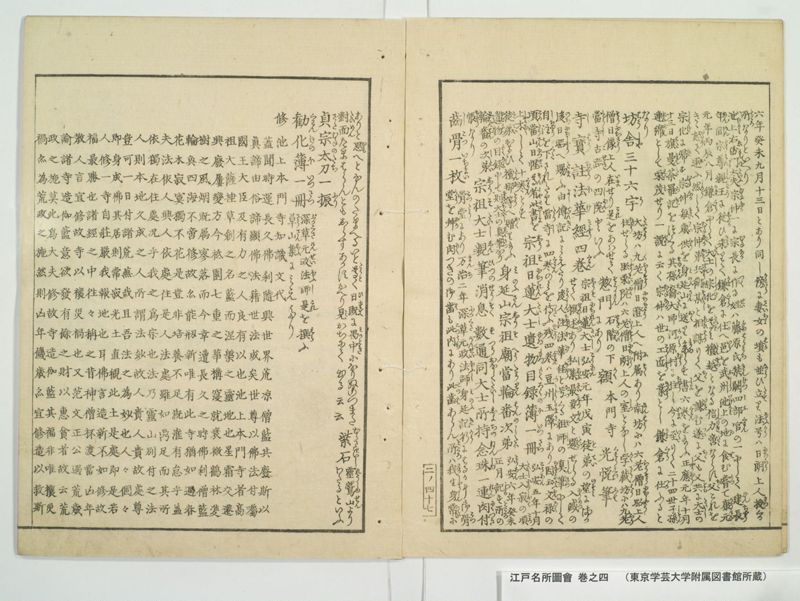
翻刻
【右丁】
《割書:六年癸未九月十三日とあり同し傍(かたはら)に妻女(さいちよ)の墳(はか)も並(なら)ひ立(たて)り法号(ほふかう)は日朗上人(にちらう )授(さつ)くる|所(ところ)なりといへり》
《割書:池上右衛門太夫宗仲(いけかみゑもんのたいふむねなか)一に宗長(むねなか)に作(つく)る姓(せい)は藤原氏(ふちはらうち)禁闕(きんけつ)四部官(しふかん)の一にして建長(けんちやう)|年間(ねんかん)宗尊親王(そうそんしんわう)に従(したか)ひ来(きた)りて鎌倉(かまくら)に仕へ邑(いう)を武州(ふしう)池上(いけかみ)の地(ち)に食(は)む甞(かつ)て康元(かうけん) 》
《割書:元年丙辰八月 鎌倉(かまくら)にして大士(たいし)の宗化(しうけ)を尊(たつと)み檀越(たんをつ)となる信力(しんりき)啻(たゝ)ならす父(ちゝ)これを|きゝ怒(いかり)て逐(お)ふ然(しかう)して宗仲(むねなか)弟(おとゝ)兵衛(ひやうゑ)某(それかし)と相謀(あひはか)りて父(ちゝ)を諌(いさ)む遂(つひ)に父(ちゝ)も又 共(とも)に大士(たいし)の》
《割書:宗化(しうけ)に帰(き)す宗仲(むねなか)毎歳(まいさい)供(くう)を身延山(みのふさん)に送(おく)り参(まゐ)らす書(しよ)六巻( くわん)を給ふ正應(しやうおう)元年十月|十三日 旗曼荼羅記(はたまんたらき)をつくる其(その)孫裔(そんえい)大師河原村(たいしかはらむら)に住(ちゆう)し今(いま)に至(いた)りて二十四世 子孫(しそん)》
《割書:連綿(れんめん)として栄茂(えいも)せり一説( せつ)に云く宗仲(むねなか)は世(よ)の工匠(こうしやう)を業(きやう)とし鎌倉(かまくら)に仕(つか)ふると|なり》
坊舎三十六宇(はうしや う )《割書:大坊(たいはう)は九老僧(くらうそう)日澄上人(にちちよう )へ附属(ふそく)あり南坊(なんはう)には六老僧( らうそう)日昭上人(にちしやう )|住(ちゆう)せらる照栄院(しやうえいゐん)は六老僧( らうそう)日朗上人(にちらう )の室(しつ)となし学藏坊(かくさうはう)には九老( らう) 》
《割書:僧(そう)日像上人(にちさう )在(いま)せり是(これ)をあはせて|當寺(たうし)《振り仮名:古跡の四院|こせき しゐん》といふ》 惣門(そうもん)《割書:石階(せきかい)の下|にあり》 額(かく)《割書:本門寺》光悦筆(くわうえつふて)
寺寳(しはう)註法華經(ちゆうほけきやう)四巻( くわん)《割書:宗祖(しうそ)日蓮大士(にちれんたいし)弘安(こうあん)元年戊寅 徒弟(とてい)の望(のそみ)にまか|せて撰述(せんしゆつ)あり私集最要文(ししふさいえうふん)と題(たい)せらる入滅(にうめつ)の》
《割書:後(のち)日昭(にちしやう)へ賜(たま)ふ由(よし)傳記(てんき)にみえたり後人(こうしん)注法華経(ちゆうほけきやう)と号(なつ)くる祖師(そし)の真筆(しんひつ)にして|自注(しちゆう)を下(くた)されたり當寺(たうし)に四巻( くわん)のみを傳(つた)ふ残(のこり)四巻( くわん)は豆州(づしう)玉澤(たまさは)にあり因云(ちなみにいふ)文禄(ふんろく)の》
《割書:頃(ころ)當山(たうさん)日惺尊者(にちせいそんしや)此書(このしよ)を|上木(しやうほく)して十巻( くわん)とす》宗祖日蓮大士遺物目録簿(しうそにちれんたいしゆゐもつもくろくのほ)一冊(いつさつ)《割書:弘安(こうあん)五年十月|大士(たいし)入寂(にうしやく)の頃(ころ) 》
《割書:徒弟(とてい)およひ檀那等(たんなとう)へ贈(おく)り給ふ|遺物(ゆゐもつ)の目録(もくろく)にして則(すなはち)大士(たいし)の真筆(しんひつ)なり》身延山(みのふさん)宗祖廟當輪番次弟(しうそへうたうりんはんのしたい)《割書:弘安(こうあん)六年癸未|正月 記(しる)す所(ところ)の》
《割書:輪番(りんはん)の次弟(したい)|帳(ちやう)なり》宗祖大士親筆消息(しうそたいししんひつのせうそく)數通(すつう)同(おなしく)大士所持念珠(たいししよちのねんしゆ)一連( れん)肉付(にくつき)
齒骨(しこつ)一枚(いちまい)《割書:骨堂(こつたう)にあり万治(まんち)二年 深草元政法師(ふかくさげんせいほふし)身延記行(みのふきかう)にはるかに御骨( こつ)|堂(たう)を拜(おか)む肉(にく)つきの御歯( は)も此内(このうち)にあり此歯(このは)あらん所(ところ)は我(わか)生身(しやうしん)常(つね)に》
【左丁】
《割書:ありと思(おも)へとなんのたまへるいと尊(たうと)く日(ひ)既(すて)に禺中(みのとき)になりぬいつまた|對面(たいめん)たまはらんともしらすあかすかへり見(み)かちにて出る云云》紫石(むらさきいし)《割書:靈鷲山(れうしゆせん)より|わたるといふ》
貞宗太刀(さたむねのたち)一振( ふり)
勧化簿(くわんけのほ)一冊(いつさつ)《割書:深草元政法師(ふかくさけんせいほふし)是(これ)を撰(えら)ふ|草山集(さうさんしふ)にみえたり》
修池上本門寺知識文代
蓋聞時運長久佛刹隨興世界荒凉僧藍共【其ヵ】廢斯以
眞諦由俗諦顯佛法藉世法成矣世尊以佛法付囑
國王大臣及有力之人良有以也池上本門寺者髙
租大薩捶草創之名藍而涅槃之靈地也星霜交遷
興廢廔變方今祇園七重之華構䆮就衰微鶴林㕠
樹之風烟既属寥落而今幸遭長久之時佛刹僧藍
輪𩵋四海不啻修故𬉹能剏新唯有此寺猶如遇春
花木寂寞獨不花是豈非培養不足漑灌有怠乎盖
夫法依人興人依處住是人法處雖如𣇓足而其所
依獨在住處况乎我之爲宗也法乃靈山別付之法
人則本地久成之人所謂法玅故人貴人貴故處尊
豈可一日付諸荒蕪哉且吾法之為妙也人々個々
即身成佛其居則常寂光土直観此土是處即是若
人修一寺自莊嚴我報地也耳佛言造新不如修故
福最勝也諸經之中往々稱之昔神僧杯渡當凶年
教人言宜修故寺以穣災禍也又范文正公遇荒歳
諭諸寺造伽藍意欲發有餘之財以惠貧者故云荒
政之施莫此爲大夫修故寺造伽藍其福非唯欀災
禍𬉹為荒政之施然則凶年饑歳𬉹宜修造以救斯
現代語訳
【右丁】
(弘安)六年癸未九月十三日とあり。同じく傍らに妻女の墓も並び立てられている。法号は日朗上人から授けられたものであるという。
池上右衛門太夫宗仲は、一に宗長とも書く。姓は藤原氏で、禁闕四部官の一つであり、建長年間に宗尊親王に従って来て鎌倉に仕え、領地を武州池上の地に得た。かつて康元元年丙辰八月、鎌倉において大士の教化を尊んで檀越となった。信仰の力はただならず、父がこれを聞いて怒り追放したが、宗仲は弟の兵衛某と相談して父を諌めた。ついに父もまた共に大士の教化に帰依した。宗仲は毎年供養を身延山に送り参らせ、書六巻を授けられた。正応元年十月十三日、旗曼荼羅記を作る。その子孫は大師河原村に住み、現在に至って二十四世、子孫が連綿として栄えている。一説には、宗仲は世の工匠を業とし鎌倉に仕えたという。
坊舎三十六宇(大坊は九老僧日澄上人へ付属されている。南坊には六老僧日昭上人が住まわれる。照栄院は六老僧日朗上人の房となし、学蔵坊には九老僧日像上人がおられる。これらを合わせて当寺の古跡の四院という) 総門(石階の下にある) 額「本門寺」光悦筆
寺宝 注法華経四巻(宗祖日蓮大士が弘安元年戊寅、徒弟の望みに任せて撰述されたもの。私集最要文と題される。入滅の後、日昭へ賜った由が伝記に見える。後人が注法華経と号する。祖師の真筆にして自注を下されたもの。当寺に四巻のみを伝える。残り四巻は豆州玉沢にある。因みに言うと、文禄の頃、当山日惺尊者がこの書を上木して十巻とした)宗祖日蓮大士遺物目録簿一冊(弘安五年十月、大士入寂の頃、徒弟および檀那等へ贈り給う遺物の目録にして、すなわち大士の真筆なり)身延山宗祖廟当輪番次第(弘安六年癸未正月に記すところの輪番の次第帳なり)宗祖大士親筆消息数通 同じく大士所持念珠一連 肉付歯骨一枚(骨堂にあり。万治二年、深草元政法師の身延記行に「はるかに御骨堂を拝む。肉つきの御歯もこの内にあり。この歯のあるところは我が生身が常に
【左丁】
ありと思えとなん仰せられる、いと尊く日既に禺中になりぬ。いつまた対面賜わらんともしらず、飽かず帰り見がちにて出る」云云)紫石(霊鷲山より渡るという)
貞宗太刀一振
勧化簿一冊(深草元政法師がこれを撰ぶ。草山集に見えたり)
修池上本門寺知識文代
そもそも聞くに、時運長久なれば仏刹随って興り、世界荒涼なれば僧藍共に廃す。これをもって真諦は俗諦によって顕れ、仏法は世法によって成る。世尊が仏法を国王大臣および有力の人に付嘱されたのは、良い理由があってのことである。池上本門寺は高祖大薩が草創した名藍にして涅槃の霊地である。星霜交遷し興廃変遷して、今や祇園七重の華構は衰微に就き、鶴林双樹の風煙は既に寥落に属している。そして今幸い長久の時に遭い、仏刹僧藍は四海に輪奐として、ただ故を修するのみならず能く新を創る。ただこの寺のみが、春に遇う花木の寂寞として独り花咲かざるが如し。これはどうして培養不足、灌漑に怠りあるのではないか。そもそも法は人によって興り、人は処によって住む。これ人法処は鼎足の如くなれども、その所依は独り住処にある。況んや我が宗たるや、法は霊山別付の法、人は本地久成の人、いわゆる法妙なるが故に人貴く、人貴きが故に処尊し。どうして一日たりとも荒蕪に付すことができようか。かつ我が法の妙なることは、人々個々即身成仏し、その居は常寂光土、直ちにこの土を観れば、この処即ち是れなり。もし人一寺を修すれば、自ら我が報地を荘厳することである。仏言く「造新は故を修するに如かず、福最も勝れたり」と。諸経の中に往々これを称す。昔、神僧杯渡は凶年に当たって人に教えて「宜しく故寺を修して災禍を穣すべし」と言った。また范文正公は荒歳に遇って諸寺に伽藍造営を諭したのは、有余の財を発して貧者を恵まんと欲してのこと。故に云く「荒政の施し、これより大なるはなし」と。それ故寺を修し伽藍を造ることは、その福はただ災禍を穣するのみならず、荒政の施しとなる。然らば凶年飢歳にはことに修造すべきである...
英語訳
【Right Page】
(Kōan) 6th year, year of the water-sheep, 9th month, 13th day, it says. Similarly, beside it stands his wife's tomb. The Buddhist name is said to have been granted by Saint Nichirō.
Ikegami Uemon-no-tayū Munenaka, sometimes written as Munenaga. His family name was Fujiwara clan, one of the Imperial Palace Four-Division Officials. During the Kenchō period, he followed Prince Munetaka to serve in Kamakura and received a fief in the land of Ikegami in Musashi Province. Once, in Kōgen 1st year, 8th month, in Kamakura, he revered the Saint's teachings and became a lay patron. His faith was extraordinary. When his father heard this, he became angry and banished him. However, Munenaka consulted with his younger brother, a certain Hyōe, and they admonished their father. Eventually, the father also joined in taking refuge in the Saint's teachings. Munenaka annually sent offerings to Mount Minobu and received six volumes of writings. In Shōō 1st year, 10th month, 13th day, he created the Banner Mandala Record. His descendants live in Taishi Kawahara village, and up to the present, for twenty-four generations, the descendants have flourished continuously. One theory says that Munenaka made his living as a craftsman and served in Kamakura.
Thirty-six temple buildings (Daibō was entrusted to the Nine Elder Monks' Saint Nitchō. The Six Elder Monks' Saint Nisshō resided in Nanbō. Shōei-in served as the quarters for the Six Elder Monks' Saint Nichirō, and the Nine Elder Monks' Saint Nichizō resided in Gakuzōbō. These together are called the four historic temples of this monastery) Main Gate (located below the stone steps) Plaque "Honmonji" by Kōetsu's brush
Temple Treasures: Annotated Lotus Sutra, four volumes (composed by Founding Saint Nichiren in Kōan 1st year, year of the earth-tiger, at the request of his disciples. Titled "Private Collection of Most Essential Passages." According to records, it was bestowed upon Nisshō after [Nichiren's] death. Later people called it the "Annotated Lotus Sutra." It is the founder's authentic handwriting with his own annotations. This temple preserves only four volumes. The remaining four volumes are at Tamasawa in Izu Province. Incidentally, around the Bunroku period, Saint Nichishō of this mountain published this book as ten volumes) Founding Saint Nichiren's Inventory of Bequeathed Items, one volume (An inventory of bequeathed items given to disciples and lay patrons around the time of the Saint's death in Kōan 5th year, 10th month, which is the Saint's authentic handwriting) Mount Minobu Founder's Mausoleum Rotation Schedule (A rotation schedule record written in Kōan 6th year, year of the water-sheep, 1st month) Founding Saint's Handwritten Letters, several copies Also, prayer beads owned by the Saint, one strand Tooth with attached flesh, one piece (Located in the bone hall. In Manji 2nd year, Priest Fukakusa Genshō's Record of Journey to Minobu states: "From afar I worship the bone hall. The tooth with attached flesh is also within. [The Saint] said, 'Think that my living body is always
【Left Page】
present where this tooth exists,' which is most sacred. The day had already reached mid-morning. Not knowing when I might have audience again, I left reluctantly, looking back repeatedly.") Purple Stone (said to have come from Vulture Peak)
Sadamune Sword, one blade
Donation Record, one volume (Selected by Priest Fukakusa Genshō. Appears in the Sōzan Collection)
Repair of Ikegami Honmonji Temple Patron Document
Indeed, when we hear that in times of lasting fortune, Buddhist temples flourish accordingly, but when the world becomes desolate, monastic compounds decay together. Therefore, absolute truth is revealed through conventional truth, and Buddhist law is established through worldly law. The World-Honored One entrusted the Buddhist law to kings, ministers, and powerful people for good reason. Ikegami Honmonji Temple is a famous monastery founded by the high patriarch great Bodhisattva and is the sacred ground of nirvana. As years pass with rise and decline alternating, now the seven-story magnificent structures of Gion have fallen into decay, and the atmosphere of the twin sal trees of Kakurin has already become desolate. But now, fortunately encountering this time of lasting fortune, Buddhist temples and monastic compounds flourish magnificently throughout the four seas, not only repairing the old but also creating the new. Only this temple is like flowering trees in spring that remain silent and alone do not bloom. Is this not because cultivation is insufficient and irrigation has been neglected? Indeed, the Dharma prospers through people, and people dwell through places. While these three—people, Dharma, and place—are like the three legs of a tripod, what they depend upon lies solely in the dwelling place. Moreover, our sect's Dharma is the separately transmitted Dharma of Vulture Peak, and its people are those of original enlightenment from time immemorial. That is, because the Dharma is wondrous, people are precious, and because people are precious, places are revered. How could we abandon it to wasteland for even a day? Furthermore, the wonder of our Dharma is that each individual person attains Buddhahood in this very body, and their dwelling is the Land of Eternally Tranquil Light. When we directly observe this land, this very place is it. If a person repairs one temple, they themselves adorn our reward land. The Buddha said, "Creating new does not compare to repairing old; the merit is most excellent." This is praised repeatedly in various sutras. Long ago, the divine monk Beidou, encountering a year of famine, taught people, "One should repair old temples to eliminate disasters." Also, Fan Wenzheng, encountering a year of poor harvest, urged various temples to construct temple buildings, wanting to distribute surplus wealth to benefit the poor. Therefore it is said, "Among relief measures for famine, none is greater than this." Thus, repairing old temples and constructing temple buildings not only eliminates disasters but also serves as famine relief. Therefore, in years of misfortune and famine, one should especially undertake construction...