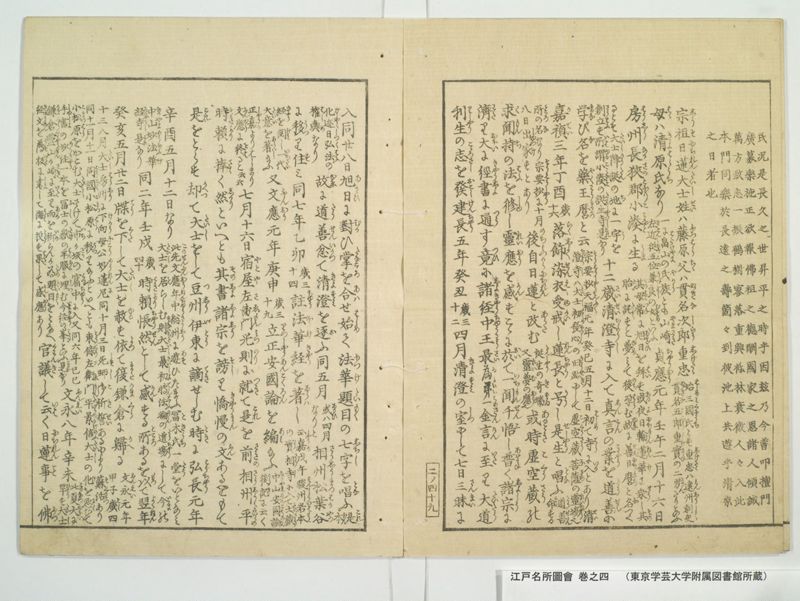
翻刻
【右丁】
民况是長久之世昇平之時乎因茲乃今普叩檀門
廣募樂施正欲報佛祖之德酬國家之恩諸人傾誠
萬方致志一振鶴樹寥落重興祗林衰微人々入此
本門同樂於長遠之壽箇々到彼池上共遊乎清凉
之日者也
宗祖(しうそ)日蓮大士(にちれんたいし)姓(せい)は藤原(ふちはら)父(ちゝ)は貫谷次郎重忠(ぬきなしらうしけたゝ)《割書:始(はしめ)三國氏(みくにうち)とす重忠(しけたゝ)は遠州(えんしう)刺史(しゝ) |貫名五郎重實(ぬきなこらうしけさね)の二男( なん)たりといふ》
母(はゝ)は清原氏(きよはらうち)なり《割書:一に畠山(はたけやま)の氏族(やから)とも山崎(やまさき)|左近従五位兼良(さこんしゆうこゐかねよし)の女(むすめ)といふ》承應(ちやうおう)元年壬午二月十六日
房州(はうしう)長狹郡(なかさのこほり)小湊(こみなと)に生(うま)る《割書:其母(そのはゝ)常(つね)に旭日(あさひ)を拜(はい)す或夜(あるよ)日輪(にちりん)蓮華(れんけ)に乗(せう)し其(その)|胎(たい)に託(たく)すと夢(ゆめ)みて後(のち)孕(はら)む故(ゆゑ)に善日麿(せんにちまろ)と名(な)つく》
《割書:るとそ大士(たいし)降誕(かうたん)の地(ち)に一宇( う)を|創立(さうりふ)す所謂(いはゆる)小湊(こみなと)の誕生寺(たんしやうし)是(これ)なり》十二歳( さい)清澄寺(せいちようし)に入て真言(しんこん)の業(きやう)を道善(たうせん)に
学(まな)び名(な)を藥王麿(やくわうまろ)と云《割書:宗要抄(そうえうしやう)天福(てんふく)元年癸巳五月十二日 初(はしめ)て寺(てら)に入(いる)とあり清(せい)|澄寺(ちようし)は大士(たいし)初(はしめ)發心(ほつしん)の旧跡(きうせき)にして虚空蔵菩薩(こくうさうほさつ)の靈塲(れいちやう)也》
嘉禎(かてい)三年丁酉《割書:歳|十六》落飾(らくしよく)染衣(せんえ)受戒(しゆかい)し蓮長(れんちやう)と号(かう)し是生(せしやう)と唱(とな)ふ《割書:道善(たうせん)|命(めい)する》
《割書:所(ところ)の名(な)なり宗要抄(そうえうしやう)に十月|八日 出家(しゆつけ)すとあり》後(のち)自(みつから)日蓮(にちれん)と改(あらた)む《割書:誕生(たんしやう)の奇瑞(きすゐ)|又 靈夢(れいむ)の應(おう)也》或時(あるとき)虚空蔵(こくうさう)の
求聞持(くもんち)の法(はふ)を修(しゆ)し靈應(れいおう)を感(かん)すこゝに於(おい)て一聞千悟(いちもんせんこ)し普(あまね)く諸宗(しよしう)に
濟(わた)り大(おほい)に經書(きやうしよ)に通(つう)す竟(つひ)に諸経中王最為第一金言(しよきやうちゆうわうさいゐたいいちのきんけん)に至(いた)り大道(たいたう)
利生(りしやう)の志(こゝろさし)を發(おこし)建長(けんちやう)五年癸丑《割書:歳三|十二》四月 清澄(きよすみ)の室(しつ)にして七日 三昧(さんまい)に
【左丁】
入同廿八日 旭日(あさひ)に對(むか)ひ掌(たなこゝろ)を合(あは)せ始(はしめ)て法華題目(ほつけたいもく)の七字(しちし)を唱(とな)ふ《割書:是(これ)|本(ほん)》
《割書:化迹日弘法(けしやくしつくはふ)の|権輿(はしめ)なり》故(ゆゑ)に道善(たうせん)忿(いかつ)て清澄(きよすみ)を逐(お)ふ同五月《割書:或(あるひ)は四月|なりと》相州(さうしう)松葉谷(まつはかやつ)
に移(うつ)り住(す)み同七年乙卯《割書:歳三|十四》註法華経(ちゆうほけきやう)を著(あらは)し《割書:正嘉(しやうか)戊午 駿州(すんしう)岩本(いはもと)|の實相寺(しつさうし)に入て大蔵(たいさう)》
《割書:経(きやう)を閲(けみ)し一代(いちたい) |大意(たいい)を著(あらはし)給ふ》又 文應(ふんおう)元年庚申《割書:歳三|十九》立正安國論(りつしやうあんこくろん)を編(あみ)給ふ《割書:中山安國論(なかやまあんこくろん)|後記(こうき)に云く》
《割書:正嘉(しやうか)よりはしまり|文應(ふんおう)に終(をは)ると云云》七月十六日 宿屋左衛門光則(やとやさゑもんみつのり)に就(つき)て是(これ)を前相州平(さきのさうしうたひらの)
時頼(ときより)に捧(さゝ)く然(しかり)といへとも其書(そのしよ)諸宗(しよしう)を謗(そし)り憍慢(きやうまん)の文(ふん)あるをもて
是(これ)をとらす却(かへつ)て大士(たいし)をして豆州(つしう)伊東(いとう)に謫(てき)せしむ時(とき)に弘長(こうちやう)元年
辛酉五月十二日なり《割書:此先(このせん)文應年中(ふんおうねんちゆう)総州(さうしう)に遊(あそ)ひたまふ冨木氏(ときうち)一堂( たう)をいとなみ|大士(たいし)を居(を)らしむ則(すなはち)大士(たいし)最初轉法輪(さいしよてんはふりん)の道塲(とうちやう)にして今(いま)の》
《割書:中山(なかやま)妙法華(めうほふけ)|経寺(きやうし)是(これ)なり》同二年壬戌《割書:歳|四十》時頼(ときより)悵然(ちやうせん)として感(かん)する所(ところ)あるを以(もつ)て翌年(よくねん)
癸亥五月廿二日 牒(てう)を下(くた)して大士(たいし)を赦(ゆる)す依(よつ)て復(また)鎌倉(かまくら)に歸(かへ)る《割書:文永(ふんえい)元年|甲子 歳(とし)四》
《割書:十三八月 大士(たいし)房州(はうしう)に下向(けかう)母公(ほこう)妙蓮尼(めうれんに)同十月三日 死(しす)師(し)御祈誓(こきせい)あるにより蘇活(そくわつ)あり|同十一月十一日 同國(とうこく)小松原(こまつはら)に移(うつ)り給ふといへとも東條左衛門平景信(とうてうさゑもんたいらのかけのふ)大士(たいし)の化(け)を悪(にく)むて》
《割書:小松原(こまつはら)をかこむ大士(たいし)さけて《振り仮名:市か坂|いち さか》の窟中(くつちゆう)に入又同六年己巳|手書(しゆしよ)の妙経(めうきやう)一本を冨士(ふし)の嶽(たけ)の半服(はんふく)に埋(うつ)む今(いま)《振り仮名:経の峯|きやう みね》といふ是(これ)なり》文永(ふんえい)八年辛未《割書:此夏(このなつ)大(おほい)に|旱(ひてり)す大士(たいし)》
《割書:鎌倉(かまくら)《振り仮名:靈山か崎|りやうせん さき》に至(いた)り雨(あめ)を祈(いの)らんか為(ため)題目(たいもく)をとなへ|経文(きやうもん)を薄板(うすいた)に書(しよ)して海(うみ)に投(とう)す果(はた)して感應(かんおう)あり》官議(くわんき)して云(いは)く日蓮(にちれん)事(こと)を佛(ふつ)
現代語訳
【右丁】
民の様子はこれ長久の世、昇平の時であろうか。これにより今、広く檀家の門を叩き、広く楽施を募り、まさに仏祖の徳に報い、国家の恩に酬いんとしている。諸人は誠を傾け、万方は志を致し、一度は鶴樹の寥落を振い起こし、祇林の衰微を重ね興さんとする。人々がこの本門に入り、長遠の寿を共に楽しみ、個々が彼の池上に到り、清涼の日を共に遊ぶのである。
宗祖日蓮大士の姓は藤原、父は貫名次郎重忠(初めは三国氏とし、重忠は遠州刺史貫名五郎重実の二男であるという)、母は清原氏である(一説には畠山の氏族とも、山崎左近従五位兼良の娘ともいう)。承応元年壬午二月十六日、房州長狭郡小湊に生まれる(その母は常に旭日を拝んでいた。ある夜、日輪が蓮華に乗り、その胎に託すと夢見て後に懐妊した。故に善日麿と名付けた)。(大士降誕の地に一宇を創立した。いわゆる小湊の誕生寺がこれである)
十二歳で清澄寺に入り、真言の業を道善に学び、名を薬王麿という(宗要抄に天福元年癸巳五月十二日、初めて寺に入るとある。清澄寺は大士が初めて発心した旧跡であり、虚空蔵菩薩の霊場である)。
嘉禎三年丁酉(歳十六)、落飾染衣受戒し、蓮長と号し、是生と唱える(道善の命による。所の名である。宗要抄に十月八日出家するとある)。後に自ら日蓮と改める(誕生の奇瑞、また霊夢の応である)。
ある時、虚空蔵の求聞持の法を修し、霊応を感じた。ここにおいて一聞千悟し、あまねく諸宗に渡り、大いに経書に通じた。ついに「諸経中王最為第一」の金言に至り、大道利生の志を発し、建長五年癸丑(歳三十二)四月、清澄の室において七日三昧に
【左丁】
入り、同二十八日、旭日に対い手を合わせ、初めて法華題目の七字を唱える(これが本化迹弘法の権輿である)。故に道善は怒って清澄を追われた。同五月(或いは四月ともいう)相州松葉ヶ谷に移り住む。
同七年乙卯(歳三十四)、注法華経を著し(正嘉戊午、駿州岩本の実相寺に入って大蔵経を閲し、一代大意を著される)、また文応元年庚申(歳三十九)、立正安国論を編まれる(中山安国論後記に云く、正嘉より始まり文応に終わるという)。
七月十六日、宿屋左衛門光則に就いてこれを前相州平時頼に捧げる。しかしながらその書は諸宗を謗り、驕慢の文があるとして、これを取らず、かえって大士を豆州伊東に謫せしめる。時に弘長元年辛酉五月十二日なり(この先、文応年中、総州に遊ばれる。富木氏が一堂を営み大士を居らしめる。すなわち大士最初転法輪の道場にして今の中山妙法華経寺がこれである)。
同二年壬戌(歳四十)、時頼は悵然として感ずる所があり、翌年癸亥五月二十二日、牒を下して大士を赦す。よって復び鎌倉に帰る(文永元年甲子歳四十三、八月大士房州に下向、母公妙蓮尼同十月三日死す。師の御祈誓によりて蘇活あり。同十一月十一日、同国小松原に移り給うといえども、東条左衛門平景信は大士の化を憎んで小松原を囲む。大士は避けて市ヶ坂の窟中に入る。また同六年己巳、手書の妙経一本を富士の嶽の半腹に埋む。今「経の峯」というのがこれである)。
文永八年辛未(この夏大いに旱す。大士は鎌倉霊山ヶ崎に至り、雨を祈らんため題目を唱え、経文を薄板に書して海に投ず。果たして感応あり)、官議して云く「日蓮は事を仏に
英語訳
【Right page】
The people's condition—is this not an age of eternal peace and prosperity? Due to this, we now broadly knock on the doors of temple supporters and widely solicit charitable donations, precisely wishing to repay the virtue of Buddha and the patriarchs and to reciprocate the nation's benevolence. All people devote their sincerity, and from all quarters they apply their will to revive the desolate crane-trees and restore the declining monastery groves. Each person enters this Honmon school to share joy in eternal life, and every individual reaches that Ikegami to enjoy together the days of coolness and purity.
The founder, Saint Nichiren's family name was Fujiwara. His father was Nukinashi-no-jiro Shigetada (originally of the Mikuni clan; Shigetada was the second son of Nukinago-ro Shikesane, governor of Enshu Province). His mother was of the Kiyohara clan (some say she was from the Hatakeyama clan family, or the daughter of Yamazaki Sakon Junior Fifth Rank Kaneyoshi). He was born on the 16th day of the 2nd month of Jōō 1 (1222) in Kominato, Nagasa District, Bōshū Province (his mother always worshipped the rising sun; one night she dreamed that the sun disc rode on a lotus and lodged in her womb, after which she conceived; hence he was named Zennichimaro). (A temple was established at the site of the saint's birth—this is the so-called Tanjō-ji of Kominato.)
At twelve years old, he entered Seichō-ji Temple and studied Shingon practices under Dōzen, taking the name Yakuōmaro (according to the Shūyō-shō, on the 12th day of the 5th month of Tenpuku 1 [1233], he first entered the temple; Seichō-ji is the historic site where the saint first awakened his religious spirit and is a sacred place of Kokūzō Bodhisattva).
In Katei 3 (1237), at age sixteen, he received tonsure, donned religious robes, received ordination, took the name Renchō, and was called Zeshō (by Dōzen's command; this was a local name; the Shūyō-shō states he became a monk on the 8th day of the 10th month). Later he changed his name to Nichiren (this was in response to the miraculous signs at his birth and the spiritual dream).
At one time, he practiced the method of kokūzō-gumonji and experienced spiritual response. Through this he gained the ability to understand a thousand things from hearing one, extensively studied all Buddhist schools, and gained great mastery of the scriptures. Finally reaching the golden words "among all sutras, this is the king, the most excellent," he awakened the aspiration for the great way of benefiting sentient beings. In Kenchō 5 (1253), at age thirty-two, in the 4th month, he entered seven days of samadhi in his room at Kiyosumi.
【Left page】
On the 28th day of the same month, facing the rising sun with palms joined, he first chanted the seven characters of the Lotus Sutra title (this was the beginning of his propagation of the true teaching). Therefore Dōzen became angry and expelled him from Kiyosumi. In the 5th month of the same year (some say it was the 4th month), he moved to Matsubagayatsu in Sagami Province.
In the 7th year, Kōgen (1255), at age thirty-four, he wrote his Commentary on the Lotus Sutra (in Shōka 4 [1258], he entered Jissō-ji at Iwamoto in Suruga Province to study the complete Buddhist canon and wrote the General Meaning of the Buddha's Lifetime Teachings). Also in Bun'ō 1 (1260), at age thirty-nine, he compiled the "Treatise on Establishing Right and Bringing Peace to the Nation" (according to the postscript to the Nakayama Ankokuron, it began in Shōka and was completed in Bun'ō).
On the 16th day of the 7th month, through Yadoya Saemon Mitsunori, he presented this to former Sagami Governor Taira no Tokiyori. However, because the writing criticized various Buddhist schools and contained seemingly arrogant passages, it was not accepted; instead, the saint was exiled to Itō in Izu Province. This was on the 12th day of the 5th month of Kōchō 1 (1261). (Prior to this, during the Bun'ō years, he visited Sōshū Province, where the Toki family built a hall and housed the saint—this was the saint's first place of turning the dharma wheel and is now Nakayama Myōhokke-ji Temple.)
In the 2nd year (1262), at age forty, Tokiyori felt remorseful and moved by something, so in the following year on the 22nd day of the 5th month of 1263, he issued a decree pardoning the saint, who then returned to Kamakura. (In Bun'ei 1 [1264], at age forty-three, in the 8th month the saint went down to Bōshū; his mother, the nun Myōren, died on the 3rd day of the 10th month, but through the saint's prayers she revived; on the 11th day of the 11th month, he moved to Komatsubara in the same province, but Tōjō Saemon Taira no Kagenobu, who hated the saint's teaching, surrounded Komatsubara; the saint escaped into a cave at Ichigasaka; also in the 6th year [1269], he buried a hand-copied Lotus Sutra in the mountainside of Mount Fuji—this is now called "Kyō-no-mine" [Sutra Peak].)
In Bun'ei 8 (1271) (this summer there was a great drought; the saint went to Ryōzengasaki in Kamakura and chanted the daimoku to pray for rain, writing sutra passages on thin boards and casting them into the sea, and indeed there was a response), the government deliberated, saying "Nichiren makes Buddhism into...