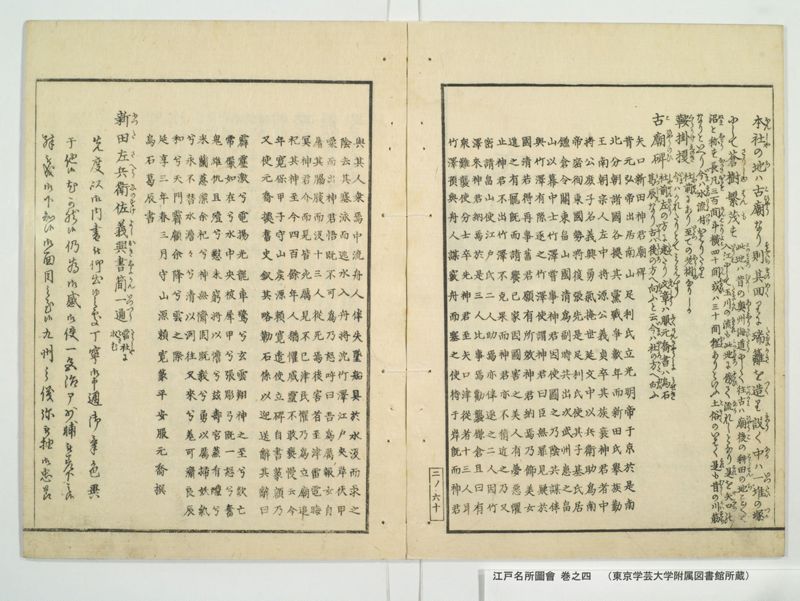
翻刻
【右丁】
本社(ほんしや)の地(ち)は古廟(こひやう)なり則(すなはち)其回(そのめく)りに瑞籬(たまかき)を造(つく)り設(まう)く中(なか)は一堆(いつたい)の塚(つか)
にして蒼樹(さうしゆ)繁茂(はんも)す《割書:此地(このところ)は昔(むかし)の奥州海道(あうしうかいたう)にして往古(そのかみ)は廟後(ひやうこ)の耕田(こうてん)の地(ぢ)こと〳〵く|入江(いりえ)にして玉川(たまかは)の流(なかれ)も此地(このところ)に傍(そひ)て流(なか)れしとなり是(これ)を矢口(やくち)の》
《割書:沼(ぬま)と称(しやう)す長(なかさ)凡(およそ)三百間( けん)斗(はかり)横(よこ)四十間( けん)或(あるひ)は三十間 程(ほと)ありといふ土俗(とそく)のいはく是(これ)も昔(むかし)の川筋(かはすち)|なりといへり今(いま)は水流(すゐりう)付(つけ)かはりたり》
鞍掛榎(くらかけえのき)《割書:社前(しやせん)にあり至(いたつ)ての老樹(らうしゆ)なりしか|今(いま)はかれたりとてみえす》
古廟碑(こひやうのひ)《割書:社前(しやせん)左(ひたり)の方に建(たて)たり文章(ふんしやう)は服元(ふくけん)喬書(きやうしよ)は烏石(うせき)|葛辰(かつしん)なり古(いにしへ)は後(うしろ)の方へ向(むか)ふと云 今(いま)は社(やしろ)の方(かた)へ向(むか)ふ》
矢口新田神君廟碑
昔元弘帝出居南山足利氏立光明帝于京於是南
北分朝諸國各㨿其黨戰爭數年而新田氏擧族勤
王南朝宗人左中將源公義貞卒其族衰神君者中
將公庶子名義興勇氣掩世延文中以兵衛助爲南
帝密徇東國勢將復張先是足利氏使其子基氏居
鎌倉令關東畠山國清爲副時共出次武州患之畠
山以幕中士竹澤嘗事神君因使圖之乃陰共謀伴
與竹澤有隙逐之竹澤使謂神君曰臣無罪見疑於
國清若得再事𦾔君願有所效神君納焉乃飾美女
進之有寵既而請饗己家因圖害之美人有夢惡懼
止神君不出竹澤不克果而神君亦不猜近之乃又
密請畠山使江戸氏二人助焉亦伴逐之二人因竹
澤來神君納焉於是三人比事焉勤襲鎌倉且曰有
衆難襲使分士卒先神君至矢口津從者十三人耳
竹澤預與舟人謀竅舟而塞之使待于岸既而神君
【左丁】
與其人乗焉中流舟人伴失墜船具於水汲而求之
陰去其塞泳而逃水入舟將沈竹澤江戸夾岸伏甲
噪而出神君悟既不可爲乃怒呼曰吾爲属報女自
屠其脇腹而沒十三人從死焉後害者至津雷電晦
冥神君介而見皆死厲見不已津民懼乃爲立廟追
祀其神至今四百餘年人猶懼威靈不敢褻慢云今
年寛保甲子守山矦源頼寛遣使立碑自書篆額乃
又使元喬㨿𦾔史𨥁其略勒石係以迎送辭其辭曰
霹靂激兮電揚光龍車驚兮玄雲翔神之至兮欻亡
常儼如在兮水中央被犀甲兮張彫弓既一怒兮奮
鬼雄仇且殪兮懟未窮將以憺兮玆壽宮蒸肴醴兮
采蘭蕙潔余祀兮神無𢥖固既毅兮勇以厲掃妖氣
兮永不替水澹々兮清以冽往又來兮羗可𢥖良辰
和兮天門霽顧余降兮雲之際
延享三年春三月守山源頼寛篆平安服元喬撰
烏石葛辰書
新田左兵衛佐義興(につたさへうゑのすけよしおき)書簡一通(しよかんいつつう)《割書:當社(たうしや)に|収(をさ)む》
先度以御内書被仰出候之處丁寧御申通御氣色異
于他候尤可然候仍為御感御使一色治部少輔被差下之候
殊被成御下知候御面目之至候九州之儀弥被抽御忠節
現代語訳
【右丁】
本社の土地は古い廟である。その周りに玉垣を造り設けている。中は一つの塚になっていて、青々とした樹木が茂っている。《この場所は昔の奥州街道で、往古は廟の後ろの耕地一帯がすべて入江であり、玉川の流れもこの地に沿って流れていたという。これを矢口の沼と称した。長さおよそ三百間ほど、横四十間あるいは三十間程度あったという。土地の人々が言うには、これも昔の川筋だったということである。今は水流が変わってしまった》
鞍掛榎《社の前にある。非常に古い樹木であったが、今は枯れてしまって見えない》
古廟碑《社の前の左側に建てられている。文章は服元喬、書は烏石葛辰によるものである。昔は後ろの方を向いていたと言われるが、今は社の方を向いている》
矢口新田神君廟碑
昔、元弘帝が南山に移られ、足利氏が光明帝を京都に立てた。ここにおいて南北朝が分かれ、諸国がそれぞれ党派に分かれて数年間戦争が続いた。新田氏は一族を挙げて勤王し、南朝に属した。一族の左中将源義貞公が戦死すると、その一族は衰えた。神君とは中将公の庶子で、名を義興といい、勇気は世に並ぶ者がなかった。延文年間に兵衛佐として南帝の密命により東国を巡り、勢力の回復を図ろうとした。その前に足利氏は子の基氏を鎌倉に置き、関東を治めさせ、畠山国清を副将とした。時に共に武蔵国に出陣し、これを患いとした。畠山は幕府の家臣竹澤がかつて神君に仕えていたことを利用して計略を立てた。そこで密かに謀りを巡らせ、竹澤と仲間割れを装って彼を追放した。竹澤は神君に告げて言った「臣は罪もないのに国清に疑われました。もし再びあなた様にお仕えできるなら、必ずや効果を示したく思います」神君はこれを受け入れた。そこで美女を飾り立てて献上し、寵愛を受けた。その後、自分の家で饗応することを請い、害を加えようと図った。美人は悪い夢を見て恐れ、神君の外出を止めた。竹澤は計画を果たせなかったが、神君もまた彼を疑うことはなく、近づけ続けた。そこで再び密かに畠山に請い、江戸氏の二人に協力させた。また仲間割れを装ってこの二人を追放し、竹澤を通じて神君のもとに来させ、神君はこれを受け入れた。ここに三人が協力することとなった。鎌倉襲撃を勧め、また「大軍では襲撃が困難です。兵卒を分けて進軍しましょう」と言った。神君が矢口の渡しに着いた時、従者はわずか十三人であった。竹澤は予め船頭と謀って船に穴を開けて塞いでおき、岸で待たせた。やがて神君
【左丁】
とその一行が乗船した。川の中ほで船頭は仲間と共に船具を水中に落としたふりをして汲み上げようとし、密かに塞ぎを取り去って泳いで逃げた。水が船に入り沈みそうになると、竹澤と江戸氏は両岸に兵を伏せて騒ぎながら現れた。神君は事態を悟り、もはやどうすることもできないと知ると、怒って叫んだ「我は君主への報復のため」と言って自ら脇腹を切って水中に没し、十三人が従って死んだ。後に害を加えた者たちが渡しに来ると、雷電が鳴り響き空が暗くなり、神君が甲冑を着けた姿で現れ、皆死んだ。怨霊の出現が止まないので、渡しの住民は恐れて廟を立てて神として祀った。今に至る四百余年、人々は今なお霊威を恐れて軽んじ侮ることを敢えてしないという。今年寛保甲子、守山侯源頼寛が使者を遣わして碑を立て、自ら篆額を書き、また元喬に命じて正史に基づいてその概要を記し、石に刻ませ、迎送の辞を添えた。その辞は以下の通りである。
霹靂が激しく響き電光が光を放ち、龍車が驚いて玄雲が翔ける。神の降臨は突然で常ならず、厳然として水中央に在るが如し。犀甲を身に着け彫弓を張り、一度怒れば鬼雄を奮い立たせる。仇敵は倒れども恨みは尽きず、この霊廟を鎮めんとす。蒸した供物と酒を捧げ、蘭や蕙を採って清らかに祭祀を行えば、神に憂いはない。既に毅然として勇敢で厳格であり、妖気を掃い永遠に衰えることがない。水は澹々として清く冷たく、往来して止むことなし。良辰が和やかで天門が晴れ、顧みて降臨される雲の間際よ。
延享三年春三月 守山源頼寛篆 平安服元喬撰 烏石葛辰書
新田左兵衛佐義興の書簡一通《当社に収蔵》
先度の御内書により仰せ出されました件につきまして、丁寧なお申し越しと御意向は他と異なり、もっともなことと存じます。つきましては御感謝のしるしとして、御使として一色治部少輔が派遣されました。殊に御指示を賜り、面目の至りでございます。九州の儀につきましても、いよいよ御忠節を尽くされ
英語訳
【Right Page】
The grounds of the main shrine are an ancient mausoleum. A sacred fence (tamagaki) has been built around it. The center forms a single mound where verdant trees flourish. 《This place was the old Ōshū Highway, and in ancient times all the cultivated land behind the mausoleum was an inlet, and the Tamagawa River also flowed along this area. This was called the Yaguchi Marsh. It was approximately 300 ken long and 40 or sometimes 30 ken wide. Local people say this was also an old riverbed. Now the water flow has changed.》
Kurakake Enoki (Saddle-hanging Zelkova) 《Located in front of the shrine. It was an extremely old tree, but now it has withered and cannot be seen.》
Ancient Mausoleum Stele 《Erected on the left side in front of the shrine. The text was composed by Fuku Genkō, and the calligraphy by Useki Katsushin. It is said that in the past it faced toward the rear, but now it faces toward the shrine.》
Yaguchi Nitta Shinkun Mausoleum Stele
Long ago, Emperor Genkō resided in Nanzan, and the Ashikaga clan established Emperor Kōmyō in Kyoto. Thus the Northern and Southern Courts split, and the various provinces each supported their respective factions, waging war for several years. The Nitta clan devoted their entire family to loyalist service under the Southern Court. When the clan's Left Middle Captain Minamoto no Yoshisada died in battle, the clan declined. The Divine Lord (Shinkun) was a son of the Middle Captain, named Yoshioki, whose courage was unmatched in the world. During the Enbun era, as Hyōe-no-suke, he secretly toured the eastern provinces under the Southern Emperor's command, attempting to restore their power. Previously, the Ashikaga had placed their son Motouji in Kamakura to govern the Kantō region, with Hatakeyama Kunikiyo as deputy. When they both advanced into Musashi Province, this caused concern. Hatakeyama used the fact that his retainer Takezawa had once served the Divine Lord to devise a stratagem. He secretly plotted and, feigning discord, exiled Takezawa. Takezawa told the Divine Lord: "Though innocent, I am suspected by Kunikiyo. If I could serve you again, I would gladly prove my worth." The Divine Lord accepted him. Takezawa then presented a beautiful woman who gained favor. Later, he requested to host a banquet at his home, plotting harm. The woman had an ominous dream and fearfully prevented the Divine Lord from going out. Takezawa could not accomplish his plan, but the Divine Lord did not suspect him and continued to keep him close. Then he again secretly requested Hatakeyama's help and had two men from the Edo clan assist. He also feigned discord and exiled these two men, who came to the Divine Lord through Takezawa, and the Divine Lord accepted them. Thus the three men worked together. They urged an attack on Kamakura, saying "A large army would make the assault difficult. Let us divide our forces and advance." When the Divine Lord reached Yaguchi Ferry, he had only thirteen followers. Takezawa had previously conspired with the boatman to bore holes in the boat and plug them, making them wait on the shore. Soon the Divine Lord
【Left Page】
and his party boarded the boat. In mid-river, the boatman pretended with his accomplice to drop boat equipment in the water and tried to retrieve it, secretly removing the plugs and swimming away. As water entered the boat and it began to sink, Takezawa and the Edo men emerged from both banks where they had hidden soldiers, making a great clamor. The Divine Lord realized what was happening and, knowing there was nothing more he could do, angrily shouted "I act for revenge against my lord's enemies" and cut his own side, sinking into the water, with all thirteen men following him in death. Later, when those who had caused this harm came to the ferry, thunder and lightning roared, the sky darkened, and the Divine Lord appeared in full armor, and they all died. As the vengeful spirit's appearances continued, the ferry residents built a shrine in fear and enshrined him as a deity. For over 400 years until now, people still fear his divine power and dare not show disrespect. This year, Kanpō Kinoe-ne, Lord Moriyama Minamoto no Yorihiro sent an envoy to erect a stele, personally writing the seal script title, and also commanding Genkō to record its summary based on official history, carving it in stone and adding verses of greeting and farewell. The verses are as follows:
Thunder crashes violently and lightning flashes bright, the dragon chariot startles and dark clouds soar. The god's arrival is sudden and extraordinary, solemnly present as if in the center of the water. Wearing rhinoceros armor and drawing a carved bow, once angered he rouses the heroic spirits. Though enemies fall, resentment is not exhausted, seeking to pacify this sacred shrine. Offering steamed delicacies and wine, gathering orchids and thoroughwort for pure worship, the god has no worries. Already resolute, brave and stern, sweeping away evil spirits never to decline. The water flows gently, clear and cold, coming and going without end. When auspicious times are harmonious and heaven's gate clears, looking back at the descent from the edge of clouds.
Third year of Enkyō, third month of spring, Moriyama Minamoto no Yorihiro inscribed the seal script, composed by Heian Fuku Genkō, calligraphy by Useki Katsushin
One letter from Nitta Sahyōe-no-suke Yoshioki 《Preserved at this shrine》
Regarding the matter commanded through the recent private imperial letter, your courteous communication and intentions differ from others, which is most appropriate. Therefore, as a token of gratitude, Isshiki Jibu-no-shō has been dispatched as an envoy. We are particularly honored to receive your instructions. Regarding the matter of Kyushu, your loyal service continues to be...