翻刻
【右丁】
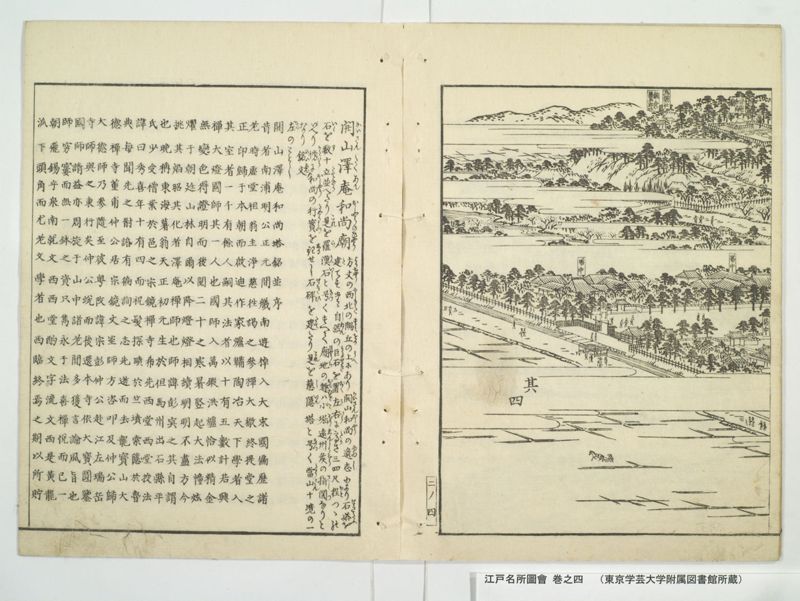
其四
【図】
塔中
澤庵和尚廟 塔中
為朝社
鎌倉権五郎社
南門
塔中
【左丁】
【左丁】
開山澤庵和尚廟(かいさんたくあんおしやうのひやう)《割書:方丈(はうちやう)の西北(にしきた)の隅(すみ)丘(をか)の上(うへ)にあり開山和尚(かいさんおしやう)の遺志(ゆゐし)により石塔(せきたふ)を|建(た)てすたゝ自然(しねん)の巨石(きよせき)を置(おく)左右(さいう)に高(たか)さ三四尺 程(ほと)つゝの》
《割書:石(いし)を数(す)十 立並(たてなら)へたり是(これ)を羅漢石(らかんいし)と号(なつ)くすへて廟地(ひやうち)の趣(おもむき)は小堀遠州矦(こほりゑんしうこう)の指図(さしつ)なりと|いへり傍(かたはら)に和尚(おしやう)の行實(きやうしつ)を記(しる)せし石碑(せきひ)を建(たて)たり是(これ)を慈隱塔(しいん )と号(なつ)く當山(たうさん)十境の一|なり銘文(めいふん)|左(さ)のことし》
開山澤庵和尚塔銘並序
昔者南浦明公正元間艤南遊棹入大宋國偏曆諸
老時虚堂祖翁主淨慈往謁之參禪大徹終提堂之
正印歸于本朝而啟迪作家爐鞴陶冶天下學者入
其室者一千有餘人嗣其法者以十有五數計若興
禪大燈國師其一人也國師入萬鍛洪爐恰似精金
無變色得證明而後閱二十之寒暑竪起大法幢炫
燿于朝廷山林自爾以降燈燈相續明明不盡方今
挑其焰昭其化者澤庵禪師也師諱彭㝠之其自謂
也晩稱東海■#8翁天正初元生於但馬州出石縣平
氏少受僧業於邑之宗鏡禪寺希先西堂西堂授法
諱曰秀喜年十有四而祝髪探賾於竺墳索隱於魯
典每聞先之𡬹諙有徧詢之志先逝而去龍寳山大
德禪寺董甫仲公居宗鏡丈室師方咨叩及仲公歸
大德師乃參隨至彼粤𨸩諱宗彭仲公赴江左瑞岳
寺師與之東行矣仲公蛻而後還本寺依大寳圓鑒
國師請益亦周旋于山中諸老閒多獲言論風旨也
師穷窶而無一鉢之資只雋永于法喜禪悅而已一
朝飛錫乎泉南就文西西堂酌文字流文西是黄龍
泒下頭角而尤老文學者也西臨終焉之期以所貯
現代語訳
【右丁】
其の四
【図】
塔中
沢庵和尚廟 塔中
為朝社
鎌倉権五郎社
南門
塔中
【左丁】
開山沢庵和尚廟(かいさんたくあんおしょうのびょう)
方丈の西北の隅、丘の上にある。開山和尚の遺志により石塔を建てず、ただ自然の巨石を置く。左右に高さ三、四尺程の石を数十個立て並べている。これを羅漢石と呼ぶ。すべて廟地の趣は小堀遠州侯の指図によるという。傍らに和尚の行実を記した石碑を建てている。これを慈隠塔と号する。当山十境の一つである。銘文は以下の通り。
開山沢庵和尚塔銘並序
昔、南浦明公が正元年間に南遊の棹を艤し、大宋国に入り諸老を偏歴した時、虚堂祖翁が浄慈に主となって往謁し、参禅大徹して終に堂の正印を提げ本朝に帰り、啓迪作家の炉鞴によって天下の学者を陶冶し、その室に入る者一千有余人、その法を嗣ぐ者十有五人を数える。興禅大燈国師はその一人である。国師は万鍛の洪炉に入り、恰も精金の変色なきが如く、証明を得て後、二十の寒暑を閲して大法幢を竪起し、朝廷山林に炫曜した。それ以降、燈燈相続して明明として尽きることなく、今日その焰を挑き、その化を昭らかにする者は沢庵禅師である。師の諱は彭㝠、その自謂である。晩に東海翁と称した。天正初元年、但馬州出石県平氏に生まれた。少くして邑の宗鏡禅寺の希先西堂より僧業を受け、西堂より秀喜という法諱を授かり、十四歳で祝髪した。竺墳を探賾し、魯典を索隠し、毎々先師の諙を聞いて偏詢の志があったが、先師は逝去した。龍宝山大徳禅寺の董甫仲公が宗鏡の丈室に居た時、師がまさに咨叩していると、仲公が大徳に帰り、師は参随してそこに至った。宗彭と改諱し、仲公が江左瑞岳寺に赴くと師も東行した。仲公蛻化の後、本寺に還り大宝円鑑国師に依って請益し、また山中の諸老の間を周旋して多く言論風旨を獲得した。師は窮窶で一鉢の資もなく、ただ法喜禅悦に雋永するのみであった。ある朝、泉南に飛錫して文西西堂に就き、文字流を酌んだ。文西は黄龍派下の頭角で、とりわけ老文学者であった。西の臨終の期に、所蔵の
英語訳
【Right Page】
Number Four
【Illustration】
Temple Sub-complexes
Takuan Osho Mausoleum Temple Sub-complexes
Tametomo Shrine
Kamakura Gongorō Shrine
South Gate
Temple Sub-complexes
【Left Page】
Founding Abbot Takuan Osho Mausoleum (Kaisan Takuan Oshō no Byō)
Located on a hill at the northwest corner of the abbot's quarters. Following the founding abbot's dying wish, no stone pagoda was erected; instead, only natural giant stones were placed. Several dozen stones, each about three to four feet high, are arranged standing in rows on the left and right. These are called Arhat Stones. It is said that the entire design of the mausoleum grounds was directed by Lord Kobori Enshū. Nearby stands a stone monument recording the abbot's deeds. This is called the Jiin Pagoda and is one of the Ten Scenic Spots of this temple. The inscription reads as follows:
Inscription and Preface for the Pagoda of Founding Abbot Takuan Osho
In ancient times, when Master Nanpo sailed south during the Shōgen era and entered the great Song country, visiting various masters everywhere, Master Kyodō served as abbot at Jōji temple. He went to study with him, achieved great enlightenment through Zen meditation, finally received the true seal of the dharma hall, returned to our country, and through the furnace and bellows of enlightened teaching, molded scholars throughout the realm. More than a thousand people entered his chamber, and fifteen people inherited his dharma. National Master Kōzen Daitō was one of them. The National Master entered the great furnace of ten thousand forgings, like pure gold showing no change of color, and after obtaining certification, spent twenty years raising the great dharma banner that shone brilliantly in the imperial court and mountains. From then on, lamp after lamp continued in succession, brightness never ending. Today, the one who kindles that flame and illuminates that transformation is Zen Master Takuan. The master's posthumous name was Pengming, which was his own designation. In later years he was called the Old Man of the Eastern Sea. He was born in the first year of Tenshō to the Taira clan in Izushi County, Tajima Province. In his youth, he received monastic training from Master Kisen Seidō of the local Sūkyō Zen temple. The Western Hall master gave him the dharma name Shūki, and he took the tonsure at age fourteen. He explored the depths of Buddhist texts and searched the mysteries of Confucian classics. Each time he heard the master's teachings, he had the desire for comprehensive inquiry, but the master passed away. When Master Dōho Chūkō of Ryūhōzan Daitoku Zen temple resided in the abbot's chamber at Sūkyō, just as the master was seeking instruction, Chūkō returned to Daitoku, and the master followed him there. He changed his name to Sōhō, and when Chūkō went to Zuigaku temple in Jiangzuo, the master also traveled east. After Chūkō's death, he returned to the home temple and sought instruction from National Master Daihō Enkan, also circulating among the various masters in the mountains and gaining much from their teachings and insights. The master was poor and had no resources for even a single bowl, but only persevered in dharma joy and Zen bliss. One morning, he traveled to Sennan and studied under Master Bunsai Seidō, learning the literary tradition. Bunsai was a leading figure of the Ōryū lineage and especially an elderly literary scholar. At the time of his death, he [gave the master] his collection of