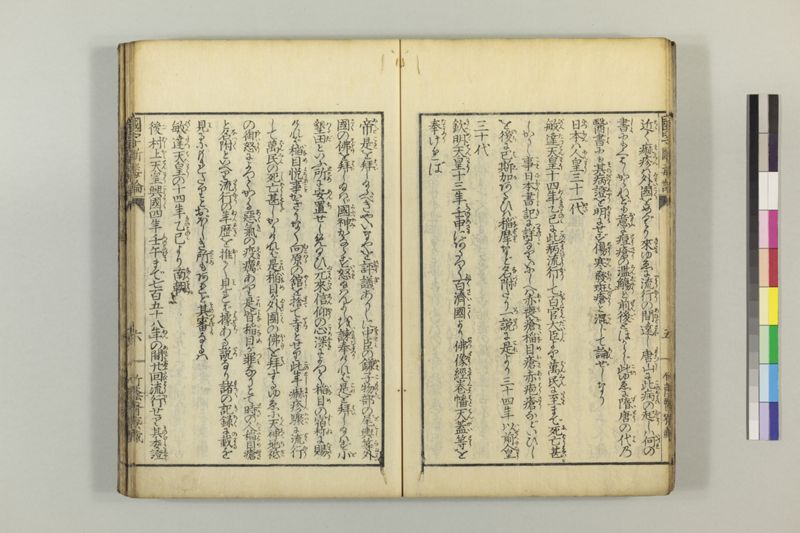
翻刻
【右頁】
近(ちか)く痲疹(ましん)は外國(ぐわいこく)をめぐり來(きたる)ゆゑに流行(りうかう)の間(あひだ)遠(とほ)し唐山(もろこし)に此病(このやまひ)の起(おこり)しは何(いづれ)の
書(しよ)にもくはしからねども意(おもふ)に痘瘡(とうさう)の濫觴(らんじやう)と前後(ぜんご)とほからじ此(この)ゆゑに隋唐(ずいとう)の代(よ)の
醫書(いしよ)にも其(その)病證(びやうしやう)を明(あきらか)にせず傷寒(しやうかん)發斑瘡(ほつはんさう)と混(こん)じて論(ろん)ぜしなり
日本(につほん)は人皇(にんわう)三十一/代(だい)
敏達天皇(びんたつてんわう)十四/年(ねん)乙巳(きのとのみ)に此病(このやまひ)流行(りうかう)して百官(ひやくくわん)大臣(だいじん)より萬民(ばんみん)に至(いたる)まで死亡(しばう)甚(はなはた)
しかりし事(こと)日本書記(にほんしよき)に詳(つまびらか)なりいにしへは赤喪瘡(あかもかさ)稲目瘡(いなめかさ)赤疱瘡(あかはうさう)などいひし
を後(のち)に巴斯加(はしか)あるひは稲摩(いなずり)など名附(なづけ)たり一説(いつせつ)に是(これ)より三十四年/以前(いぜん)人皇(にんわう)
三十代
欽明天皇(きんめいてんわう)十三年/壬申(みつのとのさる)にあたつて百濟國(ひやくさいこく)より佛像(ぶつざう)經巻(きやうくわん)幡(はた)天蓋(てんがい)等(とう)を
奉(たてまつり)ければ
【左頁】
帝(みかど)是(これ)を拜(はい)し給ふべきやいなやを評議(ひやうぎ)ありしに中臣(なかとみ)の鎌子(かまこ)物部(ものゝべ)の尾輿(をこし)等(ら)外(ぐわい)
國(こく)の佛(ほとけ)を拜(はい)し給はゞ國神(くにつかみ)かならず怒(いかり)給はんよしを諫奉(いさめたてまつり)ければ是(これ)を拜(はい)し給はず小(を)
墾田(はるだ)といふ所(ところ)に安置(あんち)せしめ給ひ元來(ぐわんらい)信仰(しんかう)の心深(こゝろふかき)によつて稲目(いなめ)の宿祢(すくね)に賜(たまはり)
ければ稲目(いなめ)悦事(よろこぶこと)かぎりなく向原(むこはら)の舘(やかた)を捨(すて)て寺(てら)とせり此年(このとし)痲疹(ましん)驟(にはか)に流行(りうかう)
して萬民(ばんみん)の死亡(しばう)甚(はなはだ)しかりければ是(これ)稲目(いなめ)が外國(ぐわいこく)の佛(ほとけ)を拜(はい)するゆゑに天神地祗(てんしんちぎ)
の御怒(みいかり)によつてかかる惡氣(あくき)の疫癘(えきれい)あり是皆(これみな)稲目(いなめ)が罪(つみ)なりとて時(とき)の人(ひと)稲目瘡(いなめかさ)
と名附(なつく)といへり流行(りうかう)の年歴(ねんれき)を推(おし)て見(み)れば據(よりどころ)ある説(せつ)なり諸(もろ〳〵)の記録(きろく)に載(のする)を
見(み)るにもれたりとおぼしき所(ところ)もあれど其審(そのつまびらか)なるは
敏達天皇(びんたつてんわう)の十四年/乙巳(きのとのみ)より南朝(なんてう)
後村上天皇(ごむらかみてんわう)興国(こうこく)四年/壬午(みつのとのむま)まで七百五十八/年(ねん)の間(あひだ)廿回(にじふたび)流行(りうかう)せり其(その)委(くはしき)證(しやう)
現代語訳
【右頁】
痘瘡は近くを回り、麻疹は外国を巡って来るので流行の間隔が遠い。中国でこの病気が起こったのはどの書物にも詳しく記されていないが、思うに痘瘡の始まりと前後それほど離れていないだろう。このため隋唐時代の医書でもその病状を明らかにせず、傷寒発斑瘡と混同して論じたのである。
日本では人皇三十一代敏達天皇十四年乙巳にこの病気が流行して、百官大臣から万民に至るまで死亡が甚だしかったことが日本書紀に詳しく記されている。昔は赤喪瘡、稲目瘡、赤疱瘡などと言ったのを、後にはしかあるいは稲摩などと名付けた。一説によれば、これより三十四年以前の人皇三十代欽明天皇十三年壬申に、百済国から仏像、経巻、幡、天蓋等を奉ったところ、
【左頁】
帝がこれを拝するべきかどうか評議があった時、中臣鎌子、物部尾輿等が、外国の仏を拝されれば国神が必ず怒られるであろうと諌め奉ったので、これを拝されず小墾田という所に安置させ給うた。元来信仰の心が深いことによって稲目宿祢に賜ったところ、稲目は喜ぶことかぎりなく、向原の館を捨てて寺とした。この年、麻疹が急に流行して万民の死亡が甚だしかったので、これは稲目が外国の仏を拝するために天神地祇の御怒りによってこのような悪気の疫病があり、これは皆稲目の罪であるとして、時の人が稲目瘡と名付けたという。流行の年歴を推して見れば根拠のある説である。諸々の記録に載せるのを見ると漏れたと思われる所もあるが、その確かなものは敏達天皇の十四年乙巳より南朝後村上天皇興国四年壬午まで七百五十八年の間に二十回流行した。その詳しい証拠は
英語訳
【Right Page】
Smallpox circulates nearby, while measles travels around foreign countries, so the intervals between epidemics are distant. Which book records when this disease first arose in China is not detailed in any text, but I think it was not far before or after the beginning of smallpox. For this reason, medical texts from the Sui and Tang dynasties also did not clarify its symptoms and discussed it while confusing it with typhoid fever with eruptions.
In Japan, during the 14th year of Emperor Bidatsu's reign (31st human emperor), year of Kinoto-Mi, this disease spread and deaths were extremely severe from court officials and ministers down to all the people, as detailed in the Nihon Shoki (Chronicles of Japan). In ancient times it was called akamokasa, inamekasa, akahōsō, etc., but later it was named hashika or inazuri. According to one theory, thirty-four years before this, in the 13th year of Emperor Kinmei's reign (30th human emperor), year of Mizunoto-Saru, Buddhist statues, sutras, banners, canopies, etc. were presented from Baekje Kingdom.
【Left Page】
When there was discussion about whether the Emperor should worship these or not, Nakatomi no Kamako, Mononobe no Okoshi and others remonstrated that if foreign Buddhas were worshipped, the national gods would surely become angry, so these were not worshipped but placed at a location called Oharuda. Due to originally having deep faith, these were bestowed upon Iname no Sukune, and Iname rejoiced limitlessly, abandoning his Mukohara mansion to make it into a temple. In this year, measles suddenly spread and deaths among all people were extremely severe. People said this was because Iname worshipped foreign Buddhas, causing the anger of heavenly gods and earthly deities to bring such malevolent epidemic qi - all of this was Iname's fault - so people of the time named it "Iname's pox." Looking at the chronology of epidemics, this is a theory with foundation. Looking at what is recorded in various chronicles, there seem to be some omissions, but what is certain is that from Emperor Bidatsu's 14th year Kinoto-Mi until Southern Court Emperor Go-Murakami's Kōkoku 4th year Mizunoto-Uma, over 758 years, there were twenty epidemics. The detailed evidence for this is...