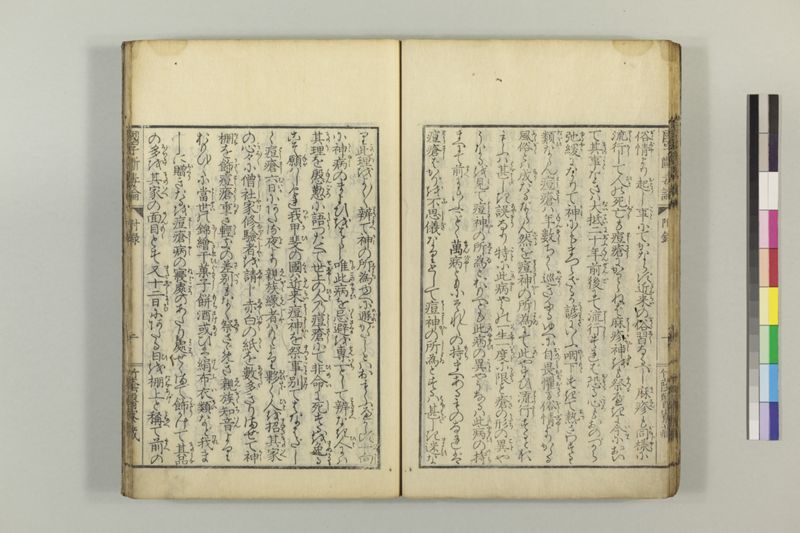
翻刻
【右頁】
俗情(ぞくじやう)より起(おこり)し事(こと)にてかならず近来(きんらい)の俗習(ぞくしう)なるべし麻疹(ましん)も同様(おなじやう)に
流行(りうかう)して人(ひと)の死亡(しぼう)も痘瘡(とうさう)にかわらねば麻疹神(はしかがみ)をも祭(まつる)べきに今(いま)におい
て其事(そのこと)なきは大抵(たいてい)二十年前後(にじふねんぜんご)にて流行(りうかう)すれば恐(おそる)る心(こゝろ)もおのづから
弛緩(ゆるやか)になりて神(かみ)にもまつらざるか諺(ことわざ)にいふ咽下(のどもと)すぎて熱(あつ)さわするゝ
類(たぐひ)ならん痘瘡(とうさう)は年數(ねんすう)ちかく巡(めぐり)きたるゆへに自(おのづから)畏懼(おぢおそる)る俗情(ぞくじやう)よりかゝる
風俗(ふうぞく)とは成(なり)たるならん然(しかる)を痘神(はうさうがみ)の所為(しよゐ)にて此(この)やまひ流行(りうかう)するとお
もふは甚(はなはだ)しき誤(あやまり)なり特(こと)に此(この)病(やみ)やうの一生一度(いつしやういちど)に限(かぎる)と瘡(かさ)の形(かたち)の異(こと)や
うなるを見(み)て痘神(はうさうがみ)の所為(しよゐ)とおもへども此病(このやまひ)の異(こと)やうなるは此病(このやまひ)の持(もち)
まへにて前(まへ)にもいふごとく萬病(まんびやう)ともにそれ〳〵の持(もち)まへあるものなれば
痘瘡(とうさう)ばかりを不思儀(ふしぎ)なりとして痘神(はうさうがみ)の所為(しよゐ)とするは甚(はなはだ)しき迷(まよひ)な
【左頁】
り此理(このり)をよく〳〵辨(わきまへ)て神(かみ)の所為(しよゐ)ゆへに遯(のがれ)がたしとはおもふべからず一向(いつかう)
に神病(かみやみ)のまよひをはらし唯(ただ)此病(このやまひ)を忌避(いみさくる)を専一(せんいち)として辨(わきまへ)なき人(ひと)には
其理(そのり)を慇懃(ねんごろ)に語(かたり)つたへて世上(せじやう)の人(ひと)の痘瘡(とうさう)にて非命(ひめい)に死(し)するを免(まぬかる)る
こそ願(ねが)はしけれ我(わが)《振り仮名:甲斐の國|か ひ くに》は近来(きんらい)痘神(はうさうがみ)を祭事(まつること)別(わけ)てはなはだし
く痘瘡(とうさう)六日(むいか)にあたる夜(よ)より親族(しんぞく)緣者(えんじや)はもとより夥(おびたゞし)く人(ひと)を招(まねき)其家(そのいへ)
の心々(こゝろ〳〵)に僧(そう)社家(しやけ)修驗者(しゆげんじや)を請(しやう)じ赤白(しやくびやく)の紙(かみ)を數多(あまた)きりまぜて神(かみ)
棚(たな)を飾(かざり)痘瘡(とうさう)重(おも)き輕(かる)きの差別(さべつ)もなく祭(まつり)さゞめき親族(しんぞく)知音(ちいん)より
おもひ〳〵に當世(とうせい)の錦繪(にしきゑ)干菓子(ひぐわし)餅(もち)酒(さけ)或(ある)ひは絹布(けんふ)衣類(いるい)など我(われ)ま
しに贈(おくり)きたるを痘瘡病(とうさうやみ)の寢處(ねどころ)のあたり處(ところ)せくまで飾(かざり)かけて其品(そのしな)
の多(おほき)を其家(そのいへ)の面目(めんもく)とす又(また)十二日(じうにゝち)にあたる日(ひ)を棚上(たなあげ)と稱(となへ)て前(まへ)の
現代語訳
【右頁】
俗情から起こったことで、必ず近年の俗習であろう。麻疹も同様に流行して人の死亡も痘瘡と変わらないのだから麻疹神も祭るべきなのに、今においてその事がないのは、大体二十年前後で流行するので恐れる心も自然と緩やかになって神も祭らないのか。諺に言う「喉元過ぎて熱さ忘るる」の類であろう。痘瘡は年数近く巡り来るゆえに自然と畏れ恐れる俗情からかかる風俗とはなったのであろう。しかし痘神の仕業でこの病気が流行するとおもうのは甚だしい誤りである。特にこの病気様の一生一度に限ることと瘡の形の異様なるを見て痘神の仕業と思うけれども、この病気の異様なることはこの病気の持ち前であって、前にも言うごとく万病ともにそれぞれの持ち前があるものであるから、痘瘡ばかりを不思議なりとして痘神の仕業とするのは甚だしい迷いで
【左頁】
ある。この理をよくよく弁えて、神の仕業ゆえに逃れがたしとは思うべからず。一向に神病の迷いを祓い、ただこの病気を忌み避けることを専一として、弁えなき人にはその理を懇切に語り伝えて、世上の人の痘瘡にて非命に死するを免れることこそ願わしい。我が甲斐の国は近年痘神を祭ることが格別はなはだしく、痘瘡六日にあたる夜より親族縁者はもとより夥しく人を招き、その家の心々に僧・社家・修験者を請じ、赤白の紙を数多切り混ぜて神棚を飾り、痘瘡重き軽きの差別もなく祭り騒めき、親族知音より思い思いに当世の錦絵・干菓子・餅・酒、或いは絹布・衣類など我勝ちに贈り来たるを痘瘡病の寝処のあたり所狭くまで飾り掛けて、その品の多きをその家の面目とす。また十二日にあたる日を棚上げと称して前の
英語訳
【Right Page】
This arose from common folk sentiments and must surely be a recent popular custom. Measles likewise spreads and causes human deaths no different from smallpox, so one should also worship a measles deity, yet this does not happen today. Perhaps because epidemics occur roughly every twenty years, people's fear naturally becomes relaxed and they do not worship the deity either. It would be like the saying "once past the throat, one forgets the heat." Smallpox cycles back at close intervals, so such customs naturally developed from folk sentiments of fear and dread. However, thinking that this disease spreads due to the smallpox deity's actions is a grave error. People see the peculiarity of this illness occurring only once in a lifetime and the strange form of the pox, and think it the work of the smallpox deity. But the strangeness of this disease is simply this disease's inherent nature. As I said before, all ten thousand diseases each have their respective inherent characteristics, so considering only smallpox as mysterious and attributing it to the smallpox deity's work is a serious delusion.
【Left Page】
One must thoroughly understand this principle and not think that because it is a deity's doing, it cannot be escaped. One should completely dispel the delusion of divine illness, focus solely on avoiding this disease, and earnestly explain this principle to those who lack understanding, so that people in the world may avoid dying untimely deaths from smallpox—this is what is desirable. In my province of Kai, worshipping the smallpox deity has recently become particularly excessive. From the night of the sixth day of smallpox, they invite not only relatives and connections but tremendous numbers of people. According to each household's preferences, they invite monks, shrine priests, and mountain ascetics, cut and mix numerous red and white papers to decorate the deity shelf, and hold festivals and revelries regardless of whether the smallpox is severe or mild. Relatives and acquaintances compete to send contemporary brocade pictures, dried sweets, rice cakes, sake, or silk cloth and clothing, which are displayed around the smallpox patient's sleeping area until there is no room left. They consider the abundance of these items a matter of family honor. Also, they call the twelfth day "tana-age" (shelf removal) and the previous