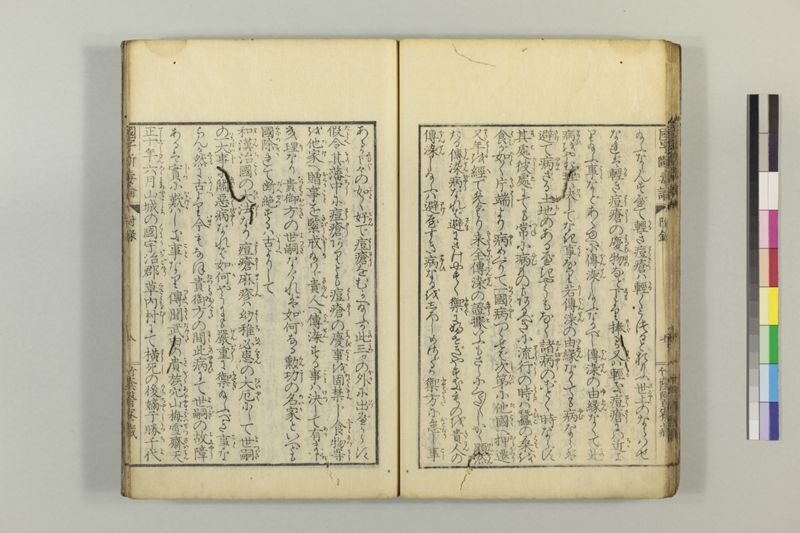
翻刻
【右頁】
給ふならんすべて輕(かる)き痘瘡(とうさう)は輕(かる)くうつるとおもふ世上(せじやう)のならはせ
なれば輕(かる)き痘瘡(とうさう)の慶物(よろこびもの)など下(しも)より捧(さゝぐ)るか又(また)は輕(かる)き痘瘡(とうさう)には近(ちか)よ
り給ふ事(こと)などあるゆへに傳染(でんせん)し給ふなるべし傳染(でんせん)の由縁(ゆゑん)なくて此(この)
病(やまひ)をやむ理(り)は决(けつ)してなき事(こと)なり若(もし)傳染(でんせん)の由縁(ゆゑん)なくても病(やむ)ならば
避(さけ)て病(やま)ざる土地(とち)のあるべきやうもなく諸病(しよびやう)のごとく時ならず
其處彼處(そこかしこ)にても常(つね)に病(やむ)ものもあるべきに流行(りうかう)の時(とき)は蠶(かひこ)の桑(くわ)を
食(はむ)が如(ごと)く片端(かたはし)より病(やみ)めぐりて一國(いつこく)病(やみ)つくせば次第(しだい)に他國(たこく)へ押遷(おしうつり)
又(また)年(とし)を經(へ)てめぐり来(きたり)全(まつたく)傳染(でんせん)の證據(しやうこ)いふもさらにくだ〳〵しかく顯然(げんぜん)
たる傳染病(でんせんびやう)なれば避(さくる)にさけやすく禦(ふせぐ)にふせぎやすきものを貴人(きにん)の
傳染(でんせん)し給ふは避(さけ)やすき病(やまひ)なるをしろしめさゞるか禦方(ふせぎかた)に怠(おこたり)し事(こと)
【左頁】
あるか下々(しも〴〵)の如(ごと)く好(このん)で痘瘡(とうさう)をむかへ給ふか此(この)《振り仮名:三ッ|みつ 》の外(ほか)に出(いづ)べからす
假令(たとへ)其(その)藩中(はんちう)に痘瘡(とうさう)ありとも痘瘡(とうさう)の慶事(よろこびごと)を固禁(かたくきん)じ食物等(しよくもつとう)
を他家(たけ)へ贈事(おくること)を緊戒(きびしくいましめ)給はゞ貴人(きにん)へ傳染(でんせん)する事(こと)は決(けつ)して有(ある)まじ
き理(り)なり貴御方(たつときおんかた)の世嗣(よつぎ)なければ如何(いか)なる勲功(くんこう)の名家(めいか)といへども
國除(くにのぞか)れて断絶(だんぜつ)するは古(いにしへ)よりして
和漢(わかん)治國(ちこく)の《振り仮名:大法|たい□う#1》なり痘瘡(とうさう)麻疹(ましん)は幼稚(ようち)必患(ひつくわん)の大厄(たいやく)にして世嗣(よつぎ)
の一大事(いちだいじ)に《振り仮名:關|あつ□□#2》惡病(あくびやう)なれば如何(いか)やうにも嚴重(げんぢう)に禦(ふせぎ)給ふべき事(こと)な
らんか然(しかる)に古(いにしへ)より今(いま)もなほ貴御方(たつときおんかた)の間(まゝ)此病(このやまひ)にて世嗣(よつぎ)の故障(こしやう)
あるは實(じつ)に歎(なげか)はしき事(こと)なり傳聞(つたへきく)武田(たけだ)の貴族(きぞく)穴山梅雪齋(あなやまばいせつさい)天(てん)
正十年六月(せうじうねんろくくわつ)《振り仮名:山城の國|やましろ くに》宇治郡(うぢごほり)草内村(くさうちむら)にて横死(わうし)の後(のち)嫡子(ちやくし)勝千代(かつちよ)
現代語訳
【右頁】
給うのであろう。すべて軽い痘瘡は軽くうつると思う世上の習わしなので、軽い痘瘡の祝い物などを下から捧げるか、または軽い痘瘡には近寄り給う事などがあるゆえに伝染し給うのであろう。伝染の由縁なくてこの病を患う理は決してない事である。もし伝染の由縁なくても病むならば、避けて病まざる土地があるはずもなく、諸病のごとく時ならずそこかしこにても常に病む者もあるべきに、流行の時は蚕が桑を食むがごとく片端より病み回って一国病み尽くせば次第に他国へ押し移り、また年を経て回り来る。全く伝染の証拠を言うのもさらに詳しく述べる必要もないほど顕然たる伝染病なので、避けるに避けやすく防ぐに防ぎやすいものを、貴人が伝染し給うのは、避けやすき病であることを知ろしめさざるか、防御方に怠りし事
【左頁】
があるか、下々のごとく好んで痘瘡を迎え給うか、この三つの外に出るべからず。
たとえその藩中に痘瘡ありとも、痘瘡の祝い事を固く禁じ、食物等を他家へ贈ることを厳しく戒め給えば、貴人へ伝染する事は決してあるまじき理である。貴い御方の世継ぎなければ、いかなる勲功の名家といえども国を除かれて断絶するのは古より和漢治国の大法である。痘瘡・麻疹は幼稚必患の大厄にして、世継ぎの一大事に関わる悪病なので、いかようにも厳重に防ぎ給うべき事であろうか。然るに古より今もなお貴い御方の間々この病にて世継ぎの故障があるのは実に嘆かわしき事である。伝聞では武田の貴族穴山梅雪斎、天正十年六月山城の国宇治郡草内村にて横死の後、嫡子勝千代
英語訳
【Right Page】
This is likely what happens. Since it is a common custom to think that mild smallpox is mildly contagious, when congratulatory gifts for mild smallpox are offered from below, or when [nobles] approach cases of mild smallpox, they become infected. There is absolutely no reason to contract this disease without a source of contagion. If one could become ill without any source of contagion, then there would be no lands where people could avoid the disease and remain healthy, and like other diseases, people would constantly fall ill here and there at any time. However, during epidemics, like silkworms eating mulberry leaves, the disease spreads from one end [of the population], and when an entire country has been afflicted, it gradually moves to other countries, then returns again after years have passed. The evidence for contagion is so abundantly clear that there is no need to elaborate further. Since this is such an obviously contagious disease that is easy to avoid and prevent, when noble persons become infected, it must be either because they do not know it is an easily avoidable disease, or because there has been negligence in protective measures,
【Left Page】
or because they welcome smallpox like the common people do - it cannot be anything other than these three reasons.
Even if there is smallpox within their domain, if they strictly forbid celebrations for smallpox and severely prohibit sending food and other items to other households, there should be absolutely no reason for noble persons to become infected. Without heirs among noble persons, even the most distinguished families with great merit will have their domains confiscated and their lineages severed - this has been the great law of governance in both Japan and China since ancient times. Smallpox and measles are great calamities that children must inevitably suffer, and being evil diseases that relate to the crucial matter of succession, they should be prevented with the utmost strictness. Yet from ancient times until now, it is truly lamentable that there are still occasional instances where noble persons experience problems with succession due to this disease. According to reports, after the noble of the Takeda clan, Anayama Baisetsu-sai, died unexpectedly in Kusauchi village, Uji district, Yamashiro province in the sixth month of Tenshō 10 (1582), his legitimate heir Katsuchiyo